
A Degree Can Take You Abroad. But Can It Teach You How to Live in a Society?
A degree can give you a qualification. It can get you a well-paying job, open doors to international opportunities and even take you to some of the most developed countries in the world.
But there is one thing that no university can guarantee: common sense and civic sense.
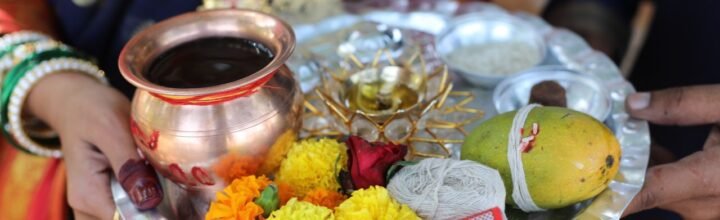
Look at the video of Indians performing Chhath Puja rituals at the Potomac River in Washington DC. There is nothing wrong with celebrating our festivals, practising our faith or preserving our cultural identity, even when we are thousands of kilometres away from home. In fact, taking our traditions abroad is something to be proud of.
But an important question needs to be asked: When we take our culture to another country, do we also take our civic responsibilities along with it?
Do we respect public spaces? Do we follow local regulations? Do we consider the inconvenience our activities might cause to others? Do we ensure that the place we use is left as clean as we found it?
These questions are bigger than any particular festival or religious practice.
Education is not the same as being educated
We often measure success through degrees, salaries, job titles, foreign employment and the countries we migrate to. Someone working in the US, UK, Canada or Australia is often considered successful.
But being professionally qualified and being socially responsible are two entirely different things.
You can be an engineer, doctor, IT professional or even a senior executive and still throw rubbish on the road, jump a queue, spit in public, ignore traffic rules, misuse public facilities or behave as though public property belongs to nobody.
That is not a lack of education. It is a lack of civic consciousness.
Why does this affect how Indians are perceived abroad?
We cannot expect an entire country or community to be judged by the behaviour of a few individuals. That would be unfair.
However, we must also accept that when people repeatedly witness visitors or immigrant communities ignoring local rules, disrespecting public spaces or creating inconvenience, it can reinforce negative stereotypes.
Many developed countries function on an understanding that public spaces belong to everyone. Their cleanliness, order and quality of life are maintained not merely by governments, but by citizens who understand their responsibilities.
When we move to such countries, we expect clean streets, disciplined traffic, efficient public services and respect for the law.
But do we always contribute to maintaining those standards?
We want the privileges of a developed society without necessarily adopting the civic habits that help build one.
That contradiction deserves serious reflection.
Culture deserves respect. So does the society hosting it.
Our festivals, traditions, food, clothing and religious beliefs are part of our identity. We should never feel ashamed of celebrating them anywhere in the world.
But cultural pride should never become an excuse to disregard local rules, environmental concerns or the comfort of others.
If a river, park or public space is used for a religious gathering, we must ensure that the activity is permitted, safe and environmentally responsible. We must leave it clean and respect the rights of people who use that space for other purposes.
Respecting another country’s laws and civic expectations does not mean abandoning our culture. It means presenting our culture with dignity.
Perhaps we need a different definition of success.
Instead of asking children only which degree they want to pursue, which university they want to attend or which country they want to settle in, perhaps we should also teach them:
- Don’t litter, even when nobody is watching.
- Follow traffic rules, even when there is no police officer.
- Respect queues and other people’s personal space.
- Don’t damage public property.
- Respect different cultures, beliefs and ways of life.
- Leave every public place better than you found it.
These are not complicated lessons. They don’t require a university degree. They require upbringing, awareness and personal responsibility.
A degree can take you to America. A good salary can give you a comfortable life there. But your behaviour determines how people experience you as a fellow human being.
Perhaps the real measure of an educated society is not how many people have foreign degrees or work in multinational companies.
It is how responsibly its people behave when nobody is watching.
Let’s not just aspire to live in developed countries. Let’s develop the civic sense that makes a society developed in the first place.
Before we demand respect from the world for being Indians, let’s also ask ourselves whether our everyday behavior deserves that respect. Patriotism is not just about carrying our culture abroad. It is also about carrying our values and responsibilities.
Comments

Hi, I’m Nishanth Muraleedharan (also known as Nishani)—an IT engineer turned internet entrepreneur with 25+ years in the textile industry. As the Founder & CEO of "DMZ International Imports & Exports" and President & Chairperson of the "Save Handloom Foundation", I’m committed to reviving India’s handloom heritage by empowering artisans through sustainable practices and advanced technologies like Blockchain, AI, AR & VR. I write what I love to read—thought-provoking, purposeful, and rooted in impact. nishani.in is not just a blog — it's a mark, a sign, a symbol, an impression of the naked truth. Like what you read? Buy me a chai and keep the ideas brewing. ☕💭 For advertising on any of our platforms, WhatsApp me on : +91-91-0950-0950 or email me @ support@dmzinternational.com