The Pahalgam Terror Attack: India’s Restraint, Pakistan’s Bluster, and a Region on Edge

On April 22, 2025, the serene meadows of Baisaran in Pahalgam, Jammu and Kashmir, turned into a killing field. Twenty-six tourists, mostly Hindus from across India, were enjoying their vacation when terrorists struck. The attackers, linked to The Resistance Front (TRF), a front for Pakistan-based Lashkar-e-Taiba, segregated their victims by religion and gunned them down. The brutality shocked the nation. Two weeks later, the terrorists—five in number, including three Pakistani nationals—remain at large, a glaring failure of India’s security apparatus. Yet, India hasn’t launched a military strike on Pakistan. Instead, Prime Minister Narendra Modi has chosen a path of calculated restraint, leaving many to wonder: What’s going on in his mind?
The Terror Attack and Its Aftermath
The Pahalgam attack was no random act. It was a deliberate provocation, designed to inflame communal tensions and destabilize Kashmir. The terrorists mingled with tourists, herded them, and executed them based on their faith—a chilling reminder of the 2008 Mumbai attacks. The death toll, the highest in Kashmir since the 2019 Pulwama bombing, sparked outrage across India. Protests erupted, with BJP workers in Hyderabad chanting, “Pahalgam ka badla lekar rahenge” (We will take revenge for Pahalgam). Social media buzzed with calls for war, yet Modi’s government stayed eerily silent on military action.
Instead, India unleashed a barrage of diplomatic and economic measures. The 1960 Indus Waters Treaty, a cornerstone of India-Pakistan relations, was suspended, raising fears in Pakistan of water shortages. The Attari border was sealed, visas for Pakistani nationals were canceled, and their ships were banned from Indian ports. Diplomatic staff in Pakistan was slashed from 55 to 30, and Indian airspace was closed to Pakistani aircraft. These moves hit Pakistan hard—its stock market crashed by over 7,100 points in a week, reflecting investor panic.
Pakistan’s Nuclear Saber-Rattling
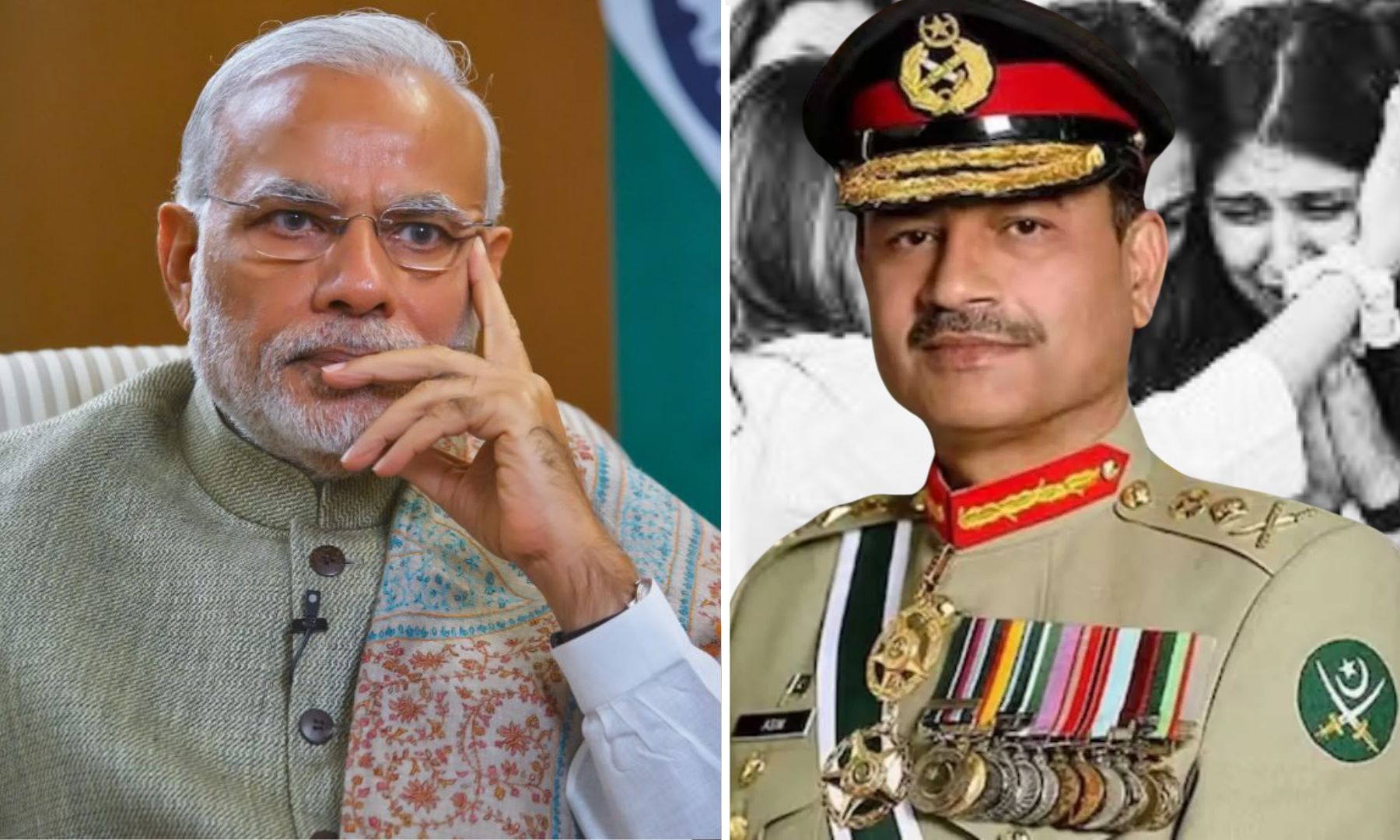
Pakistan, predictably, responded with bluster. Its leaders, from Defence Minister Khawaja Asif to Ambassador Muhammad Khalid Jamali, have repeatedly flaunted their nuclear arsenal. “We have 130 warheads, Ghori, Shaheen, and Ghaznavi missiles,” boasted Minister Hanif Abbasi, warning of a “full-scale war” if India halts water supplies. These threats, aired publicly at least twice, betray desperation rather than strength. Pakistan knows it’s cornered—economically weak, diplomatically isolated, and militarily outmatched. The nuclear rhetoric is less about intent and more about posturing to rally domestic support and deter India.
But why the panic? Pakistan’s military isn’t as feeble as some claim, with over 400 combat aircraft and a functional submarine fleet. Yet, its economy is in tatters, and prolonged conflict would be unsustainable. The Indus Waters Treaty suspension is a body blow—Pakistan relies on the Indus and its tributaries for agriculture and power. By curtailing water flow through dams like Baglihar and planning similar measures at Kishanganga, India is squeezing Pakistan’s lifeline without firing a shot. Pakistan’s threats to strike any new structures on the Indus are hollow; it lacks the precision or political will for such escalation.
Modi’s Game Plan: Silence as a Weapon
So, what’s Modi thinking? The Prime Minister has been meeting defence chiefs—Air Chief Marshal Amar Preet Singh, Navy Chief, and others—almost daily. He’s granted the armed forces “full operational freedom” to choose targets and timing, a signal of intent. But the absence of airstrikes or surgical strikes, unlike after Uri (2016) or Pulwama (2019), is telling. Modi isn’t being soft; he’s playing a deeper game.
India’s restraint isn’t cowardice—it’s strategy. A kinetic war would play into Pakistan’s hands, giving it a cause to unify its fractured polity and seek international sympathy. Instead, Modi is waging a war of attrition. By tightening the economic noose and leveraging India’s superior military readiness (S-400s, Rafales, BrahMos missiles, and naval assets), he’s forcing Pakistan to sweat. Rumors of India stoking unrest in Baluchistan or cozying up to the Taliban are unproven, but they add to Pakistan’s paranoia. The message is clear: India can hurt you without crossing the Line of Control (LoC).
Modi’s meetings with Jammu and Kashmir CM Omar Abdullah and foreign leaders, like Russia’s Sergey Lavrov, show he’s balancing domestic and international fronts. Russia urged dialogue, but India’s diplomatic offensive—engaging the US, UK, France, and others—has ensured global condemnation of terrorism, if not explicit support against Pakistan. The UN Security Council’s closed-door meeting on May 5, 2025, at Pakistan’s behest, underscores Islamabad’s desperation for international intervention.
Kashmir Today: Fear and Resilience
In Kashmir, the attack has left scars. Once-bustling Pahalgam is deserted, with tourists staying away. Security forces are on high alert, busting terror hideouts like one in Poonch, where IEDs and radio sets were recovered. Pakistani troops have violated the ceasefire along the LoC for 11 consecutive nights, firing small arms in Kupwara, Poonch, and Akhnoor. India responds in kind, but the clashes remain low-intensity. Local leaders like Farooq Abdullah insist Kashmir remains part of India, urging tourists not to fear. Yet, the failure to nab the attackers fuels anger and distrust.
The Bigger Picture: A Region on the Brink
This isn’t just about India and Pakistan. China, Pakistan’s all-weather friend, is silent, likely wary of India’s growing global clout. Turkey and Malaysia have made noises of support for Pakistan, but they’re irrelevant in this chess game. The US, under President Trump, has been urged by Pakistan to intervene, but Washington is unlikely to meddle in a nuclear flashpoint. The Taliban’s Afghanistan, meanwhile, remains a wildcard—India’s outreach to Kabul could complicate Pakistan’s western border.
The Pahalgam attack has exposed fault lines. Pakistan’s reliance on terrorism as a tool is backfiring—its economy is crumbling, and its nuclear threats sound like the cries of a cornered animal. India, under Modi, is showing a new kind of strength: not the loud, chest-thumping kind, but a cold, calculated dominance that hits where it hurts most. The Opposition, from Congress to TMC, is rallying behind the government, though some, like Karnataka’s Siddaramaiah, question the need for war.
A Wake-Up Call for India
India can’t afford complacency. The failure to catch the Pahalgam attackers is a stain on our intelligence and security systems. Modi’s strategy of economic and diplomatic pressure is smart, but it must be backed by results—nabbing the terrorists, securing Kashmir, and ensuring Pakistan pays a price. The Indian public, burning with anger, wants justice, not just promises. Social media is ablaze with calls for action, and Modi knows he can’t stay silent forever.
This is a moment of reckoning. Pakistan’s cowardice lies not in its nuclear threats but in its use of proxies to bleed India while hiding behind missiles. India’s response must be relentless—not with reckless bombs, but with a vice-like grip that chokes Pakistan’s economy, isolates it globally, and dismantles its terror networks. The new war isn’t fought with bullets alone; it’s fought with strategy, patience, and an iron will.
For those cheering war, pause. For those doubting Modi, look closer. India isn’t just reacting—it’s reshaping the battlefield. The question isn’t whether Pakistan will pay for Pahalgam. It’s how long it can survive India’s chokehold.
Comments

Hi, I’m Nishanth Muraleedharan (also known as Nishani)—an IT engineer turned internet entrepreneur with 25+ years in the textile industry. As the Founder & CEO of "DMZ International Imports & Exports" and President & Chairperson of the "Save Handloom Foundation", I’m committed to reviving India’s handloom heritage by empowering artisans through sustainable practices and advanced technologies like Blockchain, AI, AR & VR. I write what I love to read—thought-provoking, purposeful, and rooted in impact. nishani.in is not just a blog — it's a mark, a sign, a symbol, an impression of the naked truth. Like what you read? Buy me a chai and keep the ideas brewing. ☕💭 For advertising on any of our platforms, WhatsApp me on : +91-91-0950-0950 or email me @ support@dmzinternational.com