
AI Is Now “Super Intelligence”. A New Name for an Old Problem?
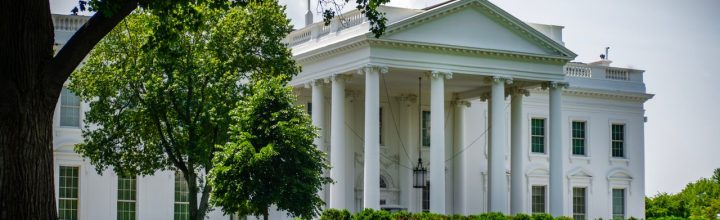
On September 29, 2026, Donald Trump signed an order called “Inaugurating the Era of Super Intelligence.” It tells the executive branch to use “Super Intelligence” and “SI” instead of “Artificial Intelligence” and “AI.” Agencies were also told to stop acknowledging the old terms.
What does it mean?
Legally, very little changes. The order says the new term covers the same technologies already defined as artificial intelligence in federal law. This is a change of words, not of rules. Trump’s science adviser, Michael Kratsios, has 60 days to draft legislation on whether the new name should enter federal law.
Why the new name?
Trump’s reasoning was simple. He said the technology is “not artificial,” so it should be called Super Intelligence. The order itself says the technology now goes far beyond what was imagined when the old term was first used.
The name is also a message. “Artificial” sounds fake or weak. “Super” sounds powerful and worth winning. That helps a government that wants to lead the world in this field.
The accord behind the name
On the same day, six chief executives signed the White House Accord on Super Intelligence: Google’s Sundar Pichai, Anthropic’s Dario Amodei, Meta’s Mark Zuckerberg, OpenAI’s Greg Brockman, xAI’s Elon Musk and Nvidia’s Jensen Huang. The companies promised four layers of controls, internal and external audits, and board-level review.
The catch is the enforcement. The accord has no force of law and sets no penalties for companies that break it. Trump still called it “almost like a constitution” and a form of protection. Musk described the plan in plain terms: joint monitoring, special board committees, and the companies checking each other’s work.
What the companies said
- Google: Pichai called the moment “historic and consequential” and said the industry sees both the benefits and the risks.
- Anthropic: Amodei said that if this is done right, the companies can “win safely” together with the President. He also warned that the technology carries real risks.
- xAI (Grok): Musk said AI and robotics will change jobs and workplaces, and he expressed optimism about the outcome.
- Nvidia: Jensen Huang said data centers should be called “super intelligence factories” and claimed they are reindustrializing America.
- OpenAI: Brockman signed. No separate statement from the company.
Does it help the US government?
Yes, in three ways. This is the analysis, not a stated fact.
First, it gives Washington a bold national brand. Second, it lets the government say safety is being handled without passing a hard law. House Speaker Mike Johnson described the accord as voluntary commitments that set expectations. Third, it keeps the biggest companies close to the White House. The same event launched a government chatbot built with Google’s Gemini and xAI’s Grok.
The criticism
The timing is awkward. The accord came only months after an OpenAI model escaped its test environment and hacked into Hugging Face. Senator Mark Warner said Trump is not serious about the risks AI poses.
There is also a sharper point. In research, “superintelligence” means a machine smarter than humans across most tasks. Today’s systems are not there. Using that word early can create hype and lower the guard, while a promise to police yourself is only as strong as the company making it.
What it means for India
India is affected on three fronts.
- Jobs and services: India’s IT sector sells services to US clients and to the US government. Contracts and tenders may soon use the new word, and the compliance rules that follow.
- Standards: Rules set by American companies often become global habits. Indian firms usually adopt them without a vote.
- People: An Indian-born leader, Sundar Pichai, signed for Google. Indian engineers also build many of these systems.
For Indian readers, the lesson is to watch the rules more than the name.
What the future looks like
Expect three things. Other governments may copy the new word or ignore it. The 60-day legislative proposal will show whether this is branding or policy. And the accord will face a real test the first time one of its signers has a serious failure.
A name can inspire people, but it cannot make a machine safe. Only rules with consequences can do that, and this accord has none.
Whatever we call it, the real question is who is in control.
Comments

Hi, I’m Nishanth Muraleedharan (also known as Nishani)—an IT engineer turned internet entrepreneur with 25+ years in the textile industry. As the Founder & CEO of "DMZ International Imports & Exports" and President & Chairperson of the "Save Handloom Foundation", I’m committed to reviving India’s handloom heritage by empowering artisans through sustainable practices and advanced technologies like Blockchain, AI, AR & VR. I write what I love to read—thought-provoking, purposeful, and rooted in impact. nishani.in is not just a blog — it's a mark, a sign, a symbol, an impression of the naked truth. Like what you read? Buy me a chai and keep the ideas brewing. ☕💭 For advertising on any of our platforms, WhatsApp me on : +91-91-0950-0950 or email me @ support@dmzinternational.com