Bengaluru Traffic Is Stealing Our Lives: The Hidden Price of Living in India’s IT Capital
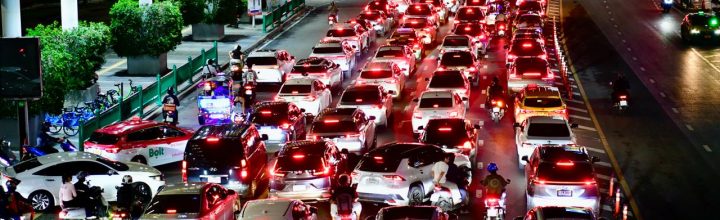
What if the city that pays you a salary is quietly taking away your health, family time, savings and even your chance of survival?
Welcome to Bengaluru, India’s Silicon Valley. A city of billion-dollar companies, ambitious professionals, world-class technology and dreams of a better future. Yet, every morning, millions of people step out of their homes only to spend hours trapped on roads that seem to have forgotten how to move.
We call it traffic. We joke about it in office meetings. We post videos about it on social media.
But what if Bengaluru’s traffic crisis is no longer merely an inconvenience? What if it has become a slow-moving disaster hiding in plain sight?
1. Your Life Is Being Measured in Traffic Jams
Imagine leaving home at 8 AM and returning at 8 PM. Eight hours at work, three hours commuting and another hour preparing for the next working day.
Where is the time to raise your children, care for ageing parents, exercise, pursue a passion or simply sit peacefully with your family?
Every hour lost on the road is an hour that cannot be recovered. You can earn more money, buy another house or change jobs. But you cannot purchase yesterday’s evening with your child.
A reported study has highlighted that employees can lose around 21 working days annually to traffic congestion. If that figure applies to you, it means weeks of productive time disappearing into exhaust fumes and endless queues.
The shocking truth is that we may be earning money to improve our lives while losing the very lives we are trying to improve.
2. The Punishment for Working in Bengaluru: Pay More to Live Closer
Here is the financial trap.
Live far from the office, and you pay through fuel, vehicle maintenance, commuting expenses and lost time. Move closer, and you may pay significantly higher rent.
A report has cited additional annual rental expenses of approximately ₹1.6 lakh to ₹2.4 lakh for employees choosing to live closer to their workplaces.
Think about that. A family could spend another ₹20,000 a month simply to escape some of the daily commute.
That money could fund a child’s education, build an emergency reserve, reduce debt or support retirement savings.
Meanwhile, companies benefit from access to Bengaluru’s talent, property owners collect premium rents, and employees are left calculating whether they can afford to live near the place where they earn their living.
Is this urban development, or an invisible tax on employment?
3. What Happens When an Ambulance Gets Trapped?
This is where the conversation becomes frightening.
Traffic is irritating when you are late for a meeting. It becomes a matter of life and death when someone is suffering a heart attack, a serious injury or another medical emergency.
An ambulance cannot negotiate with a traffic jam. A patient’s condition cannot wait for a signal to turn green.
Every avoidable delay can matter, although the actual impact depends on the medical emergency and the circumstances.
Imagine a family watching an ambulance crawl through a line of stationary vehicles, knowing that the person inside may be fighting for survival.
No software upgrade, corporate valuation or technology park can compensate a family for a life lost because emergency access failed.
A city cannot call itself world-class if reaching a hospital becomes a race against its own roads.
4. The Health Crisis Nobody Includes in the Cost of Traffic
The damage does not end when you finally reach home.
Long commutes can reduce sleep, discourage physical activity and leave people mentally exhausted. Vehicle emissions contribute to air pollution, while prolonged stress can affect overall well-being.
People who sit for hours, rush through meals and abandon exercise because they have no time may gradually develop unhealthy routines.
Then comes the vicious cycle: poor sleep, less energy, more dependence on convenience food and less motivation to exercise.
Traffic does not single-handedly cause every health problem. But an urban environment that routinely steals time for rest and movement makes healthy living harder.
And the cruelest part? Many people spend their weekends recovering from the working week instead of enjoying the lives they work so hard to build.
5. Why Is Bengaluru Still Struggling?
Bengaluru’s growth has outpaced the ability of its transport infrastructure to serve every expanding neighbourhood effectively.
Concentrated employment hubs, inadequate last-mile connectivity, road bottlenecks, construction disruptions, inconsistent footpaths and dependence on private vehicles all contribute to the problem.
Building another flyover may improve movement at one junction without solving congestion across the wider network. Widening roads alone can also encourage more people to drive, eventually creating fresh pressure.
The solution requires coordinated planning: reliable public transport, connected Metro and suburban rail networks, safe walking routes, effective bus services, disciplined parking and better distribution of employment opportunities.
Companies must also explore flexible working hours, hybrid work where practical and employee transport options.
Most importantly, infrastructure projects must be judged by how much travel time and risk they actually eliminate—not merely by how many kilometres are inaugurated.
6. What Can Bengaluru Residents Do Today?
While systemic change is essential, individuals can reduce some of the damage.
- Calculate your actual commuting cost, including time, fuel, rent and vehicle expenses before deciding where to live.
- Use public transport or employer-provided shuttles when practical.
- Ask employers to consider staggered schedules and hybrid work arrangements.
- Avoid driving short distances when safe, practical walking alternatives exist.
- Protect sleep, exercise and family time instead of treating them as optional extras.
- Demand transparent timelines and measurable outcomes from local authorities.
These actions will not fix the entire city, but they can help people make better decisions while pushing for larger reforms.
The Final Shock: What Are We Actually Building?
Bengaluru was built on ambition. People came here to transform their careers, build businesses and give their families better opportunities.
But development should not be measured only through salaries, skyscrapers, technology parks or property prices.
It should also be measured through the hours people spend with their families, the ease of reaching a hospital, the quality of the air they breathe and the freedom to live without constant exhaustion.
If a person spends years sacrificing health, relationships and peace of mind just to travel between home and work, the city has a problem far bigger than congestion.
A traffic jam delays your vehicle. A broken urban system delays your life.
And the most disturbing question is not how many hours Bengaluru residents lose tomorrow.
It is this: When today’s children grow up, will they inherit a better city—or simply inherit our traffic jams?
Comments

Hi, I’m Nishanth Muraleedharan (also known as Nishani)—an IT engineer turned internet entrepreneur with 25+ years in the textile industry. As the Founder & CEO of "DMZ International Imports & Exports" and President & Chairperson of the "Save Handloom Foundation", I’m committed to reviving India’s handloom heritage by empowering artisans through sustainable practices and advanced technologies like Blockchain, AI, AR & VR. I write what I love to read—thought-provoking, purposeful, and rooted in impact. nishani.in is not just a blog — it's a mark, a sign, a symbol, an impression of the naked truth. Like what you read? Buy me a chai and keep the ideas brewing. ☕💭 For advertising on any of our platforms, WhatsApp me on : +91-91-0950-0950 or email me @ support@dmzinternational.com