
Can China Remotely Burst EV Batteries Like Mossad Did With Hezbollah Pagers? A Chilling Possibility We Can’t Ignore
Imagine a car that you drive every day, comfortably, silently, and with zero emissions. Now imagine that car bursting into flames not because of an accident — but because someone thousands of miles away decided it was time. Sounds like science fiction? Well, think again.
This blog explores a terrifying possibility: Could China, through its dominance in EV battery tech, control or even destroy electric vehicles globally? And what lessons can we draw from one of Mossad’s most secretive and deadly cyber attacks?
BYD: China’s Trojan Horse in Your Garage?
Let’s set the context.
- BYD (Build Your Dreams) is not just a popular Chinese EV maker. It is the world’s largest EV battery manufacturer, and it’s aggressively exporting cars globally — including to India, Europe, and South America.
- Mahindra’s new EV lineup (BS6, BS9) in India is powered by BYD batteries. They’re not alone — many EV makers across the globe rely on BYD’s technology.
- In fact, BYD batteries are already in use by 80% of Indian EV bus fleets and in commercial and passenger vehicles.
This means China, via BYD, potentially controls the most critical component of millions of EVs globally — the battery. The same battery that controls charging, discharging, temperature, and safety features — all of which are governed by embedded firmware and software.
⚠️ Battery: The New Battlefield
Electric Vehicles have just three critical components:
- Mechanical Frame & Motor
- Battery Cells & Battery Management System (BMS)
- Embedded Software (BMS firmware, OTA updates)
Of these, the battery and software are the heart and brain. Whoever controls this — controls the vehicle.
If you control the software and the firmware of the Battery Management System (BMS) — you could:
- Overcharge the battery remotely (leading to explosion)
- Disable thermal protection and make it catch fire
- Shut down the vehicle mid-drive
- Cause large-scale fires across cities with coordinated attacks
You get the drift. This isn’t fear-mongering. This is cyber warfare potential in plain sight.
💣 The Mossad Pager Attack: Real, Ruthless, and Recently Confirmed
Let’s revisit a shocking modern-day covert mission — one that redefined tech-enabled warfare.
In September 2024, Mossad, Israel’s elite spy agency, executed Operation Grim Beeper, targeting Hezbollah militants across Lebanon and Syria. The weapon? Not drones or missiles — but pagers and walkie-talkies.
Mossad used a fake company to distribute communication devices secretly rigged with PETN-based micro-explosives hidden inside their battery compartments.
Then came the strike.
Over 5,000 devices were detonated remotely, killing 42+ high-ranking Hezbollah leaders and injuring thousands more.
It wasn’t just a physical attack — it crippled Hezbollah’s trust in their entire communication network. The message was chilling: any device could be a deathtrap.
This wasn’t fiction. This was modern warfare rewritten — silent, surgical, and psychological.
🚗 From Pagers to EVs: The Same Logic
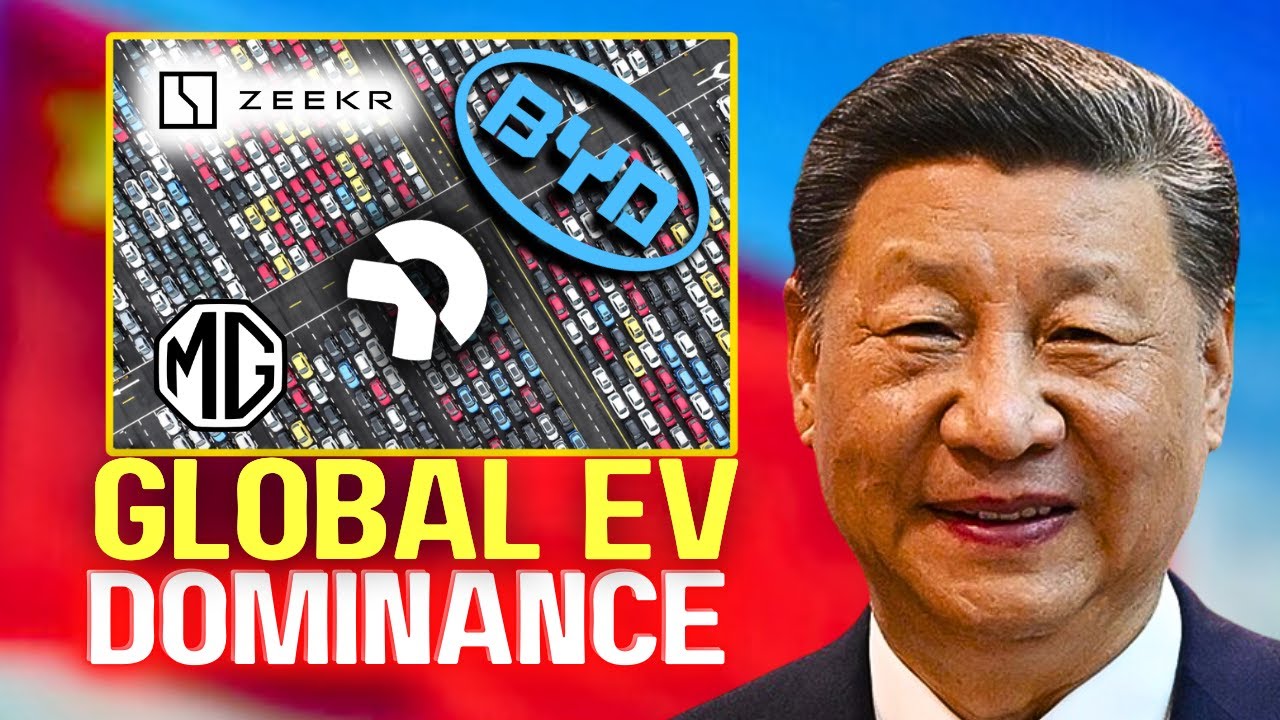
What Mossad did with pagers, China could do with EVs.
Imagine a nation like India or Germany where 1 in 5 cars is powered by BYD batteries. If geopolitical tensions rise, and a kill-switch or firmware attack is triggered, it could paralyze cities, cause explosions, or sabotage military logistics (imagine electric defense vehicles being disabled!).
We’re not claiming China will do this — but they absolutely can.
💭 If China Becomes a World Power, Then What?
If China dominates every core technology:
- Digital yuan replaces USD
- 5G, AI, EV, and chip supply chains run through China
- Electric cars around the world are Chinese-made or powered
- Software and chips have backdoors
They don’t need to send armies. Their products are already inside our borders, homes, and roads.
It becomes a war of chips and circuits, not guns and bullets.
So What Should India Do?
- Build our own Battery tech — R&D centers must be funded.
- Invest in Lithium refineries (India has lithium reserves in Jammu, Karnataka — we need to process it ourselves).
- Develop indigenous BMS (Battery Management Systems) — no black-box software from outside.
- Mandate open-source BMS or third-party validation for any imported batteries.
- Set up a National EV Cybersecurity Taskforce.
🧠 Final Thought
“You don’t need to own the battlefield if you already own what moves on it.”
Let’s not wait for a disaster to realize the risks. While EVs are our future, security must be part of the foundation, not an afterthought.
Let’s build smart, build safe, and build Indian. Because when batteries become bombs, it’s too late to switch them off.
Comments

Hi, I’m Nishanth Muraleedharan (also known as Nishani)—an IT engineer turned internet entrepreneur with 25+ years in the textile industry. As the Founder & CEO of "DMZ International Imports & Exports" and President & Chairperson of the "Save Handloom Foundation", I’m committed to reviving India’s handloom heritage by empowering artisans through sustainable practices and advanced technologies like Blockchain, AI, AR & VR. I write what I love to read—thought-provoking, purposeful, and rooted in impact. nishani.in is not just a blog — it's a mark, a sign, a symbol, an impression of the naked truth. Like what you read? Buy me a chai and keep the ideas brewing. ☕💭 For advertising on any of our platforms, WhatsApp me on : +91-91-0950-0950 or email me @ support@dmzinternational.com