Faith Belongs in the Heart, Not on the Stage
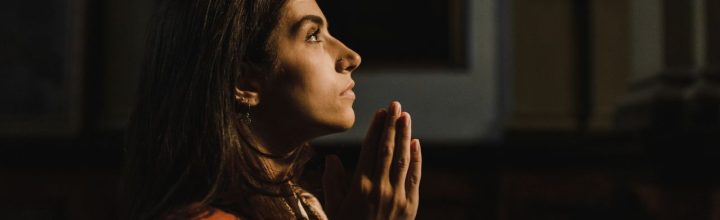
A person prays in a quiet room. A politician prays in front of cameras. The act looks the same, but the purpose is different.
Religion gives people comfort, discipline, and hope. It answers questions that no government can answer. That is exactly why it should stay personal. When a politician takes religion to a rally, it stops being faith and becomes a tool.
What the world shows us
Some countries wrote religion into their state. Saudi Arabia and Iran are ruled under Islamic law. Pakistan calls itself an Islamic Republic. Among Christian countries, Costa Rica has Catholicism as its state religion, Denmark has an official Lutheran church, and England has the Church of England as its established church. Israel defines itself as a Jewish state. Sri Lanka gives Buddhism the foremost place in its constitution.
Nepal is the most useful example for India. For centuries it was a Hindu kingdom. In 2008 it became a republic, and in 2015 it declared itself secular. Most Nepalis are still Hindu. They chose to separate the state from religion because a state must serve all its citizens, not only the majority.
Here is the hard truth. Having a state religion has not made these countries more peaceful, more honest, or more fair. Many of them still face poverty, corruption, and division. A religious label on the government does not fill an empty stomach or build a school.
The Indian question
India chose a different path. Our Constitution gives every citizen the freedom to follow any faith under Article 25. The word “secular” was added to the Preamble in 1976. Our election law treats an appeal for votes in the name of religion as a corrupt practice. In 2017, the Supreme Court said the same: votes cannot be asked for in the name of religion, caste, community, or language.
So the rule already exists. The problem is that the rule is often ignored. Speeches carry hints. Rallies carry symbols. Campaigns carry fear: “your religion is in danger” or “they will take what is yours.” Every party, in every region, has been guilty at some time. No side can claim clean hands.
Why does it work?
Because it is the easiest way to win. A voter who thinks about jobs, roads, hospitals, and prices will judge a leader on results. A voter who thinks about threat and identity will judge a leader on loyalty. Results are hard to deliver. Loyalty is cheap to buy.
This is the real cost. Every minute spent on religious politics is a minute not spent on real problems. The farmer still waits for a fair price. The graduate still waits for a job. The weaver still waits for a market. Their religion does not matter to their hunger.
What should change
A leader should treat all religions the same, in words and in action. That means:
- No speeches that praise one faith and warn against another.
- No use of worship places as campaign stages.
- No policy that gives or takes benefits because of a person’s religion.
- Equal respect at every festival, for every community.
This does not mean a leader must hide their own faith. Pray at home. Visit your temple, mosque, or church on your own time. But when you hold public office, you hold it for the believer, the non-believer, and everyone in between.
The voter’s duty
Politicians do what works. If religious appeals win votes, they will continue. The change must begin with us. Ask a simple question at every rally: what will you do for my work, my school, my road, my hospital? If the answer is about religion, that leader has no answer.
A ruler can share a religion with you and still fail you. Another can follow a different faith and still serve you well. Judge leaders by what they do, not by what they worship.
Religion asks us to be better people. Politics should ask leaders to be better servants. When the two are mixed for votes, we lose both.
Keep God in the heart. Keep the government for everyone.
Comments

Hi, I’m Nishanth Muraleedharan (also known as Nishani)—an IT engineer turned internet entrepreneur with 25+ years in the textile industry. As the Founder & CEO of "DMZ International Imports & Exports" and President & Chairperson of the "Save Handloom Foundation", I’m committed to reviving India’s handloom heritage by empowering artisans through sustainable practices and advanced technologies like Blockchain, AI, AR & VR. I write what I love to read—thought-provoking, purposeful, and rooted in impact. nishani.in is not just a blog — it's a mark, a sign, a symbol, an impression of the naked truth. Like what you read? Buy me a chai and keep the ideas brewing. ☕💭 For advertising on any of our platforms, WhatsApp me on : +91-91-0950-0950 or email me @ support@dmzinternational.com