
India Budget 2026: When an Ageing Nation Finally Entered the Budget Speech
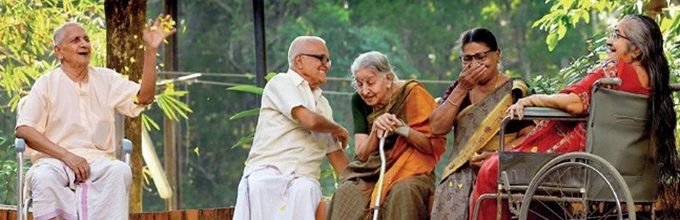
India has always celebrated youth. Young population. Young workforce. Young economy.
But quietly, year after year, another India has been growing — older, slower, weaker, and largely ignored.
Budget 2026 is the first Union Budget that openly admits one uncomfortable truth: India is ageing fast — and unprepared.
This budget may not have thrown money at senior citizens, but it did something more important: it recognised ageing as a structural problem, not a private family issue.
That alone makes this budget historically important.
The Numbers That Forced the Government’s Hand
Let’s start with facts — not emotions.
- In 2011, India had around 10.4 crore senior citizens (aged 60+).
- By 2026, this number has crossed 15 crore.
- By 2035–36, India will have around 23 crore senior citizens.
- By 2050, projections show over 31 crore elderly people.
That means:
👉 In just 25 years, India’s senior population will nearly triple.
This is not gradual ageing.
This is a demographic shockwave.
And unlike developed countries, India is ageing before becoming rich.
Why This Is a Crisis — Not Just a Statistic
Ageing in India comes with three brutal realities:
1. Most Seniors Have No Pension
More than 70% of India’s workforce is informal.
No EPF. No corporate pension. No guaranteed monthly income after retirement.
Old age, for many, means:
- Living off savings
- Depending on children
- Or continuing to work despite failing health
2. Healthcare Costs Rise Exactly When Income Stops
Senior citizens account for the highest healthcare spending per person.
- Diabetes
- Heart disease
- Blood pressure
- Cancer
- Arthritis
- Neurological disorders
Monthly medicine bills easily cross ₹3,000–₹10,000.
Hospitalisation wipes out ₹2–5 lakh in one stroke.
3. Care Is the Invisible Cost Nobody Talks About
Who helps an elderly person:
- Take medicines?
- Go to the hospital?
- Bathe, eat, walk?
- Handle emergencies?
Care is labour.
Labour costs money.
And India never planned for it.
What Budget 2026 Did Differently
For the first time, the Union Budget shifted its language.
Not just “how much pension”, but “who will care?”
1. Acknowledging the Care Economy
Budget 2026 announced large-scale investment in care infrastructure:
- 1.5 lakh trained caregivers
- 1 lakh allied health professionals
This is a landmark shift.
It means the government is finally accepting that:
- Families alone cannot handle elder care
- Ageing needs trained manpower
- Care is as important as cash
This is the first serious step towards a formal elder-care ecosystem in India.
2. Healthcare Spending Gets a Push
The total allocation for healthcare crossed ₹1,06,000 crore.
While this benefits everyone, senior citizens benefit the most, because:
- They use hospitals more
- They need long-term treatment
- They depend on public health systems
The budget also eased costs on critical medicines, especially for:
- Cancer treatment
- Rare diseases
- Chronic illnesses
For seniors, cheaper medicines are not a luxury — they are survival.
3. Tax Stability for Senior Citizens
There were no dramatic new tax exemptions, and that disappointed many.
But there was no negative shock either.
- Existing tax slabs for seniors remain
- No additional tax burden
- Compliance procedures simplified
For retirees on fixed income, stability itself is protection.
This budget chose predictability over populism.
The Pension Question: What Changed — And What Didn’t
Let’s be brutally honest.
What Did NOT Happen
❌ No universal pension scheme
❌ No major increase in old-age pension amounts
❌ No special monthly allowance for healthcare or home care
If you were expecting a “senior citizens relief jackpot”, this wasn’t it.
What This Budget Signals
Instead of expanding pensions immediately, the government seems to be:
- Strengthening healthcare
- Building care infrastructure
- Preparing systems first
This is a long-term approach, not an election-season handout.
Whether that patience is justified — only time will tell.
Who Actually Benefits from Budget 2026
Direct Beneficiaries
- Seniors dependent on public healthcare
- Elderly people requiring long-term medical care
- Families struggling to find trained caregivers
- Retirees who wanted tax stability, not surprises
Still Vulnerable
- Elderly without savings or pensions
- Seniors living alone
- Low-income elderly dependent on minimal social pensions
- Families paying out of pocket for private elder care
Why This Budget Still Matters
For decades, India treated ageing as a family problem.
“Children will take care.”
“Society will manage.”
“People will adjust.”
Budget 2026 quietly breaks that illusion.
It says:
👉 Ageing is a national responsibility
👉 Care is an economic sector
👉 Senior citizens are not invisible anymore
This is not a perfect budget for elders.
But it is the first honest one.
The Bigger Truth
By 2035, nearly one out of every six Indians will be a senior citizen.
If India does not:
- Expand pensions
- Subsidise healthcare
- Build care systems
- Support dignified ageing
Then longevity will become a curse instead of a blessing.
Budget 2026 does not finish the job — but it finally starts it.
And in a country that avoided this conversation for decades,
starting is already a big political and moral shift.
Final Thought
Senior citizens built this country — with their labour, taxes, sacrifices and silence.
Budget 2026 may not reward them generously yet,
but it finally acknowledges them clearly.
That acknowledgment matters.
Because once a problem is seen, it can no longer be ignored.
Comments

Hi, I’m Nishanth Muraleedharan (also known as Nishani)—an IT engineer turned internet entrepreneur with 25+ years in the textile industry. As the Founder & CEO of "DMZ International Imports & Exports" and President & Chairperson of the "Save Handloom Foundation", I’m committed to reviving India’s handloom heritage by empowering artisans through sustainable practices and advanced technologies like Blockchain, AI, AR & VR. I write what I love to read—thought-provoking, purposeful, and rooted in impact. nishani.in is not just a blog — it's a mark, a sign, a symbol, an impression of the naked truth. Like what you read? Buy me a chai and keep the ideas brewing. ☕💭 For advertising on any of our platforms, WhatsApp me on : +91-91-0950-0950 or email me @ support@dmzinternational.com


