The latest variant of the COVID-19 coronavirus, dubbed B.1.617, was first found in India.
The COVID variant from India: What we know so far.
The latest variant of the COVID-19 coronavirus, dubbed B.1.617, was first found in India and then in other countries around the world. It is still unclear how dangerous it is.
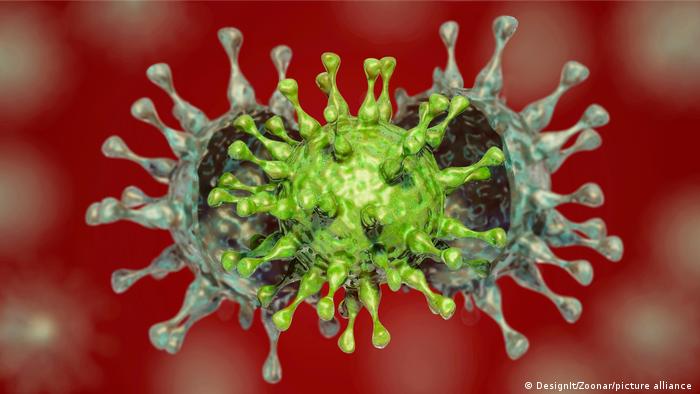
There have been at least five major mutations of the COVID-19 coronavirus
The number of new coronavirus infections has continued to rise sharply in India. The country has just recorded the world’s highest daily tally of 314,835 infections among its total population of 1.38 billion people.
It’s too early to say whether the new variant of the virus, B.1.617, is responsible for the rapid increase in infections, but it is being treated as a possible cause.
What role do virus variants play?
In many other cases and countries, new variants have played a role when infections took a sudden, upward swing.
Some experts are also concerned that the Indian variant may be turning into a type of “super mutation” that will continue to spread across the world.
Director-General of the World Health Organization (WHO) Tedros Adhanom Ghebreyesus has said that he is “deeply concerned” about the situation in India, the WHO tweeted.

And the Indian variant has spread to other countries. Health authorities have detected variant B.1.617 in Germany, Belgium, the United Kingdom, Switzerland, the US, Australia and Singapore. The British health ministry has reported 77 cases of the Indian variant.
Why would the Indian variant become dangerous?
The Indian variant consists of two mutations of the spike protein of the virus.
A spike protein allows a virus to enter the body and infect it. The virus can then spread quickly through the body, if it escapes any antibodies in the immune system or those developed as a result of a vaccine — or, indeed, if there aren’t any antibodies.
Experts say there is a risk that people, who have recovered from a COVID-19 infection, or those who have been vaccinated, may not be as resilient against this new variant as they may be against other forms of the virus.
What’s special about the Indian variant?
The mutations found in the Indian variant are identified as E484Q and E484K.
They are known in other mutations as well — they are not entirely new. They have been detected in the South African variant, B.1.353, and in the Brazilian variant, P1.
In some cases, the Indian mutations were detected in the British variant, B.1.1.7.
There are other mutations, such as one called L452R, which is detected in a Californian variant of the virus, B.1.429. The same was found in a variant in Germany.
The Indian variant of coronavirus has already reached Europe
Of interest or of concern?
The WHO categorizes the Indian variant as a “Variant of Interest.” That means the variant is being monitored, but that it is, for the time being, not of major concern.
Dr Jeffrey Barrett, director of the COVID-19 Genomics Initiative at the Wellcome Sanger Institute in the UK, has commented that the Indian variant has spread at such low levels over the past few months, and that makes it “likely not to be as transmissible as B.1.1.7.”
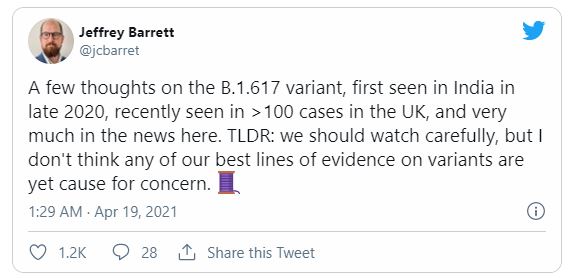
But a number of other experts see the threat differently. And current developments appear to suggest they may be right.
In the Indian state of Maharashtra, over 60% of all coronavirus infections have been linked to the new B.1.617 variant, based on the infections that have been sequenced for their origin.
But local authorities say the number of cases being sequenced is far too low for them to draw any clear conclusions.
As such, it remains unclear whether the Indian variant is responsible for the increase in infections in India.
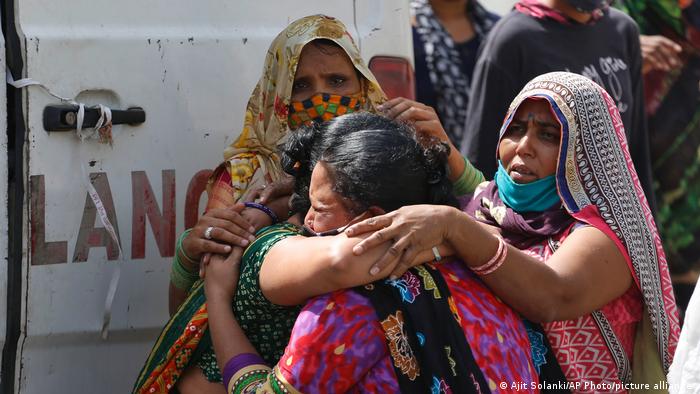
Surging infections
The image shows relatives of a patient mourning outside a hospital in Ahmedabad city. India reported a record 234,692 cases of COVID-19 on Saturday. Experts say the harrowing trend of rising infections can be traced to two factors — extremely virulent mutations of the original virus, and the country’s lax approach to restrictions on daily life to slow the spread of infection.
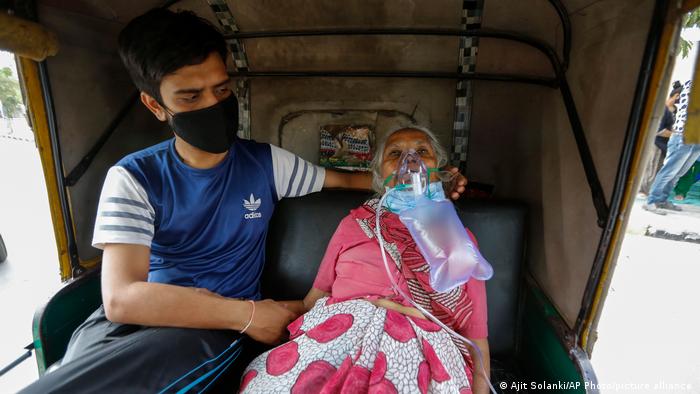
Shortage of oxygen
Several Indian states have reported a severe shortage of medical oxygen, while hospitals across the country are struggling to provide patients sufficient beds. On Sunday, Delhi’s Chief Minister Arvind Kejriwal said that Delhi was facing an acute shortage of oxygen. India’s Prime Minister Narendra Modi has asked state governments to source medical oxygen from industrial plants.
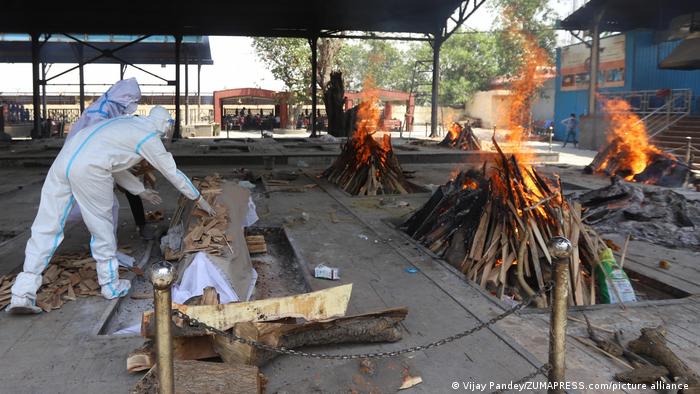
Crematoriums under pressure
Funeral centers are also struggling to dispose off the rising number of dead bodies and workers are working more than 14 hour shifts to handle the rising number of dead bodies. On Friday, Delhi reported 141 COVID-related deaths — the highest single day fatality count since the beginning of the pandemic.
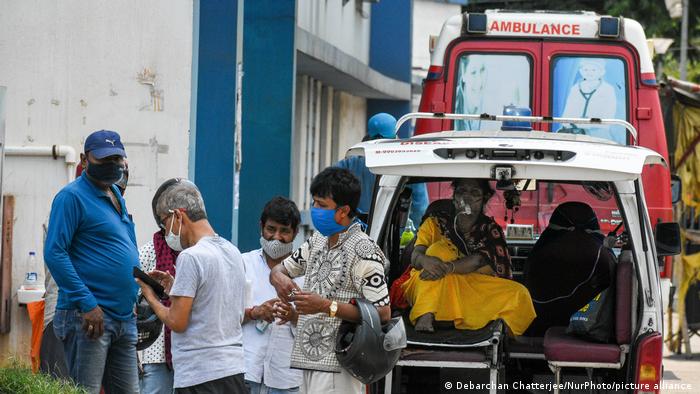
Lack of hospital beds
Hospitals in most major cities are struggling to accommodate all COVID patients. In some places, reports suggest that patients with a severe form of COVID-19 are facing difficulties to secure an intensive care unit (ICU) bed. On Sunday, the Delhi government said that about 1,500 oxygen-equipped beds will be functional within a day or two at two sports complexes and a government school.
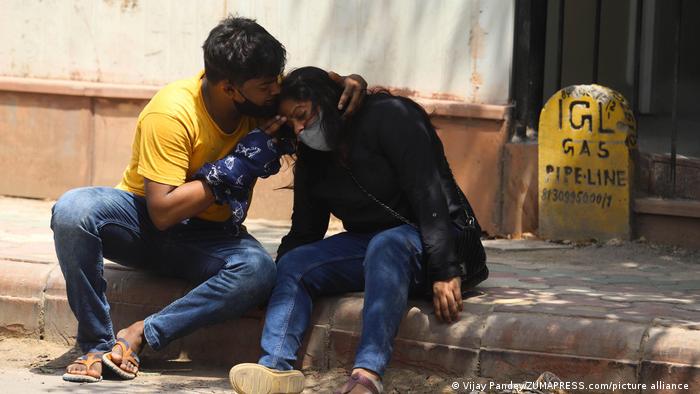
Relatives scout for medicines and oxygen
Amid the virus surge, state governments appealed for additional supplies of oxygen and treatment drugs. The federal government said special trains would transport oxygen tankers to needy states, and that oxygen use for industrial purposes would be limited. Meanwhile, the shortages are forcing some people to purchase critical drugs and oxygen from the black market.
Comments

Hi, I’m Nishanth Muraleedharan (also known as Nishani)—an IT engineer turned internet entrepreneur with 25+ years in the textile industry. As the Founder & CEO of "DMZ International Imports & Exports" and President & Chairperson of the "Save Handloom Foundation", I’m committed to reviving India’s handloom heritage by empowering artisans through sustainable practices and advanced technologies like Blockchain, AI, AR & VR. I write what I love to read—thought-provoking, purposeful, and rooted in impact. nishani.in is not just a blog — it's a mark, a sign, a symbol, an impression of the naked truth. Like what you read? Buy me a chai and keep the ideas brewing. ☕💭 For advertising on any of our platforms, WhatsApp me on : +91-91-0950-0950 or email me @ support@dmzinternational.com