Journal Entry #004 : The Biggest Lie in the Handloom Industry Isn’t About Handlooms
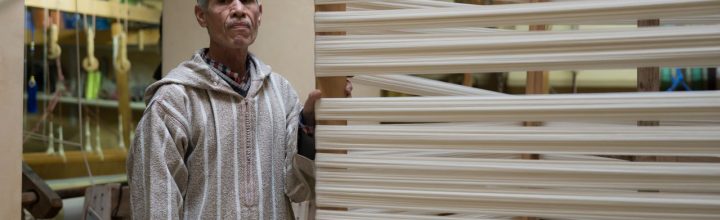
The day I entered the handloom industry, I expected to learn about fabrics, looms, yarn counts, dyes, and weaving techniques.
Instead, I learned something far more disturbing.
The biggest problem wasn’t weaving.
It was trust.
Every product seemed to carry a beautiful story.
“Handmade.”
“Artisan-made.”
“Natural.”
“Eco-friendly.”
“Traditional.”
But when I started tracing products backwards—from the customer to the retailer, from the retailer to the wholesaler, from the wholesaler to the manufacturer, and finally to the weaving cluster—the stories began to change.
Sometimes the artisan had never even heard of the brand selling their work.
Sometimes the fabric marketed as handloom had passed through several middlemen, losing every piece of its original identity.
Sometimes “natural” quietly included synthetic fibres.
Sometimes nobody actually knew where the product came from anymore.
That shocked me.
Not because people were deliberately dishonest.
But because the entire system had accepted uncertainty as normal.
In almost every industry, consumers can verify what they buy.
Cars have VIN numbers.
Electronics have serial numbers.
Medicines have batch numbers.
Food products carry manufacturing details.
Luxury watches have certificates.
Yet products that take weeks or even months to create by hand often arrive with nothing more than a paper tag.
That made no sense.
If a handwoven saree can take twenty days to weave, shouldn’t its history be preserved forever?
That single question changed how I viewed Handlooom.com.
I realised we weren’t simply building another ecommerce website.
We were trying to build trust into every product.
That is why we introduced blockchain-backed Digital Product Passports years before they became a popular discussion in fashion.
Not because blockchain sounded fashionable.
Because trust should never depend on someone’s memory.
It should depend on records that cannot be altered.
When someone buys a handmade product, they deserve to know:
Who wove it?
Which cluster produced it?
What fibres were used?
How was it transported?
Why should they simply trust a marketing claim?
Let them verify it.
The future of handloom won’t belong to the company with the biggest advertising budget.
It will belong to the company that earns the greatest trust.
Consumers are changing.
Governments are changing.
The European Union is already moving towards Digital Product Passports.
Transparency is no longer becoming an advantage.
It is becoming an expectation.
I often tell people that we are not trying to digitise handloom.
We are trying to protect it.
Technology should never replace artisans.
Technology should protect their identity, their craftsmanship, and their reputation.
The world’s oldest craft deserves the world’s most modern proof of authenticity.
That is the future I believe in.
And every day, through Handlooom.com, DMZ International Imports & Exports Pvt Ltd, and the Save Handloom Foundation, we take one more step towards making that future real.
Comments

Hi, I’m Nishanth Muraleedharan (also known as Nishani)—an IT engineer turned internet entrepreneur with 25+ years in the textile industry. As the Founder & CEO of "DMZ International Imports & Exports" and President & Chairperson of the "Save Handloom Foundation", I’m committed to reviving India’s handloom heritage by empowering artisans through sustainable practices and advanced technologies like Blockchain, AI, AR & VR. I write what I love to read—thought-provoking, purposeful, and rooted in impact. nishani.in is not just a blog — it's a mark, a sign, a symbol, an impression of the naked truth. Like what you read? Buy me a chai and keep the ideas brewing. ☕💭 For advertising on any of our platforms, WhatsApp me on : +91-91-0950-0950 or email me @ support@dmzinternational.com