
“Justice delayed is justice denied.” But in India, it often feels more like justice derailed.
🔴 The Red Fort Attack Case: A 24-Year Saga of Delay
Let’s begin with a real case that symbolizes everything wrong with India’s judicial framework — the 2000 Red Fort attack.
On December 22, 2000, terrorists from Lashkar-e-Taiba infiltrated the Red Fort in Delhi and opened fire on Indian Army jawans from the 7th Rajputana Rifles, killing three brave soldiers. Within four days, Delhi Police arrested the key conspirator, Mohammad Arif alias Ashfaq, a Pakistani national.
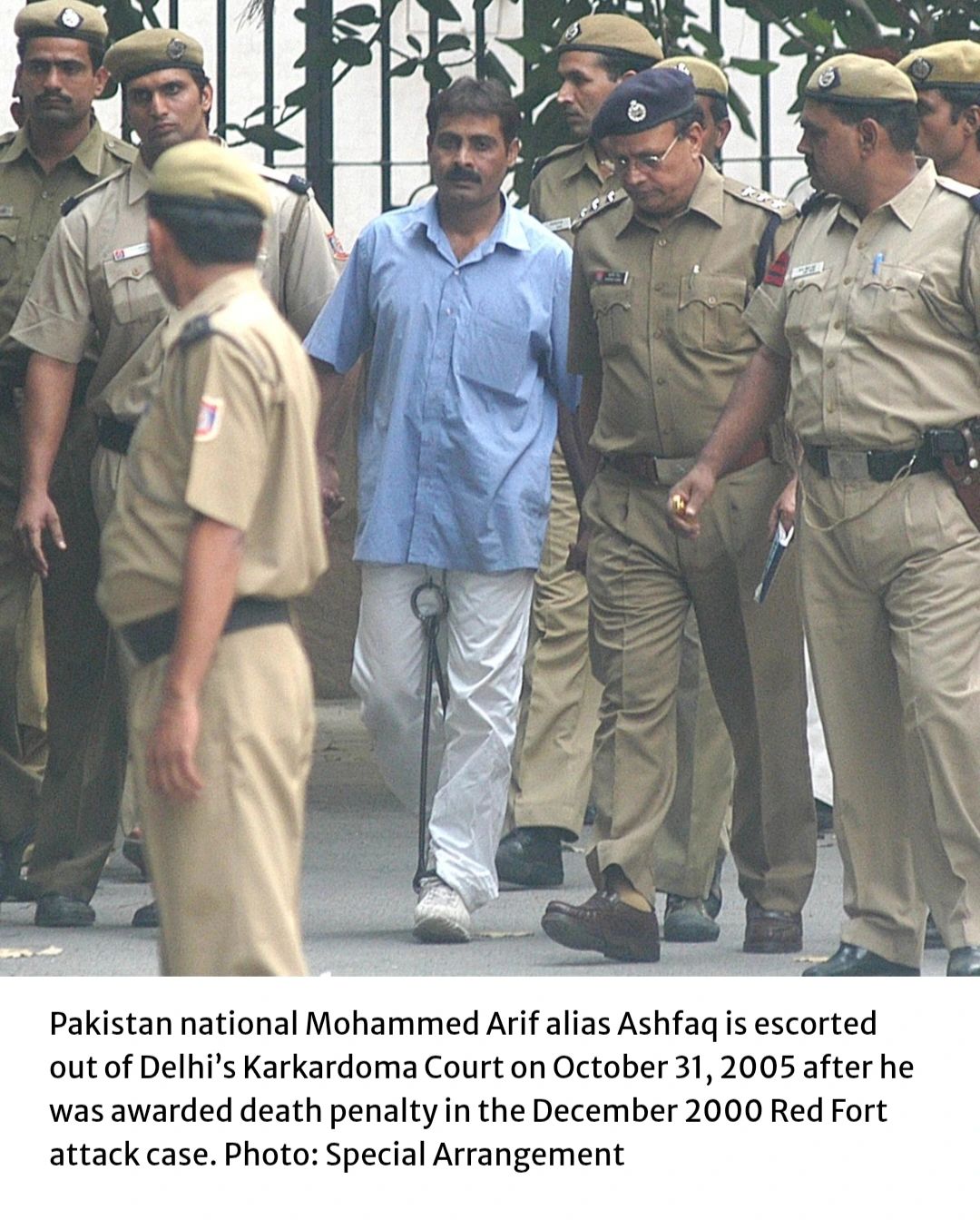
Now observe the painstakingly slow journey toward justice:
- 2005: Trial court awards death sentence — 5 years later.
- 2007: Delhi High Court upholds the verdict — 2 years later.
- 2011: Supreme Court upholds the High Court decision — 4 more years.
- 2012: Supreme Court rejects review petition.
- 2014: Supreme Court rejects curative petition, but later mandates a 3-judge bench for all capital punishments — Arif qualifies again for review!
- 2022: Supreme Court finally dismisses the second review petition.
- 2024: President of India rejects his mercy plea.
Yet, Mohammad Arif remains alive, costing taxpayers money 24 years after the attack. The case is still not concluded. And this is not an exception — it is the norm.
🇮🇳 Why is India’s Judicial System So Slow?
India’s justice system operates under a colonial skeleton meant for a smaller population and fewer disputes. It hasn’t scaled to match modern demands. Key issues include:
- Severe Judge Shortage:
- India has only 21 judges per million people.
- Compare this to the UK (51 per million) or USA (107 per million).
- Massive Case Backlogs:
- Over 5 crore pending cases as of 2024.
- Supreme Court: ~70,000+
- High Courts: ~60 lakh+
- Lower courts: ~4 crore+
- Complex Procedural Laws:
- The Code of Civil Procedure and Code of Criminal Procedure are long, archaic, and allow unlimited adjournments and appeals.
- Overburdened Judiciary:
- Judges handle multiple roles — administration, tribunals, public interest litigations (PILs), and regular hearings.
- Lack of Accountability or Deadlines:
- There is no constitutional time limit to deliver verdicts — even for national security cases like terrorism or scams.
- Vacation Culture:
- Indian courts still follow colonial-era vacations: summer, winter, Diwali — causing months of no hearings.
⚖️ Global Comparison: How Other Nations Deliver Quicker Justice
| Country | Average Time for Case Completion | Key Features |
|---|---|---|
| USA | 2–3 years (criminal cases) | Plea bargains, e-filing, time-bound trials |
| UK | ~1 year (major crimes) | Efficient jury system, real-time court management |
| Germany | < 6 months (most cases) | Strict deadlines, fast-track courts, judge accountability |
| Singapore | 3–6 months | Technology integration, zero tolerance delays, high judge-to-population ratio |
India lacks all of these features — from real-time digital tracking to judicial accountability.
🕯️ Not Just Terror: Other Delayed Justice Cases
- 1984 Anti-Sikh Riots
➤ Over 3,000 Sikhs were killed in Delhi.
➤ Convictions started coming 30 years later. - Kanishka Bombing (1985)
➤ 329 people died in an Air India flight explosion by Khalistani terrorists.
➤ Verdict was reached 22 years later in Canada (faster than India). - Jessica Lal Murder Case (1999)
➤ Conviction came in 2006 after public outcry and media trial. - Kashmiri Pandit Exodus (1989–90)
➤ To date, no judicial inquiry, no convictions, no resolution. - 2008 Malegaon Blast & 2007 Samjhauta Express Case
➤ Ongoing for over 15 years. Trials are politicized and remain inconclusive.
🤔 What Can Be Done? Time for Judicial Reforms
- Time-Bound Judgements: ➤ Set maximum time frames for each court level — 6 months to 2 years.
- Judicial Accountability Bill: ➤ Make judges answerable to a public authority for delays and misuse.
- Fast-Track Courts for National Security & Rape Cases: ➤ Implement like war rooms, with closed timelines and daily hearings.
- Digitization and E-Courts: ➤ All filings, summons, and evidence should go digital with open tracking.
- Increase Judge Strength: ➤ At least double the number of judges in 5 years.
- Revamp Collegium System: ➤ Make judge appointments transparent and diverse — include civil society.
🇮🇳 The Final Verdict
How long will we let our system humiliate the sacrifices of our soldiers, insult victims of riots, and embolden criminals?
While we celebrate democracy, justice has become a luxury. In India, even a terrorist who killed army jawans gets more legal attention than a farmer wronged in land disputes, or a rape victim waiting for closure.
We need to amend our Constitution, not to limit Presidents or Governors alone — but to limit the courts from delaying justice endlessly.
Let us not just say “Satyameva Jayate” (Truth alone triumphs), but also act in ways that ensure it does — within a human lifetime.
Comments

Hi, I’m Nishanth Muraleedharan (also known as Nishani)—an IT engineer turned internet entrepreneur with 25+ years in the textile industry. As the Founder & CEO of "DMZ International Imports & Exports" and President & Chairperson of the "Save Handloom Foundation", I’m committed to reviving India’s handloom heritage by empowering artisans through sustainable practices and advanced technologies like Blockchain, AI, AR & VR. I write what I love to read—thought-provoking, purposeful, and rooted in impact. nishani.in is not just a blog — it's a mark, a sign, a symbol, an impression of the naked truth. Like what you read? Buy me a chai and keep the ideas brewing. ☕💭 For advertising on any of our platforms, WhatsApp me on : +91-91-0950-0950 or email me @ support@dmzinternational.com