
Real Estate Sales Are Falling in India’s Richest Cities.
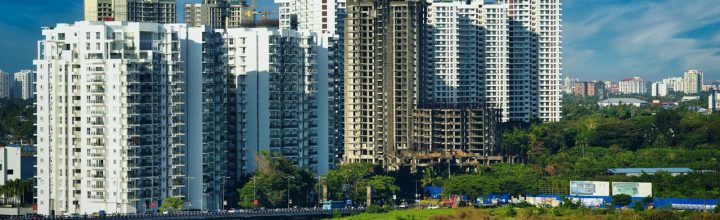
Housing sales in India’s biggest cities fell 6 percent in the April-June quarter of 2026. Anarock’s numbers show about 90,700 homes sold, down from 96,285 a year earlier. Compare this to the quarter before, and the drop is sharper: 11 percent. Proptiger’s own count, across eight cities, tells the same story. Fewer people are buying homes in the country’s richest, most developed cities.
At the same time, builders launched more homes than ever. New launches rose 7 percent to about 1.06 lakh units. So developers built more, and buyers bought less. Unsold housing stock has now crossed 616,000 units across the top seven cities. That gap between supply and demand is the real story hiding under the headline number.
Why is this happening? Anarock gave two reasons, and both matter.
The first is the West Asia conflict. It has disrupted supply chains and made buyers nervous about the broader economy. This is the kind of worry that comes and goes with global events.
The second reason is more permanent, and this is where your question about AI comes in. Anarock openly said that uncertainty in the IT and ITeS sector, caused by AI-related disruption, has pushed buyers to the sidelines. This is not speculation. It is the property market’s own explanation for its own slowdown. For years, a home loan in Bangalore, Pune, or Hyderabad was a bet on a stable IT salary rising every year. That bet is now in question. When a software engineer is not sure if his role will exist in three years, he does not sign a 20-year loan for a flat. This single shift, more than interest rates or construction costs, may be the biggest change in Indian real estate psychology in a decade.
Now look at Bangalore itself. A 2BHK apartment in most of the city, in areas like Electronic City or Yelahanka, still costs between ₹45 lakh and ₹90 lakh. But in premium micro-markets like Sarjapur Road, Bannerghatta Road, and Hebbal, top builders such as Godrej, Prestige, and Sobha are pricing new 2BHK launches between ₹1.3 crore and ₹2 crore or higher. This is not a rumour. It is the listed launch price on their own project pages. Bangalore and MMR together made up 48 percent of all homes sold in the top seven cities this quarter. Bangalore was one of only three cities, along with Hyderabad and Kolkata, that actually grew in sales. Pune fell the hardest, down 15 percent. So even inside the “slowdown” story, Bangalore is doing better than most metros. But it is doing better at a price that is quietly pushing out a large part of its own workforce.
This is the real tension. Prices across the top seven cities rose 7 percent on average even as sales fell. Delhi-NCR prices rose 13 percent. Builders are not cutting prices to move unsold stock. They are holding the line, because construction costs, land costs, and years of price memory do not let them retreat easily. A buyer today is paying more for a smaller flat, with less certainty about his own job, in a city where traffic and water supply are already stretched.
This is exactly why tier 2 and tier 3 cities are pulling ahead in a different way. Colliers and Knight Frank data show tier 2 cities growing absorption by close to 20 percent year on year, even as metros slow down. Cities like Indore, Coimbatore, Lucknow, Jaipur, and Kochi are seeing land prices expected to rise 25 to 100 percent over the next two to four years, driven by highways, industrial corridors, and the government’s new City Economic Region plan with ₹5,000 crore allocated per region. Rental yields in these cities run from 5 to 6.5 percent, almost double what a metro property gives you. And most importantly, tier 3 cities now account for 40 percent of new formal job creation in the country, with tier 2 cities close behind at 29 percent. Jobs are following the cost of living down, not up.
So is it wise to invest in real estate right now? The honest answer depends on what you are buying and why. A ₹1.5 crore metro flat bought purely for price appreciation, funded by a loan tied to an IT job that AI is actively reshaping, is a fragile bet dressed up as a safe one. A property in a tier 2 city, bought early, in a location tied to a real industrial or infrastructure corridor, carries more uncertainty about timing but a much better entry price and yield.
The old rule in Indian real estate was simple: buy in the metro, because that is where the jobs are. That rule is breaking in real time. The jobs are moving. The only question left is whether your money moves with them, or waits in a city that is pricing out the very people who built it.
Comments

Hi, I’m Nishanth Muraleedharan (also known as Nishani)—an IT engineer turned internet entrepreneur with 25+ years in the textile industry. As the Founder & CEO of "DMZ International Imports & Exports" and President & Chairperson of the "Save Handloom Foundation", I’m committed to reviving India’s handloom heritage by empowering artisans through sustainable practices and advanced technologies like Blockchain, AI, AR & VR. I write what I love to read—thought-provoking, purposeful, and rooted in impact. nishani.in is not just a blog — it's a mark, a sign, a symbol, an impression of the naked truth. Like what you read? Buy me a chai and keep the ideas brewing. ☕💭 For advertising on any of our platforms, WhatsApp me on : +91-91-0950-0950 or email me @ support@dmzinternational.com