
Same Skill, Two Choices: Is Your Data Already on the Dark Web?

An ethical hacker and a criminal hacker often know the same tools. The difference is permission. One has written approval, reports every weakness found, and helps fix it. The other takes what he finds and sells it. Your data is the product in between.
Chances are some of it is already out there. Here is how it happens, and what you can do.
Surface Web, Deep Web, Dark Web
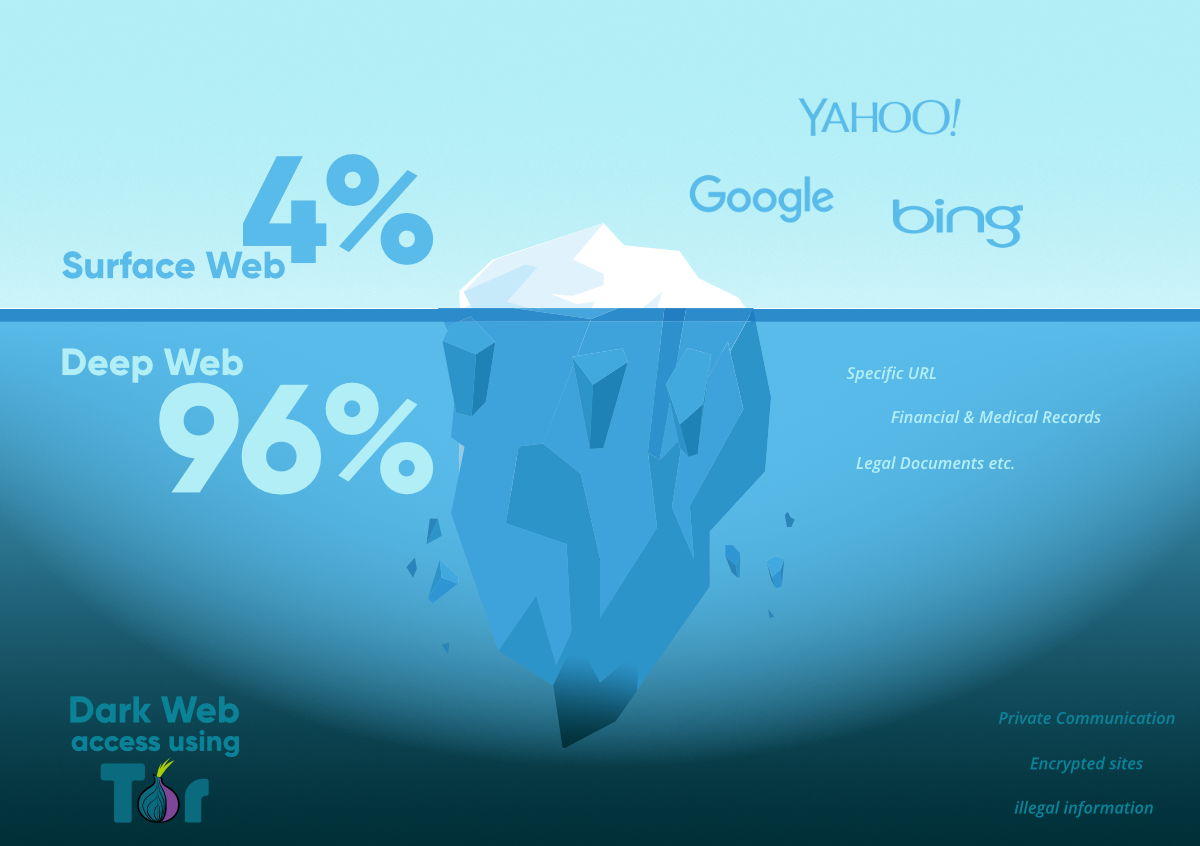
The surface web is what search engines show you: news sites, blogs, shops.
The deep web is everything search engines cannot index. Your email inbox, your bank account, your office portal. It is much larger than the surface web, and almost all of it is harmless and private.
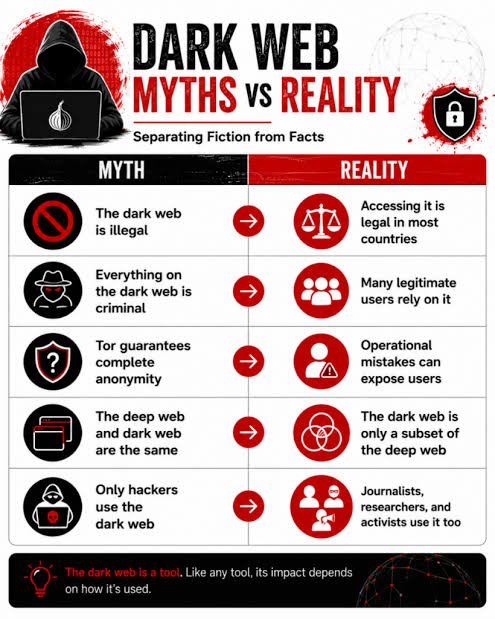
The dark web is a small part of the deep web that needs special software, such as the Tor browser. It hides who runs a site and who visits it. That privacy helps journalists and people living under censorship. It also helps criminals, who run markets there selling stolen data.
How Data Breaches Happen
Most breaches are not movie-style attacks. A company leaves a server unprotected. Software is not updated. An employee clicks a fake email. A stolen password is reused on another system.
A breach can expose your email, password, phone number, address, date of birth, ID details and sometimes payment information. Criminals copy this data, sell it in bulk, and buyers sell it again. A leak from one small website can end up inside a large package of records circulating among thousands of criminals.
How to Check Your Email
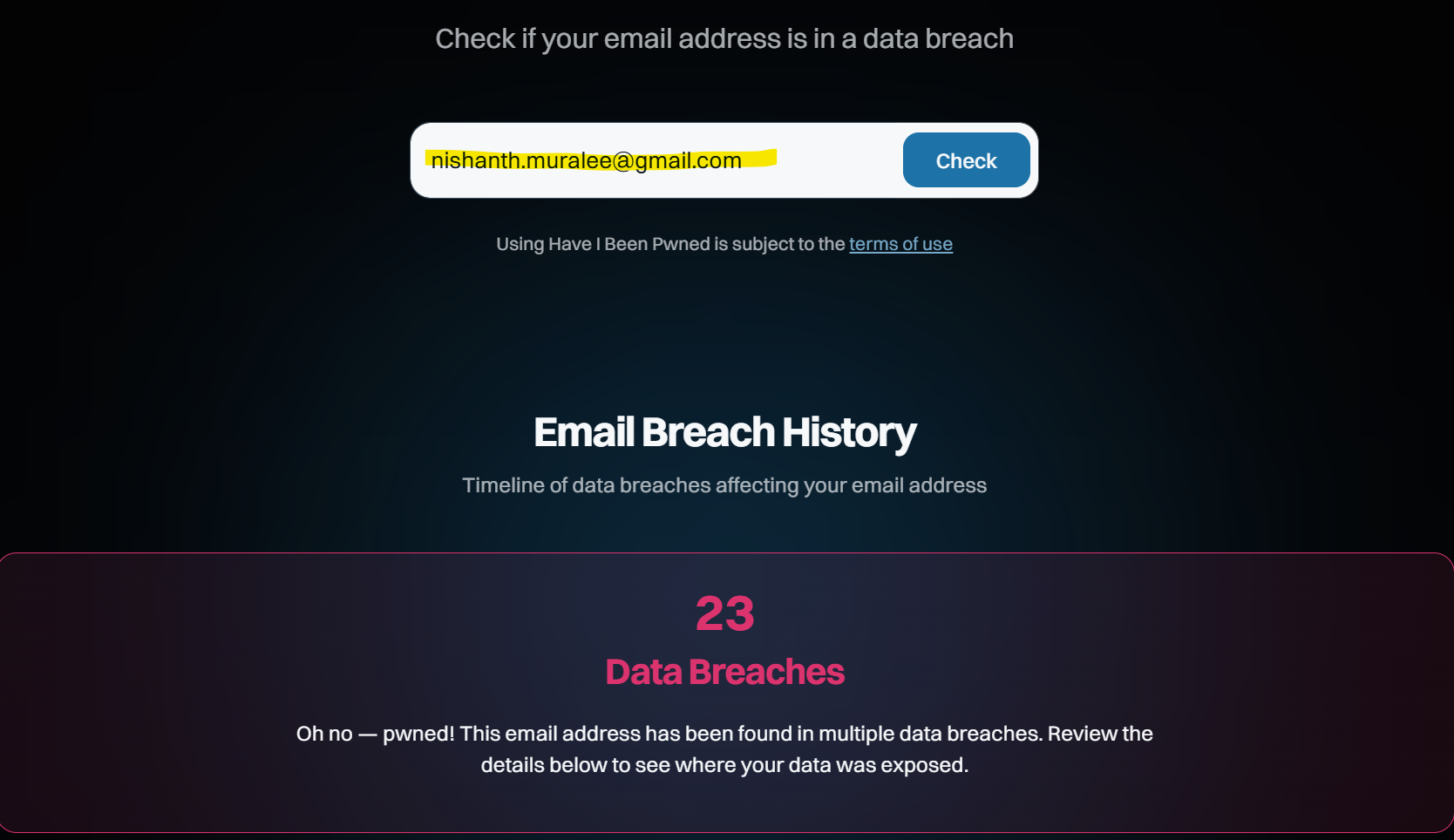
The simplest tool is Have I Been Pwned, a free service run by security researcher Troy Hunt. It collects data from known public breaches. You enter your email, and it tells you which breaches included that address and what type of data was exposed.
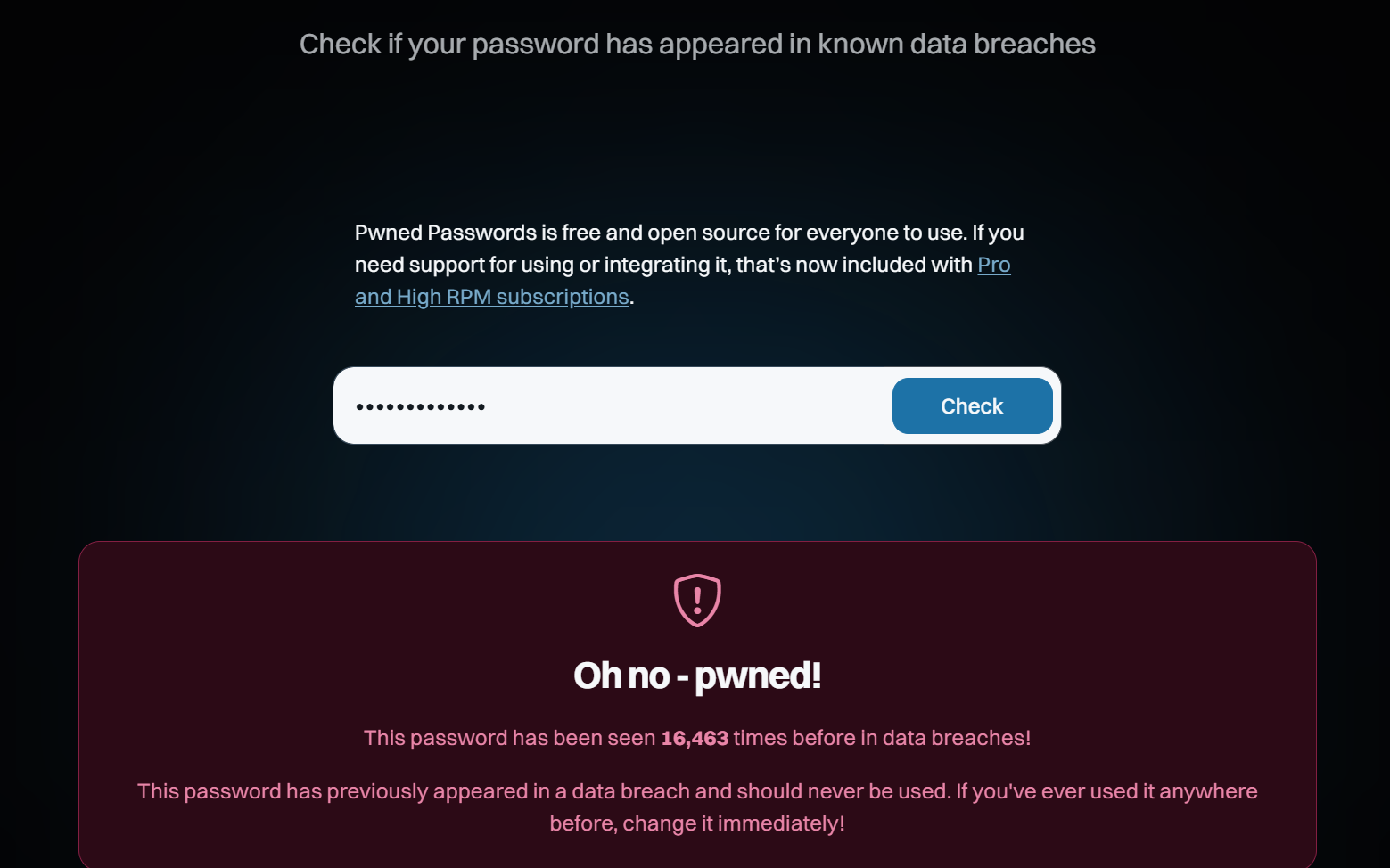
Its password checker lets you test a password without sending the full password to the service. If a password appears there, stop using it everywhere.
Note the limits. A clean result does not mean you are safe. It only means your email is not in the breaches the service knows about. Paid monitoring services search more widely, and some can check phone numbers too. Be careful here: fake “leak checker” websites exist to steal your details. Never type a password into a site you do not trust.
How Criminals Reach You Directly
Not all data comes from big breaches. Criminals also go after you.
Phishing. A message looks like it comes from your bank, delivery company or employer. The link opens a copy of the real login page. When you type your password, the criminal receives it.
OTP scams. In India this is common. A caller claims to be from your bank, a courier company or a KYC team. He says your account will be blocked or a parcel is held. He creates fear and hurry, then asks for the OTP “to verify.” That OTP is the key to your money. No real bank or agency needs it from you.
Cracked apps and APKs. Free copies of paid software and unofficial APK files often carry hidden programs called information stealers. They copy saved passwords and browser sessions from your device and send them to the criminal.
Why Stolen Sessions Matter
When you log in, the website gives your browser a small session token, stored as a cookie. It tells the site you are already verified. If a stealer takes this token, the criminal may enter your account without knowing your password, and in some cases without a second-step code. This is why a clean device matters as much as a strong password.
How It All Reaches the Dark Web
The path is simple. Data is stolen through a breach, a phishing page or a stealer program. It is sorted and packed into lists. The lists are sold on dark-web markets and forums. Buyers then use them for fraud, account takeover and more scam calls. The call you received yesterday, using your correct name, may have started this way.
How to Protect Yourself
- Use a different password for every important account. Reuse is the main reason one breach becomes many.
- Use a password manager so you do not have to remember them.
- Turn on two-factor authentication, preferably with an authenticator app.
- Never share an OTP, PIN or password with anyone, for any reason.
- Install apps only from official stores. Avoid cracked software completely.
- Do not click links in unexpected messages. Open the official app or site yourself.
- Keep your phone and computer updated.
If Your Data Has Leaked
Change the password at once, and change it anywhere else you used it. Enable two-factor authentication. Check your bank and email for unknown activity. If money is lost, call the national cybercrime helpline 1930 immediately and file a report on the national cybercrime portal. Speed matters. Early reports give a better chance of stopping the transfer.
Final Thought
A criminal hacker needs only one careless moment. An ethical hacker uses that same knowledge to close the door before anyone enters. You can think like the second one: ask where your weak points are, and fix them first.
You cannot control every breach. You can control what the criminal finds once he gets in.
Cybersecurity Reminder: Never share your password, OTP, banking information or other sensitive details with anyone. Personal information shown in any demonstration should be blurred or used only with consent.
Comments

Hi, I’m Nishanth Muraleedharan (also known as Nishani)—an IT engineer turned internet entrepreneur with 25+ years in the textile industry. As the Founder & CEO of "DMZ International Imports & Exports" and President & Chairperson of the "Save Handloom Foundation", I’m committed to reviving India’s handloom heritage by empowering artisans through sustainable practices and advanced technologies like Blockchain, AI, AR & VR. I write what I love to read—thought-provoking, purposeful, and rooted in impact. nishani.in is not just a blog — it's a mark, a sign, a symbol, an impression of the naked truth. Like what you read? Buy me a chai and keep the ideas brewing. ☕💭 For advertising on any of our platforms, WhatsApp me on : +91-91-0950-0950 or email me @ support@dmzinternational.com