
The 80/20 Principle for Founders—A Simple Guide with Real-Life Examples
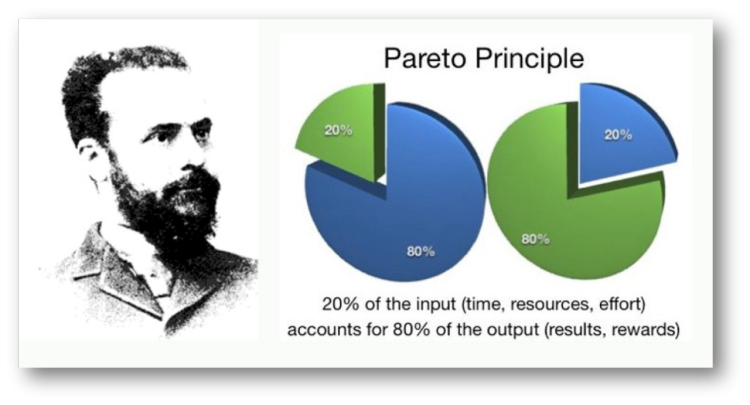
Starting a business is like planting a tree—you need to water it regularly and give it sunlight, but knowing where to focus your energy determines how fast it grows. This is where the 80/20 Principle comes in. Popularized by Italian economist Vilfredo Pareto, the principle states that 80% of results often come from just 20% of efforts.
For entrepreneurs and founders, this concept isn’t just theoretical; it’s a practical tool to navigate the chaotic early stages of a startup. By understanding which actions bring the most value, founders can work smarter, not harder, and achieve growth more efficiently.
This blog will explain how the 80/20 Principle applies to key areas like traction, growth, revenue, and more, using relatable examples and real-life success stories to help you master this golden rule.
The 80/20 Principle, also known as the Pareto Principle, says 80% of outcomes come from 20% of efforts. For founders, this concept can be a game-changer when applied smartly. Let’s break it down into simple terms with examples you can relate to.
1. Traction: 80% Distribution, 20% Product
Instead of perfecting your product endlessly, focus on reaching more people. Take Patanjali in India—they started with basic Ayurvedic products but scaled through aggressive distribution before refining their range.
2. Growth: 80% Retention, 20% Acquisition
Acquiring new customers costs more than keeping existing ones. Think about Netflix: it continuously invests in user retention through personalized recommendations rather than just chasing new subscribers.
3. Revenue: 80% Existing Customers, 20% New Leads
Existing customers are the backbone of revenue. For example, Apple makes more money from upgrades and accessories than new customer acquisitions.
4. Pricing Experiments: 80% Positioning Tweaks, 20% Price Changes
How you present your product matters more than price cuts. Look at Tata Tea’s campaigns—it connects with patriotism (“Jaago Re”) to add value without lowering prices.
5. Brand Building: 80% Customer Experience, 20% Logo Design
Great brands like Amul are loved for their quality and service, not just their logo. Focus on delighting your customers, and the logo will follow.
6. Sales: 80% Listening, 20% Pitching
Understand what your customer truly needs. Flipkart’s “Cash on Delivery” was born from listening to customers worried about online payments.
7. Community Building: 80% Empowering Users, 20% Company-Led Initiatives
Empowered users are your best marketers. Zomato thrives on user reviews and photos rather than just top-down promotions.
8. Product: 80% Core Features, 20% Nice-to-Haves
Focus on essentials first. For instance, Paytm succeeded by making payments simple, then added services like ticket booking and insurance.
9. Time: 80% Executing, 20% Strategizing
Planning without action leads nowhere. BYJU’S scaled quickly by focusing on execution, using content videos to gain traction while others were still strategizing. However, this aggressive scaling proved unsustainable in the long run.
10. Insights: 80% User Feedback, 20% User Behavior
Listening to feedback reveals hidden needs. Ola introduced auto-rickshaw bookings after noticing user feedback on affordability.
11. Pricing: 80% Value Perception, 20% Costs
Consumers buy based on perceived value. Think of Fabindia—people pay premium prices for authenticity and heritage.
12. Marketing: 80% Word-of-Mouth, 20% Paid Ads
Organic growth is sustainable. Lenskart leverages customer referrals to grow its base rather than relying solely on ads.
13. User Onboarding: 80% Aha Moments, 20% Tutorials
Creating delightful moments hooks users. Swiggy’s fast delivery and live tracking keep customers coming back more than detailed app tutorials.
14. UI/UX: 80% Intuitive Flow, 20% Aesthetics
Make navigation simple. Google’s homepage is the best example—clean, intuitive, and effective.
15. Viral Growth: 80% Reducing Friction, 20% Incentives
Easier adoption wins. WhatsApp grew by simplifying messaging, not by offering heavy discounts.
16. Roadmap: 80% Market Pull, 20% Vision Push
Cater to demand. Reliance Jio disrupted the market by addressing India’s need for affordable data.
17. Team Management: 80% Context, 20% Orders
Provide clear direction. Infosys founders empowered employees with a vision, making them stakeholders in its success.
18. Customer Interviews: 80% Observing, 20% Asking
Actions speak louder than words. Amazon India observed shopping behaviors and introduced cash-on-delivery for convenience.
19. Market Positioning: 80% Niche, 20% Broad Appeal
Specialization beats generalization. Nykaa became a beauty giant by focusing solely on cosmetics rather than being an all-in-one platform.
20. Founder Time: 80% Working on the Business, 20% In the Business
Focus on growth-driving activities. Dhirubhai Ambani spent time creating partnerships rather than managing day-to-day operations.
Key Takeaway:
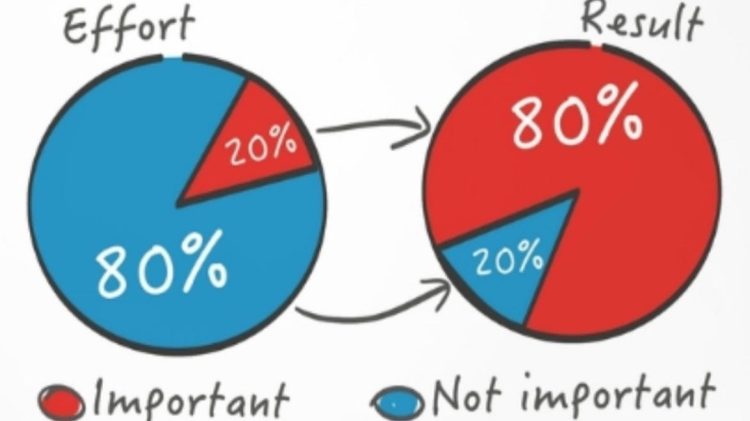
Success lies in focusing on what truly matters. The 80/20 principle is a guide to prioritize efforts effectively. Apply it wisely, and you’ll see results faster than you imagine.
The 80/20 Principle isn’t just a rule—it’s a mindset shift. It teaches founders to stop trying to do everything and instead focus on the few things that truly matter. Whether it’s retaining customers, perfecting core features, or simplifying onboarding, prioritizing the high-impact 20% can transform your business journey. Remember, companies like Amazon, Paytm, and Nykaa didn’t succeed by doing everything right—they succeeded by doing the right things well.

As you take this principle to heart, start by evaluating your current efforts. Where are you investing time and resources? Are they driving results? Adjust your focus, and you’ll not only save precious time but also supercharge your growth. Entrepreneurship is a marathon, not a sprint, and with the 80/20 Principle, you’ll learn to run smarter, faster, and farther. Save this blog as a guiding star for your journey—and remember, success is about working on what matters most.
Pro Tip: Save this blog as a checklist for your journey as a founder!
Comments

Hi, I’m Nishanth Muraleedharan (also known as Nishani)—an IT engineer turned internet entrepreneur with 25+ years in the textile industry. As the Founder & CEO of "DMZ International Imports & Exports" and President & Chairperson of the "Save Handloom Foundation", I’m committed to reviving India’s handloom heritage by empowering artisans through sustainable practices and advanced technologies like Blockchain, AI, AR & VR. I write what I love to read—thought-provoking, purposeful, and rooted in impact. nishani.in is not just a blog — it's a mark, a sign, a symbol, an impression of the naked truth. Like what you read? Buy me a chai and keep the ideas brewing. ☕💭 For advertising on any of our platforms, WhatsApp me on : +91-91-0950-0950 or email me @ support@dmzinternational.com