
The Kerala Kingmaker Drama: How VD Satheeshan Outmaneuvered Everyone — And Why Kerala Finally Got the CM It Deserves
There is a particular kind of political theatre that plays out every time a state election verdict turns in favour of the Congress. The votes are counted. The numbers are clear. And yet, for days — sometimes weeks — the real battle begins not in the streets but in closed rooms in Delhi, where the High Command sits like a medieval court deciding who gets the crown.
Kerala 2026 was no different. Except this time, it was different in every way that matters.
The Phones That Rang Before the Ink Dried
Within hours of the UDF’s majority becoming clear, the phones started. Not congratulations — strategy calls. Mallikarjun Kharge, the AICC President, was the first to begin what would become ten days of relentless consultations. Sonia Gandhi, now a Rajya Sabha member but still the gravitational centre of the Congress universe, weighed in. Rahul Gandhi, increasingly the operational brain of the party’s political calculus, was deeply involved.
What was being discussed? The same question that every Congress victory in a southern state eventually produces: Who gets the chair?
This time, however, the question was more politically explosive than usual — because unlike in Karnataka or Telangana, Kerala threw up not one but three credible claimants with genuine support bases, deep roots, and ambitions that couldn’t simply be managed with a cabinet berth and a polite smile.
The High Command had a problem. A serious one.
The Three Men and the Delhi Calculation
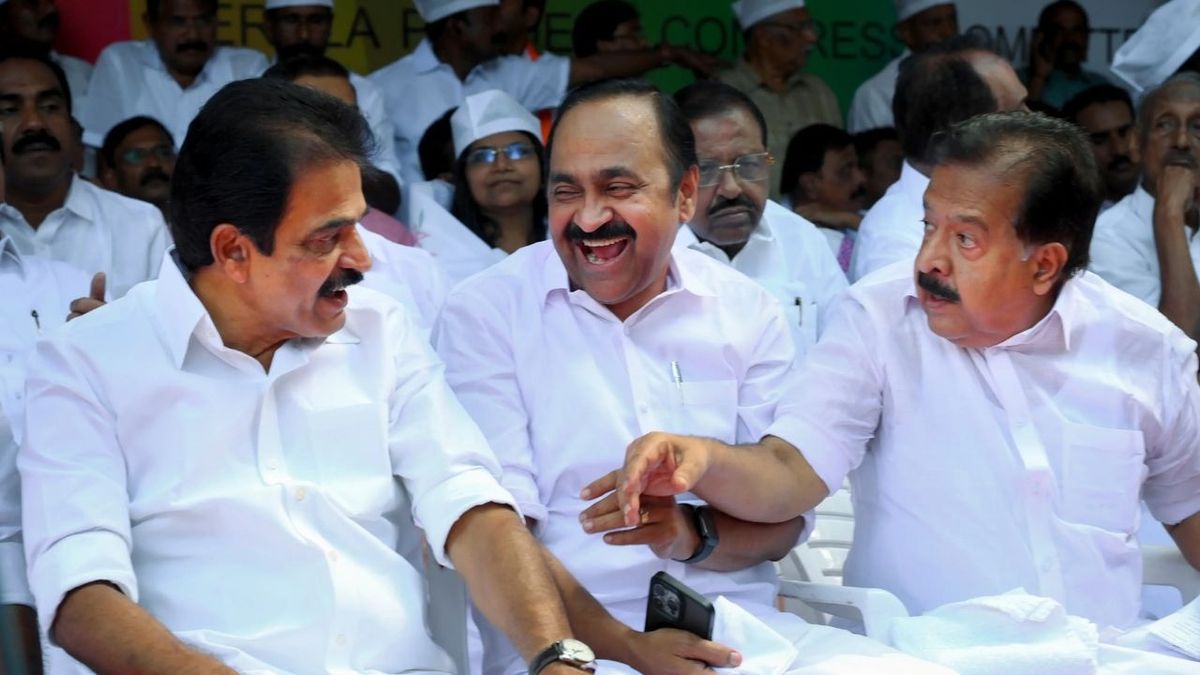
V.D. Satheeshan, the Leader of Opposition who had turned the UDF’s opposition years into a masterclass in aggressive, disciplined politics. Sharp, combative, ideologically grounded, and — crucially — with a clear moral authority over the party cadre.
K.C. Venugopal, the AICC General Secretary who had spent years building his own architecture of loyalty inside Kerala Congress — quietly, methodically, through the one lever that matters most in Indian politics: candidate selection. More on this shortly.
Ramesh Chennithala, the veteran, the kingmaker of past cycles, the man who always seems to be in the room even when he’s officially out of the picture. Seasoned, connected, and never quite willing to accept that his time has passed.
The High Command’s first task was containment. Chennithala was engaged, acknowledged, and — with characteristic Congress diplomatic finesse — made to understand that his stature was respected even as the direction was being decided elsewhere. Sources indicate he was spoken to directly, the conversation described as “warm but clear.” The message: your contribution to UDF consolidation is invaluable. The CM seat, however, is a different conversation.
The KC Venugopal Problem
This is where the story gets genuinely interesting — and where the full weight of Satheeshan’s political intelligence becomes visible.
KC Venugopal, operating from his perch as AICC General Secretary with responsibility for Kerala, had done something methodical over the past two election cycles. He had ensured that a significant number of winning MLA candidates in Kerala were his people — candidates whose selection he had championed, whose nominations he had cleared, whose victories created a debt of loyalty not to the state leadership but to him personally.
The design, if you read it correctly, was elegant in its cynicism: if the UDF won, a substantial bloc of newly elected MLAs would organically push for KC as Chief Minister — not because he was the best candidate, but because he had made their political careers. The MLA would back the patron. That’s how it works.
This is not unusual in Indian politics. But it is rarely this visible.
What Satheeshan did — and this is what appears to have turned the tide in Delhi — was document it, articulate it, and place it before Rahul Gandhi, Kharge, and Sonia Gandhi with enough clarity that the High Command could see the structural problem for what it was: not a leadership contest, but an attempted institutional capture of a state government.
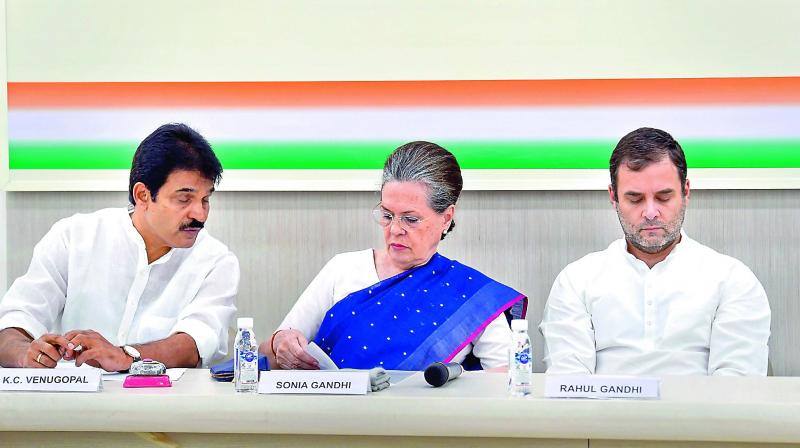
The argument Satheeshan made, as it appears to have landed in Delhi, was essentially this: if you reward the manipulation of candidate selection with the Chief Minister’s post, you are institutionalising a model that will hollow out every state unit the Congress runs. The MLAs should owe their loyalty to the party and the people of Kerala — not to the man who gave them their ticket.
It was a clean, principled argument. And it was exactly the kind of argument that resonates with Rahul Gandhi’s stated project of internal Congress reform.
By all accounts, it hit its mark.
The Muslim League Consultation
The UDF is not a Congress monolith. The Indian Union Muslim League, the party’s most significant and consistent ally in Kerala, is a serious political force with its own clear views on governance, CM selection, and the direction of the UDF alliance.
The High Command reached out to the League leadership as well — because any CM who takes office in Kerala without the active goodwill of the IUML is walking on political glass from day one.
The League’s concerns were heard. Their preferences — which have always centred on governance stability, minority affairs, economic development of their core constituencies, and maintaining the UDF’s secular credibility — were factored in. The consultations, by all accounts, went well. The League signalled comfort with the Satheeshan option.
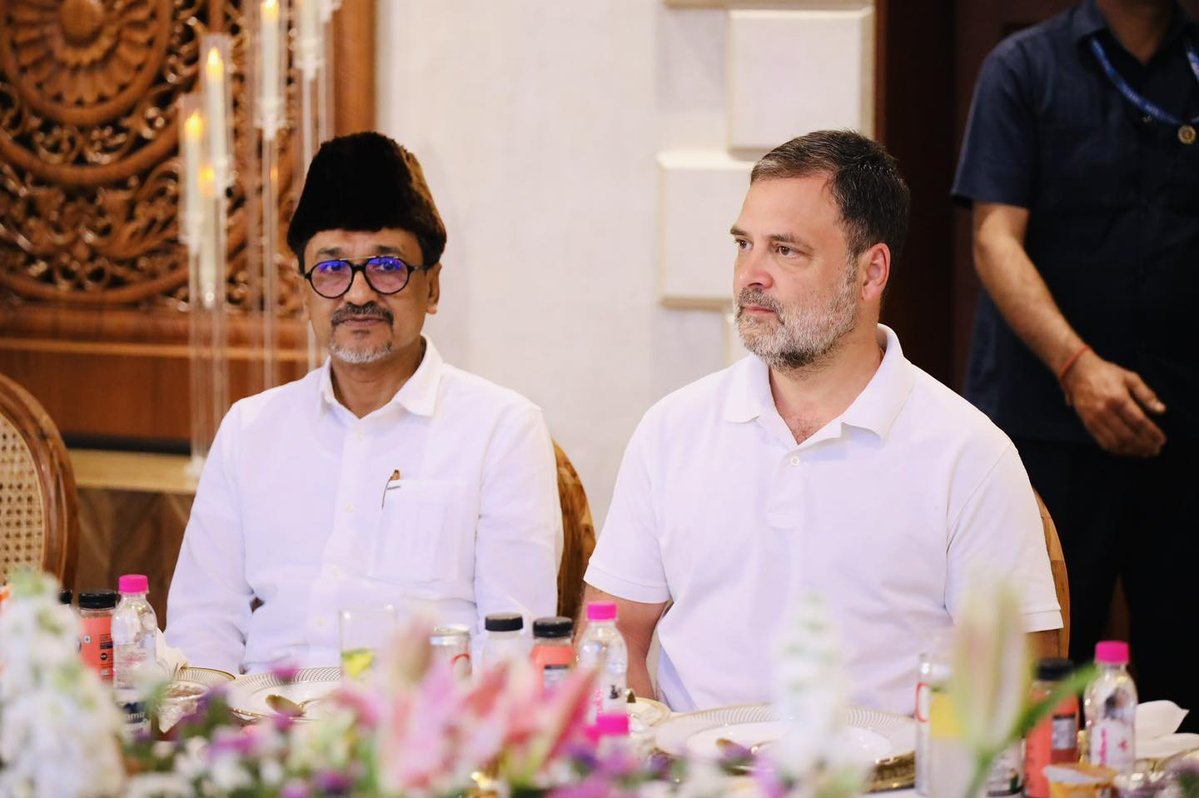
This matters. A CM who walks into office with the blessing of both the High Command and the IUML has a governing mandate that extends well beyond his own party. That is a strong foundation.
Why Kerala Wants VD
At the popular level — on the streets, in the tea shops, in the political conversations of ordinary Keralites — there is a clarity about Satheeshan that is unusual. He is seen as clean, which in Kerala’s political context is not a small thing. He is seen as sharp, which matters in a state that has among the highest political literacy in the country. And he is seen as hungry to build, not merely to govern.
Kerala has been at a curious inflection point for years. High human development indices. High literacy. High remittance flows. But a stagnant economic structure, a service sector that punches below its weight, and an infrastructure that consistently fails to convert Kerala’s natural advantages into competitive economic power.
VD Satheeshan, to his credit, has not been vague about what he wants to do. He has spoken in specifics. Let us examine what that vision looks like.
The Satheeshan Blueprint: What He Plans to Do With Kerala
1. Water Transport as Economic Infrastructure — The Idea That Could Change Everything
This is perhaps the most transformative idea in Satheeshan’s governance vision, and it deserves serious examination.
Kerala has approximately 1,900 kilometres of navigable waterways. It has a 590-kilometre coastline. It sits on the Arabian Sea, one of the world’s busiest shipping corridors. And yet, for decades, Kerala has treated its water as a tourist attraction rather than as economic infrastructure.
Satheeshan’s proposal is to flip this completely.
The idea is to develop inland waterway corridors as genuine supply chain arteries — moving freight, not just tourists. Goods that currently travel by road through Kerala’s chronically congested highways — fish, produce, construction materials, industrial inputs — could move by water at a fraction of the cost and with dramatically less wear on road infrastructure.
The economic logic is airtight:
- Road freight costs in Kerala are among the highest in India due to congestion, terrain, and the relative short distances between nodes that make tolls disproportionately expensive.
- Water transport is 3-5x more fuel efficient per tonne-kilometre than road transport, which is a significant operational cost advantage.
- Reduced road congestion would itself deliver a measurable GDP boost — traffic congestion in Kochi alone is estimated to cost hundreds of crores annually in lost productivity.
- Coastal shipping between Kerala’s major ports — Kochi, Kollam, Kozhikode, Kannur — could integrate the state’s economy vertically in ways that road connectivity has failed to achieve.
The vision extends to RoRo (Roll-on/Roll-off) ferry services that allow vehicles carrying goods to board vessels and move between coastal nodes, effectively creating a water highway system parallel to NH 66.
This is not fantasy. Kerala’s neighbours in Southeast Asia — Thailand, Vietnam, the Philippines — have built significant portions of their logistics networks around exactly this model. Kerala has the geography. What it has historically lacked is the political will and the execution architecture.
2. Tourism Elevation Through Water Infrastructure
The same infrastructure that serves the supply chain serves tourism — but at a premium tier.
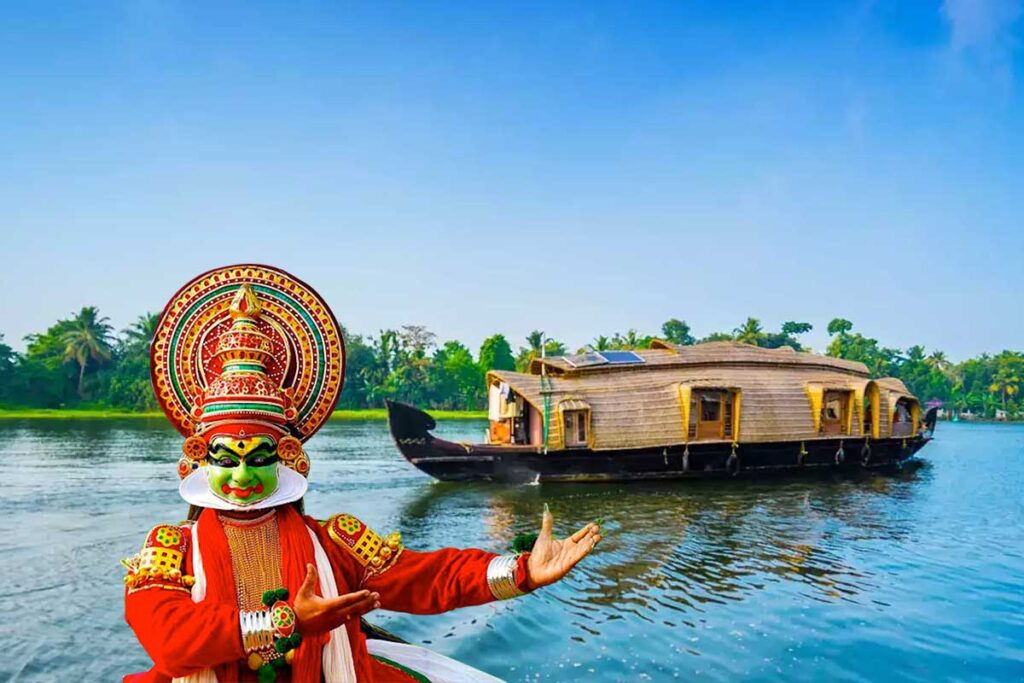
Satheeshan’s vision integrates heritage water tourism circuits into the logistics network. The idea is to build world-class houseboat and water tourism infrastructure on top of functional waterway corridors — so the same backwater channels that move agricultural produce by day become curated tourist experiences by evening.
This dual-use model is smart urban economics. It means the infrastructure cost is shared between commercial logistics and tourism revenue, making the investment case significantly stronger for private sector participation.
Specific plans include:
- Luxury floating tourism corridors connecting Alleppey, Kumarakom, Kollam, and Vembanad Lake into a seamless premium circuit
- Water-connected heritage tourism linking Kuttanad’s paddy fields, Kochi’s Fort area, and the Periyar river basin into a coherent experience economy
- Marine tourism expansion along the Lakshadweep sea route, positioning Kerala as the gateway to India’s only coral atoll destination
- Night tourism circuits on illuminated backwater routes as high-value experiential products for domestic and international tourists
Kerala currently earns approximately ₹40,000 crore annually from tourism. Satheeshan’s team believes this number can be doubled within five years with the right infrastructure investment and international positioning.
3. IT and Knowledge Economy — Moving Beyond Technopark
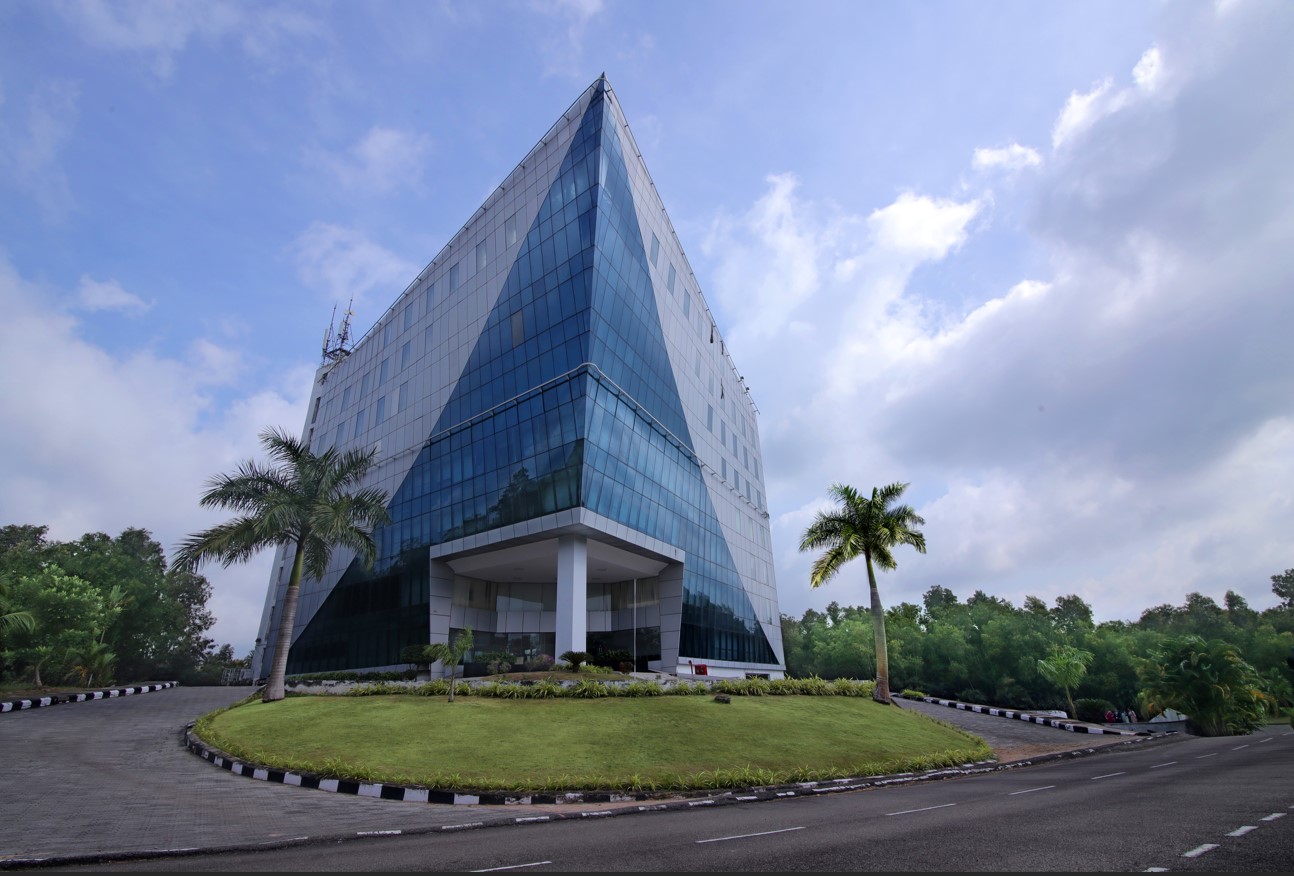
Kerala’s IT sector has underperformed its human capital for two decades. The reasons are structural: power infrastructure, connectivity, the absence of a startup ecosystem comparable to Bengaluru or Hyderabad, and the persistent brain drain of Kerala’s best technical talent to the Gulf and to other Indian metros.
The Satheeshan plan targets:
- Expansion of IT infrastructure to tier-2 cities — Thrissur, Kozhikode, Kannur — rather than concentrating everything in Kochi. This de-risks the ecosystem and creates distributed employment.
- Kerala Diaspora Investment Framework — a structured programme to channel NRK (Non-Resident Keralite) capital into Kerala’s startup and SME ecosystem, with clear governance, tax clarity, and return mechanisms.
- University-Industry integration — Kerala has world-class educational institutions whose research output currently has almost no commercial application within the state. Building structured industry-academia pipelines for sectors like aquaculture technology, materials science, and biotechnology.
4. Agricultural Modernisation and Food Processing
Kerala’s agriculture is in structural decline. Rubber prices are volatile, spice farming is under climate stress, and the paddy sector requires sustained public support to remain viable.
Satheeshan’s approach focuses on:
- Value-added processing — converting raw agricultural output into branded, processed products for export rather than selling commodity.
- Kerala GI (Geographical Indication) brand architecture — using internationally recognised GI tags for Malabar Pepper, Alleppey Cinnamon, Wayanad Coffee, and others to command premium pricing in global markets.
- Cooperative modernisation — upgrading the legendary Kerala cooperative sector with digital traceability, modern logistics, and export-oriented production planning.
5. Healthcare as Export — The Medical Tourism Opportunity
Kerala already punches above its weight in healthcare. Institutions like Amrita, AIMS, and the government medical college network have genuine quality. Satheeshan’s plan is to formalise Kerala as a medical tourism destination — building on the existing reputation with purpose-built infrastructure, international accreditation, dedicated patient corridors, and a state-backed medical tourism promotion authority.
The Gulf NRK community is a natural initial market — thousands of Keralites in the Gulf who currently travel to Kochi for medical treatment, and whose networks extend to non-Keralite Gulf residents who could be attracted with the right package.
6. Coastal Security and Blue Economy Integration
Less discussed but strategically significant: Satheeshan has spoken about Kerala’s under-utilisation of its Exclusive Economic Zone and the potential of a managed blue economy — deep sea fishing, marine biotechnology, offshore aquaculture, and coastal zone economic development — as a long-term growth pillar.
This connects directly to the water transport vision but extends it into the maritime domain.
What This Moment Means
Kerala has chosen Chief Ministers in the past through processes ranging from democratic to opaque. But rarely has a selection involved this level of national leadership engagement, this many competing interests being managed simultaneously, and this clear an articulation of a governance agenda by the candidate who ultimately prevailed.
What happened in the High Command’s Delhi consultations over those ten days was not just internal party management. It was, in miniature, a test of whether the Congress organisation is capable of recognising merit and protecting process when powerful insiders try to engineer outcomes through structural means.
That Satheeshan succeeded — by making a principled argument about institutional integrity to the highest leadership of his party — is, in itself, a significant data point about where the Congress is headed under Rahul Gandhi’s increasing operational control.
Kerala now has a Chief Minister who got the job the hard way: by outperforming the opposition in the assembly, by building genuine public trust, and by winning an internal battle through argument rather than through the manipulation of candidacies.
He has a plan. He has political capital. And he has a state that is, for once, watching with something closer to hope than cynicism.
The question — as it always is — is execution.
Watch this space.
Nishani is the Founder of Save Handloom Foundation & DMZ International Imports & Exports Pvt Ltd.and writes on geopolitics, governance, economics, and Indian civilisational identity at nishani.in
Comments

Hi, I’m Nishanth Muraleedharan (also known as Nishani)—an IT engineer turned internet entrepreneur with 25+ years in the textile industry. As the Founder & CEO of "DMZ International Imports & Exports" and President & Chairperson of the "Save Handloom Foundation", I’m committed to reviving India’s handloom heritage by empowering artisans through sustainable practices and advanced technologies like Blockchain, AI, AR & VR. I write what I love to read—thought-provoking, purposeful, and rooted in impact. nishani.in is not just a blog — it's a mark, a sign, a symbol, an impression of the naked truth. Like what you read? Buy me a chai and keep the ideas brewing. ☕💭 For advertising on any of our platforms, WhatsApp me on : +91-91-0950-0950 or email me @ support@dmzinternational.com