
The Man Behind India’s Missile Shield: How Manohar Parrikar Made the S-400 Deal Happen
Today, whenever we hear about India’s powerful S-400 missile system protecting our skies — intercepting drones, missiles, or enemy aircraft — we naturally praise the technology. But very few remember the leader who made this system a reality for India.
That leader was Manohar Parrikar, India’s Defence Minister from 2014 to 2017. A man known for his simplicity, honesty, and sharp vision, Parrikar played a crucial role in securing this missile system, despite challenges from powerful countries like the United States.
What is the S-400 Triumf? Why is it important?
The S-400 Triumf (called SA-21 Growler by NATO) is one of the most advanced air defense systems in the world, developed by Russia’s Almaz-Antey company.
Key features:
- Detects 100+ targets at once.
- Can target and destroy aircraft, ballistic missiles, cruise missiles, drones.
- Maximum range: 400 km.
- Maximum altitude: 30 km.
- Can shoot down stealth aircraft like F-35.
Why is it critical for India?
- India faces threats from both China and Pakistan.
- Both countries have advanced fighter jets and missile systems.
- India’s existing air defense (Akash, Israeli Spyder) has shorter range.
- S-400 gives long-range, layered defense, improving India’s security.
The journey to acquiring the S-400: Started under Parrikar’s watch
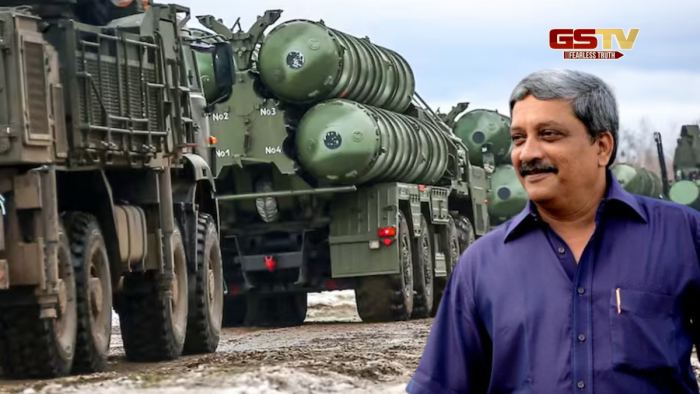
Although India signed the S-400 deal in October 2018, the entire process started much earlier, under Manohar Parrikar.
Key timeline:
- 2015: India’s Ministry of Defence under Parrikar approves interest in acquiring S-400.
- December 2015: During PM Modi’s visit to Russia, India signs an initial inter-governmental agreement for S-400 purchase.
- 2016: Parrikar leads detailed negotiations with Russian Defense Minister Sergey Shoigu and other Russian officials.
- 2017: Parrikar steps down as Defence Minister (to return as Goa CM), but negotiations and technical talks completed under his tenure.
By the time the final contract was signed in 2018 under Defence Minister Nirmala Sitharaman, all major groundwork — approvals, clearances, negotiations, financial planning — had already been done under Parrikar’s leadership.
A top Ministry of Defence official (quoted in media at that time) confirmed:
“Parrikar played a very important role in clearing bottlenecks and pushing the S-400 deal forward.”
The US pressure: How Parrikar stood firm
India buying Russian defense equipment always invites diplomatic challenges, especially from the US. After the US passed CAATSA (Countering America’s Adversaries Through Sanctions Act) in 2017, it threatened sanctions on any country buying weapons from Russia.
Even before the act became law, in 2016, US diplomats privately warned India about going forward with the S-400 purchase.
Despite this:
- Parrikar ensured that India’s strategic autonomy remained protected.
- He kept negotiations with Russia moving, without delay.
- He prepared legal and diplomatic pathways for India to avoid possible sanctions.
He believed in a non-aligned defense policy, focusing only on India’s security needs, not foreign pressures.
Later in 2018, India received a presidential waiver from US sanctions, thanks to diplomatic efforts built on that foundation.
Why the S-400 was Parrikar’s priority
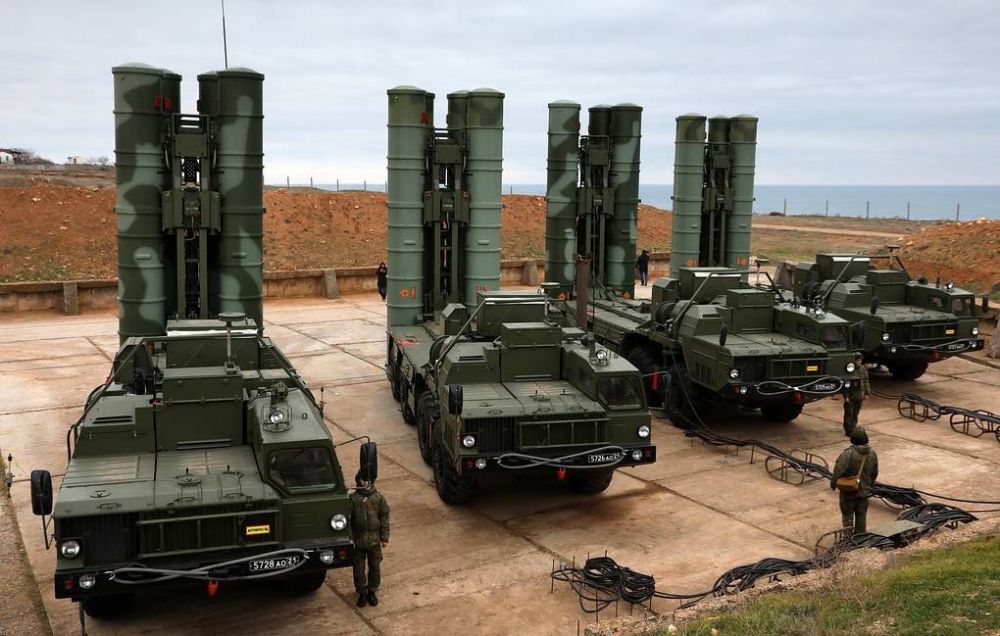
Defense analysts credit Parrikar for:
- Identifying India’s air defense gap early — India had no system with range beyond 100 km; China had Russian S-300 systems and was deploying S-400 too.
- Prioritizing layered defense — he approved S-400 not to replace but complement India’s existing air defense like Akash, Spyder, Barak-8.
- Speeding up procurement — known for his hands-on, no-nonsense approach, Parrikar removed red tape from defense buys.
He once famously said:
“My decisions are based on what a soldier in Siachen would need to survive tomorrow, not on what bureaucrats debate for years.”
Deployment and current status
India started receiving S-400 units from Russia in late 2021, with deliveries continuing till 2024.
- First unit deployed near Punjab sector, covering Pakistan and parts of western border.
- Second unit deployed in Siliguri corridor, guarding against Chinese threats.
- By 2024, five units deployed along critical borders.
Today, S-400 is already active, intercepting drone threats along border areas, especially in Jammu-Kashmir and Punjab.
Without Parrikar’s early approval and leadership, India might have faced significant delays in strengthening its air defense.
Historical background: Why S-400 mattered more after 1999 and 2001
India’s push for long-range missile defense accelerated after:
- Kargil War (1999): Pakistan used high-altitude attacks; India realized need for better surveillance and air defense.
- 2001-2002 Operation Parakram: military standoff with Pakistan; exposed air defense gaps.
- China’s military modernization: China acquired S-300PMU and S-400, creating imbalance.
Parrikar’s tenure came at a critical time when China was deploying S-400 near Tibet, giving it missile coverage over Indian territory.
Defense experts agree:
“Without S-400, India would be at a serious disadvantage if faced with a two-front war.”
Why Parrikar’s leadership stands out
Unlike previous defense ministers:
- He was technically informed (IIT Bombay graduate).
- He directly engaged with military commanders, often skipped bureaucratic delays.
- He visited military installations without protocol or media attention to understand ground realities.
His leadership wasn’t about photo ops or headlines — it was about quietly solving problems before they became crises.
As one retired Air Force officer said:
“We never had to explain things twice to Parrikar. He understood fast, decided faster.”
A legacy that continues to protect India
Today, every time an S-400 radar detects an incoming drone, missile, or fighter jet — and the interceptor missile launches to protect Indian skies — it’s not just Russian engineering at work.
It’s also the vision, courage, and silent preparation of Manohar Parrikar at work.
His story reminds us:
“True leaders are remembered not for the noise they make, but for the futures they secure.”
Even after his untimely death in March 2019, his decisions continue to save lives and safeguard India’s sovereignty.
In conclusion
While the world praises India’s S-400 shield today, let’s not forget the leader who saw the need before anyone else did, acted before it was urgent, and delivered before it was too late.
The skies over India today carry an invisible mark of gratitude:
“Protected by S-400. Secured by Manohar Parrikar.”
Comments

Hi, I’m Nishanth Muraleedharan (also known as Nishani)—an IT engineer turned internet entrepreneur with 25+ years in the textile industry. As the Founder & CEO of "DMZ International Imports & Exports" and President & Chairperson of the "Save Handloom Foundation", I’m committed to reviving India’s handloom heritage by empowering artisans through sustainable practices and advanced technologies like Blockchain, AI, AR & VR. I write what I love to read—thought-provoking, purposeful, and rooted in impact. nishani.in is not just a blog — it's a mark, a sign, a symbol, an impression of the naked truth. Like what you read? Buy me a chai and keep the ideas brewing. ☕💭 For advertising on any of our platforms, WhatsApp me on : +91-91-0950-0950 or email me @ support@dmzinternational.com