The Medical Seat Mafia : How India’s Most Noble Profession Became a Multi-Thousand-Crore Industry
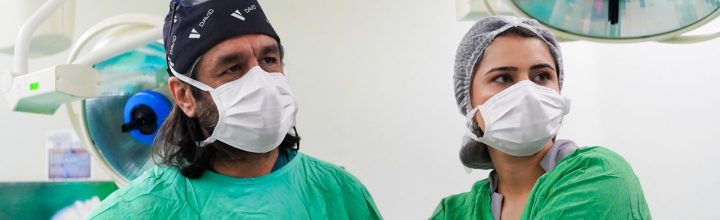
“A society is judged not by how many doctors it produces, but by whether the poorest child with the brightest mind has an equal chance to become one.”
Prologue: A Protest That Asked the Wrong Question
July 2026.
Outside Parliament, emotions are boiling over.
Thousands of students, parents, teachers and ordinary citizens have taken to the streets. Sonam Wangchuk, known across India for his work in education and innovation, has been on a prolonged hunger strike demanding accountability after the controversies surrounding NEET and the larger education system. His protest has evolved into a wider movement questioning fairness, transparency and trust in one of India’s most important public institutions.
Television debates ask one question repeatedly.
“Should the Education Minister resign?”
It is an emotional question.
But it may not be the most important one.
Because history teaches us something uncomfortable.
India has changed Prime Ministers.
It has changed Education Ministers.
It has changed governments.
It has changed examination agencies.
It has changed admission rules.
It has changed entrance examinations.
Yet every few years another scandal emerges.
Another paper leak.
Another admission racket.
Another impersonation gang.
Another investigation.
Another promise of reform.
If changing people solved the problem…
Why does the problem keep returning?
Perhaps because the real story was never about one minister.
The real story began almost fifty years ago.
And unless we understand that history, India will continue treating the symptoms while ignoring the disease.
This is not merely the story of NEET.
This is the story of how education slowly became one of India’s biggest businesses.
When Becoming a Doctor Became a Business
During the 1960s and 1970s, India had relatively few medical colleges.
Most were government institutions.
Seats were limited but admissions were largely merit-based through state entrance examinations.
Demand existed.
But supply was even smaller.
Then came the 1980s.
India’s population was growing rapidly.
Healthcare demand increased.
Governments alone could not establish enough medical colleges.
Private institutions entered the sector.
Initially this looked like a blessing.
More colleges.
More doctors.
More opportunities.
But economics had different plans.
Running a medical college required enormous investment.
Hospitals.
Equipment.
Laboratories.
Faculty.
Hostels.
Regulatory compliance.
Private investors expected returns.
Education slowly transformed into a commercial enterprise.
And then India discovered a phrase that would haunt generations.
Capitation Fee.
Officially it did not exist.
Unofficially almost everyone knew about it.
Parents whispered about it.
Agents discussed it openly.
Students feared it.
A medical seat could cost several lakhs.
Later it became several crores.
Nobody advertised it.
Everybody understood it.
The dream of becoming a doctor had quietly acquired a price tag.
The Rise of the Donation Economy
Throughout the late 1980s and the 1990s, private medical colleges expanded rapidly across states such as Karnataka, Tamil Nadu, Maharashtra, Andhra Pradesh and others.
Many institutions were established by charitable trusts.
Others by educational societies.
Some by influential business groups.
Some by politicians.
Not every private college indulged in questionable practices.
Many became world-class institutions.
But wherever enormous demand met limited supply, an unofficial market emerged.
Parents began approaching admission consultants.
Education brokers appeared.
Middlemen promised guaranteed seats.
Cash transactions became common allegations in numerous investigations over the decades.
Some families sold agricultural land.
Others mortgaged homes.
Jewellery disappeared into banks.
Retirement savings vanished.
Entire family fortunes were invested in one dream.
MBBS.
For India’s middle class, becoming a doctor was no longer merely an educational achievement.
It became an investment.
And every investment attracts brokers.
The Numbers That Created the Perfect Market
Imagine opening a business where customers outnumber products by twenty to one.
That is exactly what medical education became.
Every year millions of students compete.
Only a fraction succeed.
Even today, despite substantial growth in medical seats over the past decade, demand continues to far exceed supply.
Scarcity is the foundation of every profitable market.
Diamonds.
Luxury watches.
Prime real estate.
Medical seats.
The rarer something becomes…
The more valuable it becomes.
And when something becomes valuable enough…
People begin finding shortcuts.
The Broker Arrives
Every major industry has intermediaries.
Real estate has brokers.
Insurance has agents.
Stock markets have dealers.
Medical admissions soon developed their own ecosystem.
Admission consultants.
Career advisors.
Educational agencies.
Some were legitimate counselling services.
Others allegedly operated in shadows.
Their advertisements promised certainty.
Guaranteed admissions.
Direct management seats.
NRI quota assistance.
No entrance worries.
One phone call.
One payment.
One admission.
Some worked within legal frameworks.
Others became subjects of police investigations across different states over the years.
Parents rarely asked questions.
Fear had replaced curiosity.
If your child missed one year…
You lost time.
If they missed two…
The pressure doubled.
The broker understood this psychology better than anyone.
He was not selling education.
He was selling hope.
The Courts Step In
As complaints increased, courts across India began hearing petitions regarding admissions, transparency and capitation fees.
Over several decades, the Supreme Court delivered landmark judgments attempting to balance three competing interests:
The right of private institutions to administer themselves.
The need for affordable education.
The constitutional requirement of fairness.
Cases such as Mohini Jain (1992) and Unni Krishnan (1993) became milestones in the debate over capitation fees and the commercialization of education. Later constitutional bench decisions, including T.M.A. Pai Foundation (2002), Islamic Academy (2003), and P.A. Inamdar (2005) further shaped the legal framework governing admissions and private educational institutions.
The judiciary repeatedly tried to regulate a market that had become increasingly complex.
Every judgment closed one loophole.
The market searched for another.
The Coaching Revolution Nobody Saw Coming
Around the same time another giant was being born.
Coaching institutes.
Cities like Kota transformed into educational factories.
Thousands became lakhs.
Lakhs became millions.
Entire neighbourhoods evolved around entrance examinations.
Hostels.
Libraries.
Test series.
Motivational seminars.
Crash courses.
Repeat batches.
Parents believed coaching was an investment.
Institutes believed demand would never end.
Both were right.
India’s coaching industry eventually grew into one of the country’s largest education businesses.
The irony was striking.
Students first paid enormous amounts to prepare for an examination.
Then some families allegedly paid even more trying to secure admissions.
Education had developed two parallel economies.
Preparation.
Admission.
Both were worth thousands of crores.
The Internet Changed Everything
By the early 2000s technology entered the picture.
Application forms moved online.
Counselling became digital.
Results became electronic.
Transparency was expected to improve.
Instead…
Technology created entirely new opportunities.
Identity fraud.
Digital forgery.
Database manipulation.
Communication through encrypted platforms.
Organized impersonation.
Professional solver gangs.
Cross-state networks.
Technology did not invent corruption.
It modernized it.
The Scandal That Changed India
Then came one of the biggest examination scandals in independent India.
Vyapam.
Although primarily related to recruitment and admissions in Madhya Pradesh rather than NEET itself, Vyapam exposed how deeply organized fraud could infiltrate competitive examinations.
Investigations uncovered alleged use of impersonators, answer-sheet manipulation, middlemen, forged identities and organized networks involving candidates, facilitators and officials. Hundreds of arrests followed over the years, and the case became a national symbol of systemic examination fraud.
For millions of Indians, Vyapam shattered an illusion.
People had always believed cheating happened.
Now they realized organized crime could penetrate entire examination ecosystems.
It demonstrated that corruption was no longer about one dishonest student.
It could involve sophisticated networks, technology, money, and institutional weaknesses.
And that realization changed public trust forever.
The Promise Called NEET
The solution seemed obvious.
One country.
One examination.
One merit list.
One transparent counselling system.
After years of legal battles and policy changes, the National Eligibility-cum-Entrance Test—NEET—became the common entrance examination for undergraduate medical admissions.
Its objectives were widely welcomed.
Eliminate multiple entrance examinations.
Reduce exploitation.
Standardize admissions.
Promote merit.
Reduce opportunities for manipulation.
On paper…
It looked like the biggest reform in Indian medical education.
Many believed the age of donations and manipulation was finally ending.
They were only half right.
Because systems rarely disappear.
They evolve.
And as millions celebrated the birth of NEET…
An entirely new chapter in India’s education story was quietly beginning…
The Illusion of One Nation, One Exam
When NEET became the common entrance examination, it was projected as the great equalizer.
No more dozens of separate entrance tests.
No more different merit lists.
No more confusion.
No more exploitation.
In many ways, NEET did improve transparency. A single national examination reduced multiple admission processes and created a common benchmark for millions of students.
But there was one assumption policymakers underestimated.
Changing the examination does not automatically change the ecosystem built around it.
The examination changed.
The business adapted.
Instead of manipulating dozens of examinations…
The incentive shifted to influencing one.
When one examination determines the future of more than two million students every year, its value becomes enormous—not just academically, but economically.
The higher the stakes…
The greater the temptation.
The Coaching Capital of India
If medical education became India’s largest aspiration, coaching became its largest support industry.
Walk through Kota.
You don’t just see coaching institutes.
You see an economy.
Hostels.
Mess facilities.
Book stores.
Counselling centres.
Psychologists.
Transport services.
Real-estate projects.
Entire neighbourhoods exist because millions of parents believe one thing:
“If my child gets the right coaching, they will become a doctor.”
Some coaching institutions genuinely transformed lives.
They produced brilliant doctors.
Outstanding scientists.
IAS officers.
Researchers.
But competition also became commercial.
Premium batches.
Exclusive faculty.
Rank improvement programs.
Repeat-year courses.
Scholarship marketing.
Students began preparing from Class 6.
Some from Class 4.
Childhood slowly became preparation.
Parents weren’t buying education anymore.
They were buying probability.
When Failure Became a Family Tragedy
For previous generations…
Not becoming a doctor simply meant choosing another profession.
Today’s reality is very different.
Families invest years.
Savings disappear.
Parents take loans.
Children leave home at sixteen.
Every examination becomes life itself.
When results arrive…
One mark can separate two futures.
One seat can change an entire family’s destiny.
This pressure has contributed to a growing mental health crisis among students. Over the years, several coaching hubs have witnessed tragic student suicides, prompting national debate on academic stress, parental expectations and the need for better psychological support.
No examination should become more valuable than a child’s life.
Yet that is exactly where India finds itself.
The Legal Market That Created an Illegal Market
One of the most misunderstood aspects of medical admissions is the difference between what is legal and what is illegal.
Management quota exists legally.
NRI quota also exists under the regulatory framework applicable to many institutions.
These categories are not, by themselves, illegal.
Many colleges follow the rules.
Admissions are conducted through prescribed counselling processes.
Fees are declared under applicable regulations.
So why does controversy persist?
Because wherever there are high-value seats, large fee differences and desperate demand, there is room for unethical intermediaries.
This is where confusion begins.
The existence of a legal management quota created an ecosystem in which unscrupulous brokers could falsely promise “guaranteed seats,” collect huge sums from families, forge documents, or exploit loopholes. Numerous such rackets have been uncovered by police in different states over the years.
The law may be transparent.
The ecosystem around it often is not.
The Paper Leak Economy
Question papers today are not ordinary documents.
They are worth crores.
One leaked paper can generate enormous illegal profits.
Across India, competitive examinations—not only NEET but also recruitment tests, teacher eligibility tests, police recruitment, engineering entrance examinations and state public service exams—have repeatedly been affected by allegations or confirmed instances of paper leaks.
Each investigation reveals a familiar pattern.
Someone prints.
Someone transports.
Someone stores.
Someone photographs.
Someone distributes.
Someone pays.
Someone profits.
Technology accelerated this chain.
Encrypted messaging.
Disposable SIM cards.
Temporary groups.
Digital payments.
Cloud storage.
Organized networks.
The methods became more sophisticated.
Law enforcement improved too.
Yet the race continues.
The 2024 NEET Controversy That Shook Confidence
The 2024 NEET-UG controversy became one of the biggest education debates in recent Indian history.
Questions were raised about alleged paper leaks in some regions, unusual score patterns, grace marks awarded to certain candidates, and the integrity of the examination process.
The issue reached the Supreme Court.
Investigations were handed to the Central Bureau of Investigation (CBI).
Several arrests were made in connection with alleged paper leak networks.
The Court examined whether the available evidence showed a nationwide compromise of the examination. While it acknowledged serious irregularities in certain places, it did not order a nationwide re-examination, concluding that the material before it did not establish that the entire exam had been compromised.
That judgment settled one legal question.
It did not settle public trust.
For many students, the damage had already been done.
When trust disappears…
Every honest result becomes suspect.
The Cost Nobody Counts
India often measures success by the number of doctors produced.
Rarely does it measure what families lose trying to produce one.
Parents mortgage homes.
Farmers sell land.
Retirement funds disappear.
Children sacrifice birthdays.
Teenagers spend years away from home.
Families postpone daughters’ marriages.
Medical dreams reshape household economies.
When admissions become uncertain…
The financial risk multiplies.
And whenever fear increases…
Middlemen flourish.
Who Really Profits?
Whenever a scandal emerges, public debate quickly searches for villains.
A minister.
An official.
A university.
An examination agency.
Sometimes accountability is necessary.
But investigative journalism asks a different question.
Follow the money.
Who benefits from scarcity?
Who benefits from repeated attempts?
Who benefits from expensive coaching?
Who benefits from rising tuition?
Who benefits from admission consultancy businesses?
Who benefits when parents believe there is no option except paying someone who claims to “manage” admissions?
Every major corruption investigation eventually reaches the same destination.
Money.
Not ideology.
Not politics.
Money.
The Protest That Became a National Mirror
By July 2026, the public conversation had moved far beyond one examination.
Sonam Wangchuk’s prolonged hunger strike and the demonstrations that followed became a symbol of a broader frustration with transparency, accountability and the future of Indian education.
For many supporters, the issue was no longer simply about NEET.
It was about trust.
Trust in institutions.
Trust in examinations.
Trust that hard work alone should determine a student’s future.
Some demanded resignations.
Others demanded structural reform.
History suggests that while political accountability is important, durable change depends on strengthening institutions, improving oversight, increasing transparency, expanding quality medical education, and ensuring swift prosecution of organized exam fraud wherever it occurs.
The Reform India Cannot Ignore
Every few years India promises another reform.
A new committee.
A new law.
A new technology.
A new examination pattern.
But reforms that merely react to the latest scandal are unlikely to solve long-term structural problems.
Real change would mean:
- Significantly increasing high-quality government medical seats.
- Strengthening independent oversight of examinations.
- Using secure technology and rigorous audit trails for question paper handling.
- Faster investigation and prosecution of organized exam fraud.
- Greater transparency in counselling and admissions.
- Better regulation of admission intermediaries.
- Expanded mental health support for students.
- Making medical education more accessible so that scarcity itself becomes less profitable.
Corruption survives where opportunity is concentrated and accountability is weak.
Reduce both, and the incentives shrink.
Final Entry: The Doctor India Deserves
Every year, millions of young Indians wake before sunrise.
They study while their friends celebrate festivals.
They memorize anatomy before they have experienced adulthood.
They believe one simple promise:
If I work hard enough, I will earn my place.
That promise is the foundation of every competitive examination.
If students begin to believe that merit can be bought, leaked, manipulated or brokered, the loss is not only theirs.
It is India’s.
A nation that cannot convince its brightest students that honesty matters risks losing something more valuable than examination credibility.
It risks losing faith itself.
This investigation is not an accusation against every private college, every coaching institute, every official or every policymaker. Many institutions and educators work with integrity and have helped produce generations of outstanding doctors.
But history also shows that whenever education becomes a high-value marketplace, vigilance must be constant.
The question India faces in 2026 is not whether one minister should resign.
The deeper question is whether the country has the collective will to build an education system where no parent feels compelled to search for a broker, no student fears that honesty is a disadvantage, and no child’s future depends on anything other than ability, effort and fairness.
Because in the end, a medical seat is not just a seat.
It is a promise.
A promise that the next doctor treating our children, our parents and ourselves reached that white coat through knowledge, dedication and merit—not through privilege, manipulation or money.
That is a promise worth protecting.
Comments

Hi, I’m Nishanth Muraleedharan (also known as Nishani)—an IT engineer turned internet entrepreneur with 25+ years in the textile industry. As the Founder & CEO of "DMZ International Imports & Exports" and President & Chairperson of the "Save Handloom Foundation", I’m committed to reviving India’s handloom heritage by empowering artisans through sustainable practices and advanced technologies like Blockchain, AI, AR & VR. I write what I love to read—thought-provoking, purposeful, and rooted in impact. nishani.in is not just a blog — it's a mark, a sign, a symbol, an impression of the naked truth. Like what you read? Buy me a chai and keep the ideas brewing. ☕💭 For advertising on any of our platforms, WhatsApp me on : +91-91-0950-0950 or email me @ support@dmzinternational.com