
The Milky Mist Bet: Why Skipping Fresh Milk Made a Dairy Company Rich
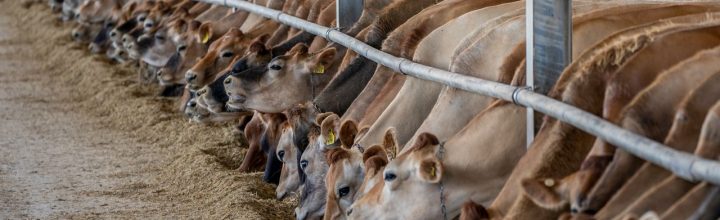
Every dairy business in India seems to chase the same thing: getting fresh milk into homes every morning. It looks like the obvious product. It is the first thing people associate with the word “dairy.” But fresh liquid milk is also one of the worst businesses to be in, and the story of Milky Mist makes that point clearly.
Start with the economics. Milk spoils within hours if it is not chilled. It has to be collected from thousands of small farmers, cooled quickly, transported in tankers, packed, and delivered to shops within a day or two. The margins on a packet of milk are razor thin, often just a few rupees. Prices are watched closely by the government and by public opinion, so companies cannot raise them freely even when their costs go up. On top of that, milk is a true commodity. One brand’s milk is barely different from another’s. Customers buy whichever packet is cheapest and closest to their home. There is very little room to build loyalty or charge a premium.
This is exactly the game that Amul mastered, but Amul did it through a structure that is almost impossible to copy. Amul is not one company. It is a cooperative built from thousands of village-level milk societies, feeding into district unions, feeding into one state-level federation. Millions of farmers are the actual owners of the business. This gives Amul two advantages that no private company can easily match. First, a massive and steady supply of milk collected directly from villages, without needing to build that trust and network from scratch. Second, decades of brand-building supported by government policy, cooperative movements, and a distribution reach that took half a century to create. Competing with that on fresh milk alone is a losing fight for almost any new entrant.
Milky Mist’s founder, Sathish Kumar, understood this early. He took over his family’s struggling milk trading business in Tamil Nadu as a teenager in the early 1990s, at a time when the venture was losing money. Instead of trying to out-compete the cooperatives at their own game, he made a simple but sharp decision: stop selling fresh milk as the main product, and focus almost entirely on value-added dairy items instead. His first product was paneer, sent out in small batches to Bengaluru. That one shift changed everything about the business he was building.
Value-added products completely change the economics of dairy. Paneer, curd, cheese, ghee, and yogurt all have longer shelf lives than raw milk, which gives a company more room to plan production and manage transport without racing against the clock. These products are also processed, which means a brand can build a real identity around taste, texture, and quality, something almost impossible with plain milk. Because of this, customers are willing to pay more for a trusted brand, and margins improve sharply. A litre of milk earns a company a few rupees. The same litre, turned into paneer or cheese, can earn many times that.
Milky Mist grew by doubling down on this idea rather than treating it as one product line among many. It became known for consistent quality in paneer and cheese, categories where Indian consumers had few reliable branded options at the time. It invested in its own cold chain, including chillers placed directly in shops so that its products were stored properly, something most retailers were not doing on their own. It built manufacturing scale in Tamil Nadu, later becoming the country’s largest producer of fresh paneer. By staying almost entirely focused on value-added dairy and steering clear of the low-margin, commodity race for fresh milk, the company grew from a small family venture into one of India’s largest private dairy businesses, now looking at a public listing with a valuation running into thousands of crores.
The bigger lesson here is not really about dairy. It is about what happens when a business refuses to compete on the terms set by the market leader. Amul owns fresh milk because it built an ownership structure that private companies cannot replicate. Milky Mist grew not by fighting that battle, but by asking a different question: which part of this industry has no dominant player yet, and can be won through quality and focus alone. That question, more than any single product, is what built the company.
Comments

Hi, I’m Nishanth Muraleedharan (also known as Nishani)—an IT engineer turned internet entrepreneur with 25+ years in the textile industry. As the Founder & CEO of "DMZ International Imports & Exports" and President & Chairperson of the "Save Handloom Foundation", I’m committed to reviving India’s handloom heritage by empowering artisans through sustainable practices and advanced technologies like Blockchain, AI, AR & VR. I write what I love to read—thought-provoking, purposeful, and rooted in impact. nishani.in is not just a blog — it's a mark, a sign, a symbol, an impression of the naked truth. Like what you read? Buy me a chai and keep the ideas brewing. ☕💭 For advertising on any of our platforms, WhatsApp me on : +91-91-0950-0950 or email me @ support@dmzinternational.com