
Two forests. One pattern. And a country pretending it’s not connected.
If you want to understand how “development” actually works in India, don’t listen to speeches. Watch what happens to forests that don’t have PR teams. Hasdeo Arand in Chhattisgarh and the Aravalli range across Rajasthan–Haryana–Delhi–Gujarat tell the same story in two different accents. One is a dense, living forest that feeds rivers and tribal livelihoods. The other is one of the oldest mountain ranges on Earth, acting as a climate shield for North India. Both are now being slowly dismantled in the name of growth, power, and convenience.
This is not about emotion. This is about facts, patterns, and consequences.
Hasdeo Arand: from living forest to coal blueprint
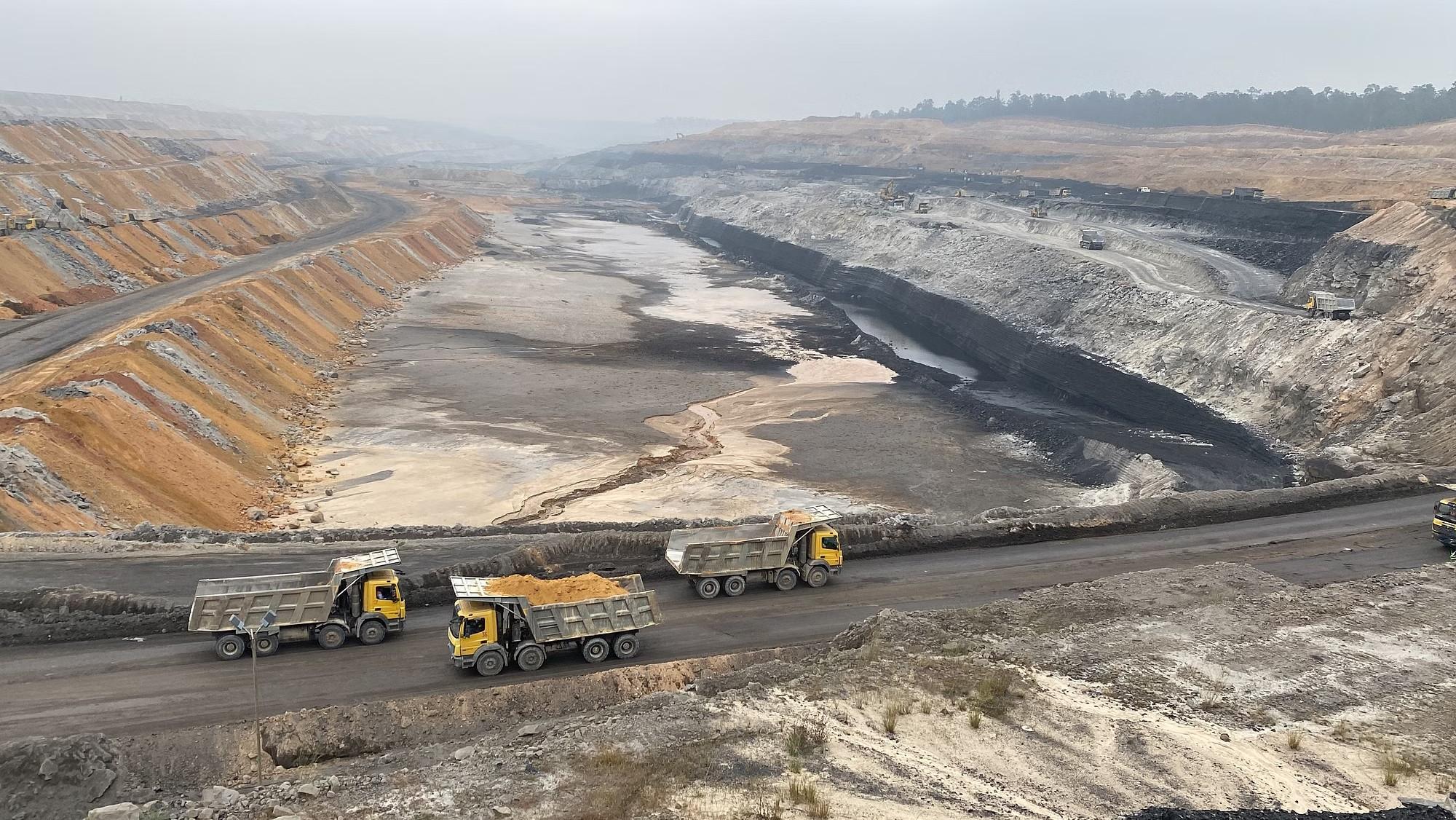
Hasdeo Arand is not empty land. It is a contiguous forest landscape with rich biodiversity, elephant habitats, water systems, and thousands of Adivasi families dependent on it for survival. The Hasdeo river, a major tributary of the Mahanadi, originates here. Damage this forest, and you don’t just lose trees—you destabilise water security across regions.
Over the past decade, large coal blocks in the Hasdeo coalfield were allotted for mining. On paper, many of these blocks were given to state-owned power utilities for “public interest.” But here’s the fine print most people miss: the actual mining operations were handed over to private corporations as Mine Developer and Operator (MDO) contracts. One of the biggest names involved is Adani Enterprises, operating mines such as Parsa East & Kanta Basan and linked expansions.
This structure is clever.
When people protest, the company says: we are only operators.
When questions reach the government, the reply is: the allotment is legal and for public power needs.
Meanwhile, forests vanish.
Local communities have repeatedly alleged that gram sabha consents were forced or manipulated. Villagers have protested continuously, often sitting in front of machines, risking arrests and intimidation. Environmental clearances were granted despite internal warnings and ecological assessments flagging irreversible damage.
The current political blame game continues. The BJP-led government claims everything is lawful. The opposition raises concerns but lacks sustained force. Courts are approached, hearings happen, but mining rarely pauses for long. Trees don’t get a stay order.
What India risks here is massive:
- Permanent destruction of a dense forest ecosystem
- Water stress downstream
- Escalation of human–elephant conflict
- Displacement of indigenous communities with compensation that never replaces livelihoods
Coal extracted here will be burned in power plants, but the ecological bill will be paid for generations.
The Aravallis: the ancient shield being erased on paper
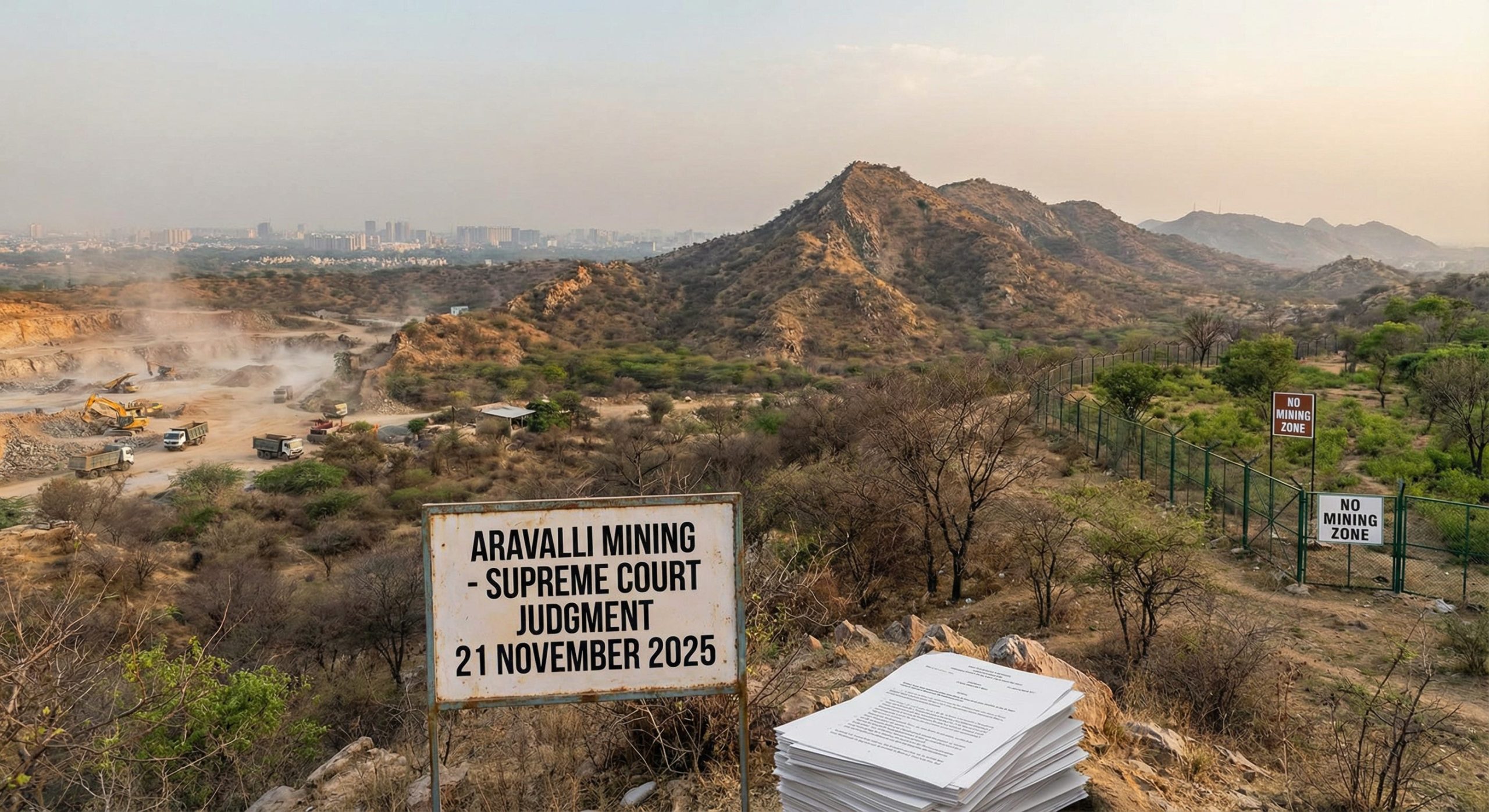
The Aravalli range is older than the Himalayas. It acts as a natural barrier against desertification, supports groundwater recharge, reduces dust storms, and plays a critical role in regulating the climate of North India—especially the already choking NCR region.
Yet for decades, the Aravallis have been treated like expendable real estate.
Mining, quarrying, real estate construction, and road projects have eaten into these hills relentlessly. Even where bans existed, illegal mining thrived. Enforcement was weak, fines were laughable, and violators usually returned stronger.
The most dangerous development is not just mining—it’s definition manipulation.
Recently, legal and administrative battles have focused on what exactly qualifies as “Aravalli land.” Change the definition, shrink the map, and suddenly large tracts are no longer protected. Once land falls out of the “forest” category on paper, it becomes fair game for construction, mining, and commercial use.
Adding insult to injury, authorities have begun granting post-facto clearances—legalising activities that violated forest laws decades ago. In simple terms: destroy first, legalise later. This sends a clear message to violators—break the law today, paperwork will catch up tomorrow.
Unlike Hasdeo, the Aravalli destruction cannot be pinned on one corporate name. It is a system involving:
- State governments
- Central environment authorities
- Builders, miners, and contractors
- And a culture that treats forests as obstacles
The outcome is the same: groundwater depletion, rising temperatures, dust storms, and cities that suffocate every winter.
Who is behind this mess?
This is not a conspiracy with one villain. It’s worse—it’s institutional comfort with destruction.
- Governments that speak of sustainability while clearing forests
- Policies that prioritise short-term revenue over long-term survival
- Corporate models that profit without bearing ecological responsibility
- Opposition parties that protest selectively and move on
- A public that reacts only when disasters hit their doorstep
The BJP is undeniably at the centre of current decision-making in both Hasdeo and Aravalli regions. These decisions are happening now, under their watch. That responsibility cannot be outsourced. But let’s be brutally honest: this extraction mindset predates one party and will outlive it unless challenged fundamentally.
Is anyone really fighting this?
Yes—but not where TV cameras usually look.
The real resistance comes from:
- Tribal communities who refuse to leave
- Villagers blocking roads and machines
- Activists and lawyers keeping cases alive for years
- Journalists documenting what glossy brochures hide
Opposition parties raise issues in assemblies and press conferences, but sustained political opposition capable of stopping such projects is rare. Once money, contracts, and power align, forests become negotiable.
The uncomfortable truth
Forests are not just greenery. They are infrastructure—natural infrastructure that cleans air, stores water, cools land, and sustains life.
Destroying Hasdeo and hollowing out the Aravallis is not development. It is borrowing against the future with no intention of repayment.
When floods worsen, when water runs out, when heatwaves kill, when cities become gas chambers—remember this moment. Remember that it wasn’t ignorance. It was a choice.
So here’s the real question every citizen should ask:
If forests are life-support systems, why are we auctioning them like surplus land—and calling it progress?
Comments

Hi, I’m Nishanth Muraleedharan (also known as Nishani)—an IT engineer turned internet entrepreneur with 25+ years in the textile industry. As the Founder & CEO of "DMZ International Imports & Exports" and President & Chairperson of the "Save Handloom Foundation", I’m committed to reviving India’s handloom heritage by empowering artisans through sustainable practices and advanced technologies like Blockchain, AI, AR & VR. I write what I love to read—thought-provoking, purposeful, and rooted in impact. nishani.in is not just a blog — it's a mark, a sign, a symbol, an impression of the naked truth. Like what you read? Buy me a chai and keep the ideas brewing. ☕💭 For advertising on any of our platforms, WhatsApp me on : +91-91-0950-0950 or email me @ support@dmzinternational.com