
UPI Was India’s Free Revolution. Is the Free Ride Coming to an End?
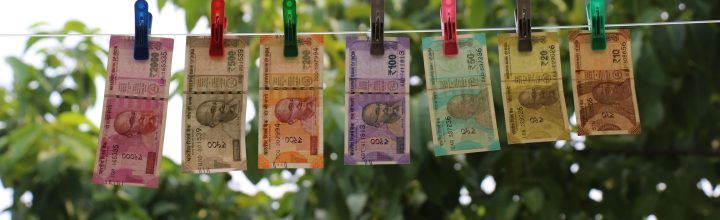
Remember when we used to stand in ATM queues to withdraw cash?
Today, you can buy a ₹20 tea, pay an auto driver ₹150, send ₹5,000 to a friend or pay a ₹50,000 bill without carrying a single rupee note.
Just scan a QR code.
UPI quietly changed the way India uses money.
But now, a new question is emerging:
Is India’s free UPI revolution coming to an end?
Not exactly. But something is changing.
What is actually changing?
From October 15, 2026, a new Merchant Discount Rate, or MDR, will apply to certain UPI merchant transactions.
The important thing is this:
This is not a 0.4% charge on every UPI payment.
If you send money to another person, P2P payments remain free.
If you pay a merchant up to ₹2,000, it remains free.
For specified merchant transactions above ₹2,000, an MDR of 0.4% can apply, subject to a maximum of ₹300 for transactions of ₹75,000 and above.
The government says around 96% of UPI merchant transactions will remain unaffected.
So if you are buying vegetables for ₹300 or paying ₹1,500 at a restaurant, this change doesn’t suddenly mean you will be charged 0.4%.
Then why should ordinary people care?
Because the charge is on the merchant.
And whenever a business gets an additional cost, someone eventually has to absorb it.
A shopkeeper could absorb it.
A payment company could absorb part of it.
Or, indirectly, businesses could increase prices.
The government has said merchants should not pass the MDR directly to customers.
So there is no reason to start carrying a wallet full of ₹500 notes tomorrow.
But this is still worth watching because it changes the economics of UPI.
UPI has become enormous
UPI is no longer simply a convenient payment app.
In August 2026 alone, UPI processed roughly 24.5 billion transactions worth nearly ₹29.8 lakh crore.
Think about that.
India has moved a huge part of its everyday economy from physical cash to a phone screen.
And something else happened along the way.
We stopped visiting ATMs as often.
A 2026 government-backed study found UPI was the preferred payment method among surveyed users, ahead of cash, while also reporting declining reliance on ATMs.
India’s ATM network has also been shrinking as digital payments reduce the need for cash withdrawals.
The transformation is obvious.
Earlier:
Bank → ATM → Cash → Shop
Now:
Bank → Phone → QR Code → Shop
One entire physical chain has almost disappeared.
Will people go back to cash?
Probably not because of this change alone.
And that is the interesting part.
Once people get used to convenience, they don’t easily go backwards.
Why would someone stand in an ATM queue, withdraw ₹5,000, carry the cash, search for change and count notes when they can simply scan a QR code?
Cash still has an important role.
It works without internet.
It works when your phone battery dies.
It offers a level of privacy digital payments don’t.
And it remains important for parts of India’s informal economy.
So cash isn’t disappearing.
But India’s dependence on cash is clearly declining.
The bigger question
The real question isn’t:
“Will UPI charge me?”
For most everyday users, the answer is currently no.
The bigger question is:
Can India keep UPI affordable while creating a sustainable business model for the enormous infrastructure behind it?
UPI became successful partly because it was simple and inexpensive.
If that simplicity remains, people will probably continue using it.
But if charges slowly spread from merchants to consumers, or digital payments become complicated and expensive, behaviour could eventually change.
And there is another issue we shouldn’t ignore.
As India becomes increasingly dependent on digital payments, we also need a reliable backup.
Imagine fewer ATMs, fewer people carrying cash and then suddenly a major internet, banking, telecom or power outage.
What happens?
Maybe the future isn’t cash versus UPI.
Maybe it is:
UPI for everyday life.
Cash for emergencies.
India’s biggest payment experiment
UPI didn’t just change how Indians pay.
It changed what we think money is.
Money used to be something you could hold in your hand.
Now it is increasingly something you move with your thumb.
The ATM may not disappear tomorrow.
Cash won’t disappear either.
But the India that once asked, “Do you have cash?”
has increasingly become an India that asks:
“What’s the QR code?”
And that change may be much bigger than any new UPI charge.
Comments

Hi, I’m Nishanth Muraleedharan (also known as Nishani)—an IT engineer turned internet entrepreneur with 25+ years in the textile industry. As the Founder & CEO of "DMZ International Imports & Exports" and President & Chairperson of the "Save Handloom Foundation", I’m committed to reviving India’s handloom heritage by empowering artisans through sustainable practices and advanced technologies like Blockchain, AI, AR & VR. I write what I love to read—thought-provoking, purposeful, and rooted in impact. nishani.in is not just a blog — it's a mark, a sign, a symbol, an impression of the naked truth. Like what you read? Buy me a chai and keep the ideas brewing. ☕💭 For advertising on any of our platforms, WhatsApp me on : +91-91-0950-0950 or email me @ support@dmzinternational.com