
When a Norwegian Journalist Asked a Question India Couldn’t Answer
The Helle Lyng episode is not about Modi. It is about what happens when inconvenient questions find no answer and an uncomfortable mirror.
It started with nine words shouted across a hall in Oslo.
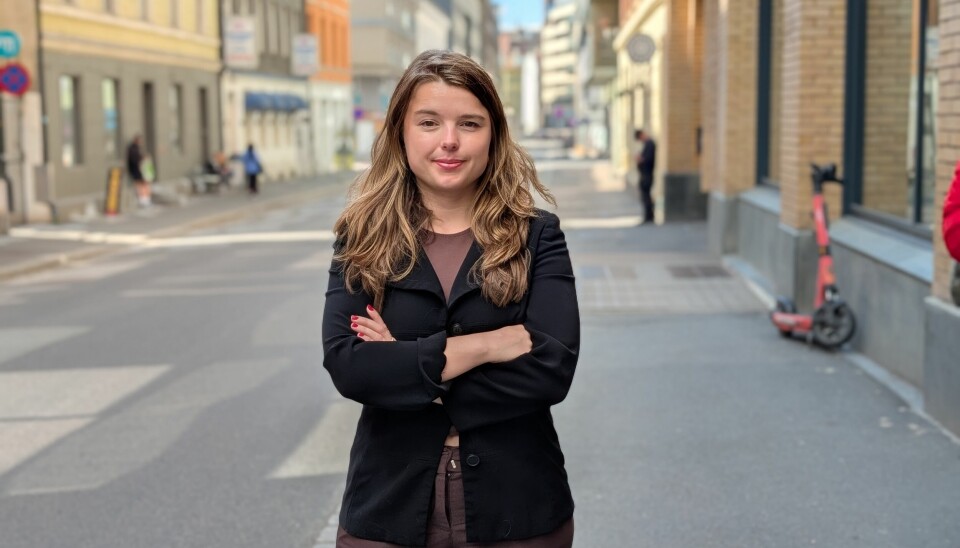
During a joint press statement by Prime Minister Narendra Modi and Norwegian Prime Minister Jonas Gahr Støre in Oslo on Tuesday, as the leaders were exiting the venue without taking questions, Helle Lyng — a journalist with the Oslo-based newspaper Dagsavisen — was heard calling out to Modi, asking why he would not take questions from the “world’s freest press.”
Modi did not respond. He kept walking. That was expected. What followed was not.
The Number That Started Everything
In a post on X after the incident, Lyng shared a clip of the moment and wrote: “Prime Minister of India, Narendra Modi, would not take my question. I was not expecting him to.” She then added the number that set Indian Twitter on fire: “Norway has the number one spot on the World Press Freedom Index. India is at 157th, competing with Palestine, Emirates and Cuba. It is our job to question the powers we cooperate with.”
That ranking is not a slur. It is a published, verifiable number from Reporters Without Borders. India sits at 157th on the World Press Freedom Index. You can dispute the methodology. You cannot make the number disappear by calling the person who cited it a spy.
The Embassy’s Own Goal
Here is where the story took a turn that nobody in South Block would have scripted.
After the episode went viral on social media and triggered political reactions in India and Norway, the Indian Embassy in Oslo held a press conference later in the day at Hotel Radisson Blu and specifically invited Lyng to attend, personally tagging her.
Think about that. A journalist shouts an uncomfortable question. The government ignores her in the moment, then actively summons her for round two. What followed was a masterclass in how not to handle a press freedom story.
Lyng asked MEA Secretary (West) Sibi George directly: “I am wondering, as we strengthen our partnership, why should we trust you?” She also questioned whether India would stop human rights violations and whether the Prime Minister would start taking critical questions from the Indian press.
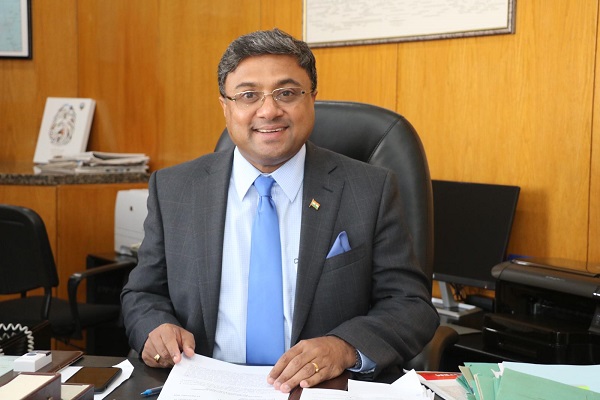
George’s response was long. It covered yoga. It covered chess. It covered COVID vaccines. It covered India’s 5,000-year-old civilisation. It covered women’s voting rights from 1947. It notably included the line: “People have no understanding. They read one or two news reports published by some godforsaken, ignorant NGOs and then come and ask questions.”
What it did not cover, in any direct or satisfying way, was the question of press freedom in India.
The MEA Secretary stated that India’s Constitution guarantees fundamental rights to all citizens and provides legal remedies in cases of violations. That is a true statement. It is also a non-answer to why India ranks 157th on the very index that the Constitution is supposed to prevent.
A subplot emerged mid-briefing. On X, there was speculation about whether Lyng had slipped out while George was still mid-answer. George himself believed at one point that she had walked out. When a user accused her of leaving without hearing the response, Lyng replied: “I just needed a cup of water.”
A cup of water. That became the viral footnote of a diplomatic incident.
Then Her Accounts Went Dark
This is the part of the story that deserves the most scrutiny — and is getting the least.
Lyng posted on X: “If you are trying to reach me on Instagram or Facebook, I am letting you know that both of my accounts have been suspended. It is a small price to pay for press freedom, but I’ve never experienced something like this before.”
She shared screenshots of the suspension notices and said it was making it difficult for her to reply to people contacting her through Meta platforms.
Now the critical question: who suspended them, and why?
There is no publicly confirmed evidence that the Indian government directly requested Meta to take down her accounts. What is documented is the nature of the online campaign against her. Indian social media users attacked her as a foreign agent, and some released her personal details and phone number to increase harassment. Meta’s automated systems are notoriously susceptible to coordinated mass-reporting campaigns — when thousands of accounts flag a profile simultaneously, suspension can follow algorithmically, without any human review or government request ever being filed.
Did Mark Zuckerberg’s team receive a formal request? There is no confirmation of that. What is confirmed is that her accounts went down in the middle of a viral controversy driven heavily by Indian users mass-reporting her content. Whether that is Meta’s algorithm doing what it always does when brigaded, or something more deliberate, has not been established. The absence of transparency from Meta — as always — is itself the problem.
Lyng also had to issue a public clarification: “I never thought I would have to write this, but I am not a foreign spy of any sort, sent out by any foreign government.” The fact that a journalist covering a diplomatic event had to publicly deny being a spy tells you something about the temperature of the discourse.
The Questions Were Real. The Ranking Is Real.
Strip away everything — the shouting, the cup of water, the civilisation lecture, the suspended accounts, the spy allegations — and what remains?
A journalist asked why a head of government would not take questions from the press. That is not a hostile act. That is journalism’s oldest and most fundamental function.
The issue spilled into India’s political arena with Opposition leaders Rahul Gandhi and Mahua Moitra attacking the Prime Minister over his reluctance to answer questions. Hours later, Lyng herself reached out to Rahul Gandhi seeking an interview on the Norway visit.
India is ranked 157th in press freedom. That is not a Western conspiracy. That is a composite score built on documented incidents — journalist arrests, sedition charges, equipment seizures, accreditation denials, SLAPP suits, and yes, coordinated online harassment of reporters who ask the wrong questions. Lyng experienced the last one in real time, within hours of opening her mouth.
The MEA chose to answer questions about press freedom with a lecture on civilisation. That approach works brilliantly as political theatre for a domestic audience already convinced that all criticism is foreign interference. It does absolutely nothing to move the needle on 157th place.
What This Episode Actually Revealed
The Helle Lyng incident is not about whether she was polite enough, whether the briefing format technically required Modi to answer questions, or whether Norway’s media has its own blind spots. All of those are fair secondary debates.
The primary revelation is structural. When a foreign journalist asks about press freedom in India, and the official response is yoga and vaccine diplomacy, and the journalist’s social media accounts then get suspended amid a coordinated mass-reporting campaign — the incident proves the point more effectively than any index ranking ever could.
Press freedom is not threatened only by governments issuing formal censorship orders. It is threatened when the cost of asking a question is high enough that most people choose not to ask.
Helle Lyng called the suspension of her accounts “a small price to pay for press freedom.”
The fact that asking a question at a diplomatic event came with a price at all — that is the story.
Nishani writes on geopolitics, economics, and Indian society at nishani.in
Comments

Hi, I’m Nishanth Muraleedharan (also known as Nishani)—an IT engineer turned internet entrepreneur with 25+ years in the textile industry. As the Founder & CEO of "DMZ International Imports & Exports" and President & Chairperson of the "Save Handloom Foundation", I’m committed to reviving India’s handloom heritage by empowering artisans through sustainable practices and advanced technologies like Blockchain, AI, AR & VR. I write what I love to read—thought-provoking, purposeful, and rooted in impact. nishani.in is not just a blog — it's a mark, a sign, a symbol, an impression of the naked truth. Like what you read? Buy me a chai and keep the ideas brewing. ☕💭 For advertising on any of our platforms, WhatsApp me on : +91-91-0950-0950 or email me @ support@dmzinternational.com