
The Cloth That Became a Weapon; From Gandhi’s Charkha to India’s Handloom Future
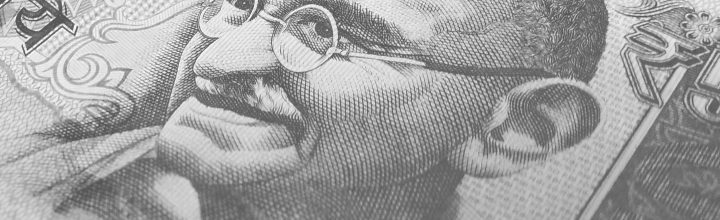
On Gandhi Jayanti, we remember the man who taught India that freedom could begin with something as simple as a thread.
Today, October 2, we remember Mahatma Gandhi as the leader of India’s freedom struggle, the man of non-violence and Satyagraha.
But there is another Gandhi we should remember.
The Gandhi who picked up a spinning wheel.
The Gandhi who wore Khadi.
The Gandhi who asked millions of Indians to reject foreign cloth.
The Gandhi who understood that political freedom meant little without economic self-reliance.
For Gandhi, cloth was never merely cloth.
It was politics. It was economics. It was dignity. It was resistance.
When India’s looms were weakened
India had a remarkable textile tradition long before British rule. Spinning and weaving supported millions of people, with village households and professional weavers forming an important part of the country’s economic life.
The expansion of Britain’s industrial textile industry dramatically changed that system. British manufactured textiles, particularly from Lancashire and Manchester, entered the Indian market while colonial economic structures weakened India’s traditional textile sector. The consequences were devastating for many artisans and weavers.
The tragedy was not simply that India began buying foreign cloth.
India began losing the economic power of its own hands.
And Gandhi understood this.
Gandhi turned the charkha into a symbol of freedom
Gandhi’s Khadi movement began taking shape around 1918. He saw hand-spinning and hand-weaving not merely as a way of producing cloth, but as a means of creating work, dignity and self-reliance in India’s villages.
The spinning wheel—the charkha—became one of the most powerful symbols of the freedom movement.
During the Non-Cooperation Movement, the boycott of foreign cloth became an important part of the campaign. Gandhi encouraged Indians to reject foreign cloth and embrace hand-spun Khadi. Foreign-cloth boycotts, public campaigns and the promotion of spinning and weaving turned an everyday purchasing decision into an act of resistance.
Think about how radical that idea was.
The British had factories.
India had millions of hands.
Gandhi wanted those hands to work again.
He believed that reviving spinning and weaving could provide supplementary livelihoods to rural families, revive traditional skills and reduce India’s dependence on imported cloth.
The charkha therefore became much more than a machine.
It became a symbol of Swaraj.
The real question is not simply how much money Khadi or handloom can generate. It is how much economic value, dignity and opportunity we can put back into the hands of the people who make India’s cloth.
Gandhi understood this more than a century ago. His answer was the charkha, Khadi and Swadeshi—encouraging Indians to reject dependence on foreign cloth and rebuild the economic strength of Indian villages.
Almost a century later, history gave us a very different reason to ask the same question.
From Importing Foreign Products to Taking Indian Products to the World
Before handloom became our mission, DMZ International Imports & Exports Pvt Ltd was doing something very different.
We were importing Chinese-made car accessories and selling them through Amazon.
Then COVID-19 changed everything.
International supply chains were disrupted, imports from China became extremely difficult, and the business model we had built was suddenly under enormous pressure.
We could either wait for the old model to return—or rethink what DMZ International could become.
And that forced us to ask ourselves a simple question:
If we could no longer build our business by bringing products from outside India, why couldn’t we build one by taking India’s own products to the world?
That question became the beginning of our handloom journey.
And then, almost a century later, our story took an unexpected turn
Before handloom became our mission, DMZ International Imports & Exports Pvt Ltd was doing something very different.
We were importing Chinese-made car accessories and selling them through Amazon.
Then COVID-19 changed everything.
International supply chains were disrupted. Imports from China became extremely difficult. The business model that had supported us was suddenly no longer viable.
We had a choice.
Wait for the old world to return—or find a new direction.
We asked ourselves:
If we cannot bring products from the world into India, why can’t we take India’s products to the world?
That question led us towards handloom.
And eventually, Handlooom.com was born.
But we discovered another problem
India has extraordinary weavers, artisans and cooperative societies.
Many produce products with deep cultural heritage. Some carry GI recognition.
Yet many of these producers still struggle to access the modern digital marketplace.
They know how to weave.
They don’t necessarily have Amazon accounts, digital marketing teams, international logistics, product photography, technology or global customers.
The product exists.
The skill exists.
The demand exists.
But the bridge is missing.
That is where Save Handloom Foundation came in.
We created the public charitable trust to help weavers, artisans and handloom cooperative societies take their products to online markets.
Through DesiFusions.com, we help bring their products to customers through platforms such as Amazon.
Our objective is not simply to sell another dhoti or saree.
It is to help create more work, more visibility and more appreciation for the people who make them.
From Gandhi’s charkha to the digital product passport
Our journey has now moved from the spinning wheel to another kind of technology.
The Digital Product Passport.
At the Chendamangalam handloom cooperative in Kerala, we have worked on digitally identifying GI-tagged handloom products.
Imagine buying a handloom dhoti and tapping the product.
Suddenly, the product can become a doorway to its story:
Where was it made?
Which cooperative produced it?
Who are the people behind it?
What is the product’s identity?
What is it made from?
A QR code or NFC chip can connect the physical product to its digital identity.
This is where we believe tradition and technology can meet.
And Europe is now moving toward greater digital traceability of products through the EU’s Digital Product Passport framework, making product-level information increasingly important for businesses selling into European markets.
For us, however, this isn’t merely about complying with a future regulation.
It is about making the invisible visible.
Gandhi asked India to look at the hands that made its cloth.
Today, we have the technology to let the entire world do the same.
That is why Gandhi’s message about Khadi still matters.
Not because everyone must wear Khadi.
Not because technology should replace tradition.
But because Gandhi understood something remarkably early:
A country’s economic strength cannot be separated from the dignity of the people who make its products.
His charkha connected freedom with livelihoods.
Our technology attempts to connect those livelihoods with the global marketplace.
The challenge has changed.
The technology has changed.
The world has changed.
But the fundamental question remains:
Can we build a future where the person who makes the product is not the least visible person in the supply chain?
On this Gandhi Jayanti, perhaps that is one part of his legacy worth remembering.
From the charkha to the NFC chip.
From Swadeshi to global e-commerce.
From fighting foreign cloth to helping Indian craft reach foreign markets.
The thread has changed.
The purpose has not.
Because every time we help an Indian weaver find a customer somewhere in the world, we are doing something Gandhi believed deeply in:
giving dignity to the hands that build India.
Comments

Hi, I’m Nishanth Muraleedharan (also known as Nishani)—an IT engineer turned internet entrepreneur with 25+ years in the textile industry. As the Founder & CEO of "DMZ International Imports & Exports" and President & Chairperson of the "Save Handloom Foundation", I’m committed to reviving India’s handloom heritage by empowering artisans through sustainable practices and advanced technologies like Blockchain, AI, AR & VR. I write what I love to read—thought-provoking, purposeful, and rooted in impact. nishani.in is not just a blog — it's a mark, a sign, a symbol, an impression of the naked truth. Like what you read? Buy me a chai and keep the ideas brewing. ☕💭 For advertising on any of our platforms, WhatsApp me on : +91-91-0950-0950 or email me @ support@dmzinternational.com