
On Gandhi Jayanti, India’s Youngest Generations Are Protesting. Are They Following Gandhi Without Saying So?
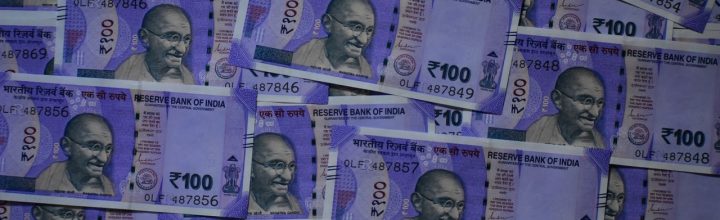
Ask a 17-year-old in India about Gandhi. You will probably get three things: a face on a currency note, a clip about the Salt March, and a meme about him. This is how Gen Z and Gen Alpha meet him. He arrives in pieces, between reels and exam notes.
Do they respect him as much as older Indians do? Honestly, not in the same way. And the reasons are not all their fault.
Why the respect looks thinner
First, respect for older generations was inherited. Many of us grew up with Gandhi in school plays, in the photograph on the office wall, in the stories of grandparents who lived through 1947. Young Indians have no such automatic link. They ask for reasons, and a name alone is not a reason.
Second, they live inside a loud internet. Every great person is cut into short clips, and every clip is argued over. A leader who spent his life on slow, patient work does not fit easily into fifteen seconds. His critics get a clip. His admirers get a clip. Few people read the whole story.
Third, we adults must take some blame. We turned Gandhi into a statue, a holiday and a speech. We asked children to bow to him, not to understand him. Respect that is only ordered rarely lasts.
How they see the freedom struggle
Young Indians do not see one lone saint leading a nation. They see many people: Ambedkar, Bhagat Singh, Subhas Chandra Bose, Savitribai Phule, countless unnamed workers. They ask hard questions about caste, about Partition, about some of Gandhi’s early views. Older people may feel hurt by this. They should not. A generation that asks questions is not insulting its history. It is trying to own it.
Still, here is something older Indians often miss. When these young people look for a way to fight, they reach for Gandhi’s tools without using his name: the sit-in, the march, courting arrest, the moral force of a crowd that stays calm. Gandhi shows up in their actions even when he is missing from their speeches.
The Cockroach moment
Look at what happened in July. After weeks of protest over leaked NEET papers, the education minister resigned. The movement behind it, the Cockroach Janta Party, began as an online joke after an insulting remark about jobless youth. Within weeks it filled the streets.
That showed older India something it had not expected. This generation is not lazy and not indifferent. When they feel cheated over exams, jobs and fairness, they organise quickly and they keep pressing.
Today’s test is harder
Today, on Gandhi Jayanti, the same movement begins a new agitation. This time it wants the Chief Election Commissioner removed. The trigger is a report of at least 14 recorded objections by the other two Election Commissioners over electoral roll decisions. Protesters also point to millions of voters losing their right to vote in the roll revision. Police have refused permission in Delhi and Mumbai, and the movement has threatened a “Jail Bharo” campaign.
Here is why this will be far harder than the education minister’s fall.
A minister serves at the Prime Minister’s pleasure. One resignation can end the matter. A Chief Election Commissioner is protected by the Constitution and can be removed only on grounds of proved misbehaviour or incapacity, through a resolution passed by both Houses of Parliament with a special majority. The opposition itself admits it does not have the numbers. The government may also believe that giving in a second time would look weak.
There is a second danger. The first protest had a clear, simple demand supported by a shared grievance. The second mixes a legal fight with a political one, and the Commission denies there is any internal discord. If the movement attacks with personal insults, it will hand its opponents an easy reply. Anger wins crowds. Evidence wins courts and public trust.
What to expect
Expect them to stay in the fight. Expect street action mixed with online pressure, court petitions and public records. Expect them to demand answers, not blessings. And expect old leaders to be surprised, again and again, that “the phone generation” can hold a long campaign.
The real test is patience. Gandhi understood this. A movement that wins one fast victory can believe every battle will be fast. His struggle took decades.
So do they respect Gandhi? They respect what he did more than what he stands for in textbooks. If we want them to know the man, we should stop handing them a statue. We should hand them the whole story, including the hard parts.
Gandhi never asked anyone to worship him. He asked them to act with courage and to stay honest while doing it. Today’s young Indians are already on that road. The question is whether they will walk it all the way.
Comments

Hi, I’m Nishanth Muraleedharan (also known as Nishani)—an IT engineer turned internet entrepreneur with 25+ years in the textile industry. As the Founder & CEO of "DMZ International Imports & Exports" and President & Chairperson of the "Save Handloom Foundation", I’m committed to reviving India’s handloom heritage by empowering artisans through sustainable practices and advanced technologies like Blockchain, AI, AR & VR. I write what I love to read—thought-provoking, purposeful, and rooted in impact. nishani.in is not just a blog — it's a mark, a sign, a symbol, an impression of the naked truth. Like what you read? Buy me a chai and keep the ideas brewing. ☕💭 For advertising on any of our platforms, WhatsApp me on : +91-91-0950-0950 or email me @ support@dmzinternational.com