
How Trump Gutted the CIA and Went to War on a Hunch
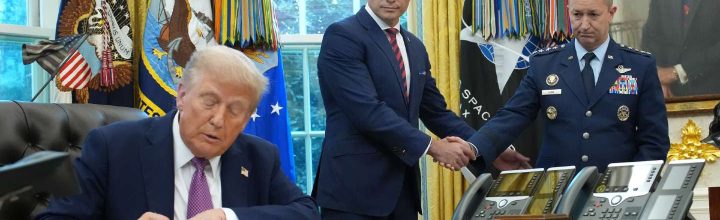
There is a building in Langley, Virginia, that no foreign adversary has ever truly broken into from the outside. What no enemy managed in seventy years, an American president accomplished in months — from the inside.
What the CIA actually is
The CIA is far more than an intelligence-gathering agency. A single Station Chief in a foreign capital can authorise operations costing hundreds of millions of dollars, shift the politics of an entire nation, and greenlight actions that result in deaths — all through internal approvals the public never sees. The President’s Daily Brief, the most classified document on earth, is compiled every morning by thousands of analysts. When a president ignores it in favour of personal associates, he is not being bold. He is flying blind.
The purge nobody fully reported
Before Trump even took his oath, the CIA’s internal watchdog Robin Ashton resigned. The Intelligence Community’s watchdog Thomas Monheim followed. Both inspector generals — the only officers legally mandated to investigate misconduct inside these agencies — were gone simultaneously. The four-star general leading the NSA and Cyber Command was abruptly fired. Hundreds of experienced officers were terminated or pushed into resignation through a “Fork in the Road” email that reportedly contained tracking code to identify anyone who forwarded it internally. Russia and China immediately launched recruitment operations targeting the fired officers — on LinkedIn, with dedicated websites — hunting people who still knew classified source networks and operational methods.
The men who replaced the intelligence community
Into that vacuum stepped Steve Witkoff, Trump’s golf partner, and Jared Kushner, his son-in-law. Neither has intelligence or diplomatic experience. Together they were handed negotiations over Iran’s nuclear programme — one of the most technically complex issues in international affairs — without bringing a single nuclear expert to the table. Witkoff‘s own defence of his qualifications was: “I wouldn’t tell you I’m an expert in nuclear, but I’ve learned quite a bit.”
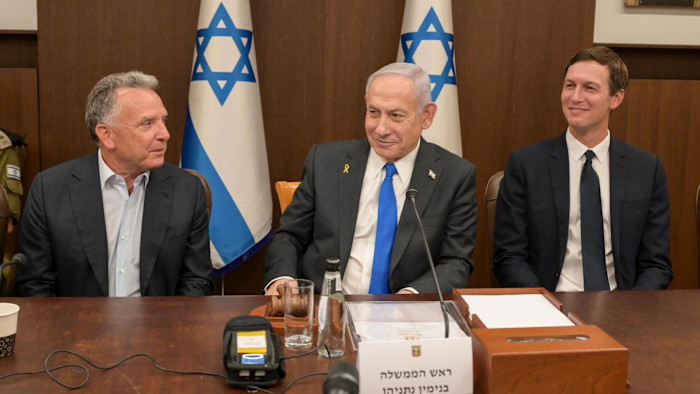
What makes this worse is the money. Saudi Arabia has paid Kushner’s private equity firm over $137 million in management fees. The UAE has invested hundreds of millions more. Both governments were privately lobbying Trump to attack Iran — and both were paying the man who briefed Trump on whether to do it.
How the war started
Less than 48 hours before bombs fell on Iran, Witkoff and Kushner were in Geneva for nuclear talks that a neutral Omani mediator described as making substantial progress. They returned and reportedly told Trump that Iran was playing games. Nuclear experts who reviewed Iran‘s actual negotiating position found that Iran had offered to transfer its enriched uranium stockpile — a significant concession that appears to have been either misunderstood or misrepresented. After the strikes began, U.S. officials told Congress in private briefings that American intelligence had not assessed Iran as preparing any preemptive attack. The war was not driven by intelligence. It was driven by a golf partner and a son-in-law.
What this means
The CIA was never a perfect institution. But it was designed to give decision-makers accurate information, insulated from personal financial interest. What has replaced it is more convenient — for the people making the decisions, and for the foreign governments paying for access to them.
The watchdogs are gone. The experienced officers are being recruited by adversaries. And the consequences are only beginning.
The weeks ahead will test whether America’s hollowed intelligence apparatus can still function as a meaningful check on political decision-making. With no independent watchdogs, a loyalist at the CIA’s helm, and a war already underway on contested justifications, the structural damage is no longer theoretical. What began as a purge is now a precedent — and precedents, once set, are extraordinarily difficult to reverse.
Comments

Hi, I’m Nishanth Muraleedharan (also known as Nishani)—an IT engineer turned internet entrepreneur with 25+ years in the textile industry. As the Founder & CEO of "DMZ International Imports & Exports" and President & Chairperson of the "Save Handloom Foundation", I’m committed to reviving India’s handloom heritage by empowering artisans through sustainable practices and advanced technologies like Blockchain, AI, AR & VR. I write what I love to read—thought-provoking, purposeful, and rooted in impact. nishani.in is not just a blog — it's a mark, a sign, a symbol, an impression of the naked truth. Like what you read? Buy me a chai and keep the ideas brewing. ☕💭 For advertising on any of our platforms, WhatsApp me on : +91-91-0950-0950 or email me @ support@dmzinternational.com


