
Putin Says U.S. Is 15 Years Behind and Can’t Stop China – What Does That Really Mean?
In a recent and attention-grabbing statement, Russian President Vladimir Putin claimed that the United States is “15 years out of date” and that it can “no longer stop China” from rising as a global superpower. For many, this sounds like typical Cold War-era rhetoric. But what if there’s more substance behind the bluster? Let’s unpack the statement, dig into the geopolitics, and explore the deeper implications for the world order in 2025 and beyond.
🧠 Decoding Putin’s Intent: Bluff or Brutal Honesty?
Putin is no stranger to provocative statements. But he doesn’t usually speak without a calculated reason. His comments can serve multiple purposes:
- Undermining U.S. global dominance
- Strengthening the Sino-Russian alliance
- Positioning Russia as a geopolitical equal
By saying the U.S. is “15 years out of date”, Putin is pointing to more than just outdated policies. He’s hinting at a deep structural stagnation in America — from its infrastructure and education system to its political gridlock and economic overreliance on debt and tech bubbles.
📉 Is America Really Behind? Let’s Talk Numbers.
The U.S. still leads in many ways — military power, global cultural influence, and tech innovation (think OpenAI, SpaceX, etc.). But there are real cracks:
- Education: U.S. ranks 13th in reading, 18th in science, and 37th in math (PISA rankings).
- Infrastructure: Roads, bridges, and public transport are crumbling compared to China’s ultra-modern bullet trains and smart cities.
- Manufacturing: China is the world’s factory, responsible for over 28% of global manufacturing output, while the U.S. continues to outsource.
- Debt: The U.S. national debt surpassed $34 trillion in 2024, raising questions about sustainability.
Meanwhile, China is aggressively investing in AI, quantum computing, clean energy, and space exploration, often with state-backed strategy and speed that democracies struggle to match.
🤝 The Rise of the Dragon – Can the Eagle Keep Up?
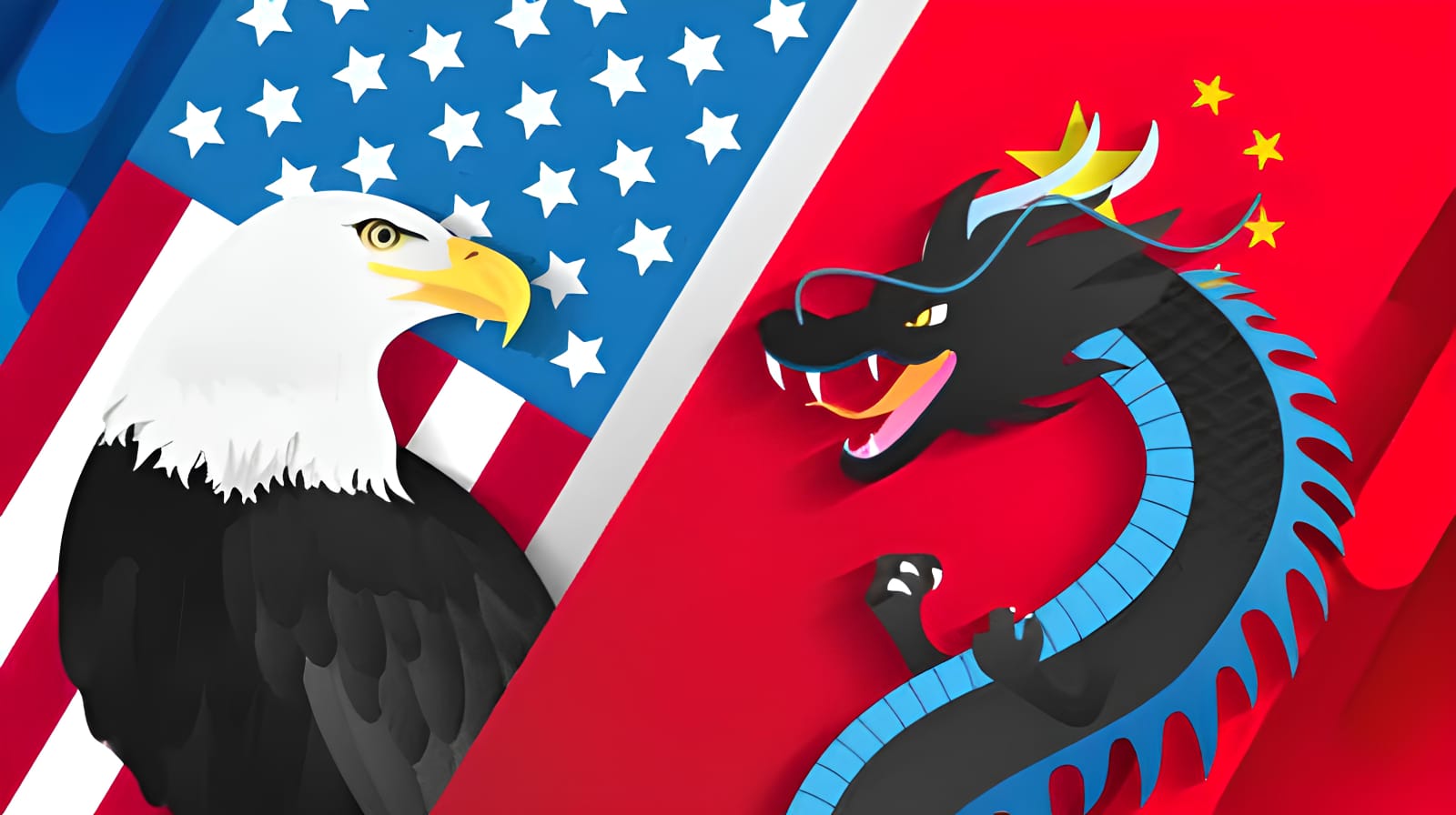
Whether the U.S. can “stop” China depends on how we define that word. Militarily? Unlikely. Economically? Not anymore. Technologically? It’s a race, but China’s catching up.
China has:
- The largest high-speed rail network in the world
- Pioneered digital currency with the digital yuan
- Mass surveillance tech integrated into daily life
- A Belt and Road Initiative tying over 70 countries into China’s orbit
The U.S. has responded with decoupling, sanctions, and export bans — but these are short-term band-aids, not long-term strategy.
⚠️ The Real Danger: Multipolar World Without Moral Compass?
Putin’s comment isn’t just about America’s decline — it’s about the end of U.S. hegemony. We are stepping into a multipolar world: China, Russia, India, the EU, and others are vying for regional control.
But here’s the problem: Who sets the rules in a multipolar world?
- The U.S. once claimed to represent liberal democracy (even if inconsistently).
- China and Russia champion state control, censorship, and authoritarianism.
If the U.S. fades without passing the torch to a globally accepted ethical framework, the world could slip into a power vacuum ruled by might over right.
💥 Final Thought: Is Putin Right?
Yes and no.
- Yes – The U.S. has lost ground and can no longer singlehandedly control the rise of China.
- No – America still has unmatched soft power, innovation ecosystems, and alliances like NATO, AUKUS, and the Quad that can adapt and evolve.
But Putin’s comment should be a wake-up call — not just for American policymakers but for every global citizen. We are no longer living in a world of clear good vs. evil, but in a murky battlefield of competing narratives.
The question isn’t whether the U.S. can stop China.
The question is — can humanity stop self-destruction in an age of unchecked ambition, AI, and tribal geopolitics?
🌍 What are your thoughts? Is the U.S. truly outdated, or is it just facing a rough transition in a new world order? Drop your comments below and share this with a friend who’s into geopolitics!
Comments

Hi, I’m Nishanth Muraleedharan (also known as Nishani)—an IT engineer turned internet entrepreneur with 25+ years in the textile industry. As the Founder & CEO of "DMZ International Imports & Exports" and President & Chairperson of the "Save Handloom Foundation", I’m committed to reviving India’s handloom heritage by empowering artisans through sustainable practices and advanced technologies like Blockchain, AI, AR & VR. I write what I love to read—thought-provoking, purposeful, and rooted in impact. nishani.in is not just a blog — it's a mark, a sign, a symbol, an impression of the naked truth. Like what you read? Buy me a chai and keep the ideas brewing. ☕💭 For advertising on any of our platforms, WhatsApp me on : +91-91-0950-0950 or email me @ support@dmzinternational.com