
Schizophrenia isn’t ‘two people in one body’: Twisha sharma case sparks concern over mental health misinformation

On May 12, 2026, Twisha Sharma — 33, MBA graduate, former Miss Pune contestant, content creator — was found hanging at her marital home in Bhopal’s Katara Hills, barely five months after her wedding. The post-mortem at AIIMS Bhopal confirmed death by “antemortem hanging by ligature” and noted multiple antemortem injuries on other parts of her body. She had a return ticket to Noida booked for May 15. She never used it.
Her family says she was killed by a system — dowry harassment, coercion, and controlled cruelty. Her in-laws say she had a mental illness. And just like that, the word “schizophrenia” entered the courtroom before it entered any medical record.
What the Two Sides Are Saying
Twisha met Bhopal-based advocate Samarth Singh on a dating app in 2024. They married in December 2025. Within months, her family alleges, the harassment began — dowry demands, mental cruelty, physical abuse, and relentless pressure that caused her to lose nearly 15 kg. Her father, Navnidhi Sharma, spoke with her for nearly half an hour on the night she died. She called herself “trapped.” Her brother, Major Sharma, said she wanted to continue her pregnancy but was coerced into a medical termination just a week before her death — her character was questioned and the child called illegitimate.
Her husband Samarth Singh is absconding. Bhopal Police have announced a Rs 10,000 reward for his arrest. His anticipatory bail was rejected. His mother, retired judge Giribala Singh, was granted anticipatory bail — a decision Twisha’s father publicly called erroneous given the accused’s influential background and risk of evidence tampering.
Then came Giribala Singh’s statement to the media. She claimed Twisha “underwent psychiatric counselling” and was prescribed medicines “given to a schizophrenic patient.” She described trembling hands, unstable behaviour, a woman who “destroyed everything.” She also alleged an MTP and implied the victim’s own father could be the source of her distress.
This is the classic playbook: shift the narrative from accused to victim, from harassment to instability, from murder to mental illness.
What Friends Say
Twisha’s friends don’t recognise the woman Giribala Singh describes. Roshni, a close friend, called the drug abuse allegations “absolutely ridiculous.” Friend Manika recalled a woman who was cheerful, spiritual, and excited about marriage — who became withdrawn and emotionally shattered after the wedding. Samiira Sehgal said Twisha was pressured to take down her modelling photos from social media and eventually deactivated her accounts entirely. Cousin Manav Sharma called all allegations against Twisha “completely fabricated” and alleged irregularities in the investigation — delayed FIR, possible autopsy tampering.
These aren’t the accounts of someone in a psychotic break. These are the accounts of someone being systematically broken.
Schizophrenia Is Not What You Think It Is
Here’s where this blog needs to stop and correct a dangerous public misconception — one that Giribala Singh’s statement just turbocharged in national media.
Schizophrenia is not “two personalities living in one body.” That is not schizophrenia. That is not even close.
Schizophrenia is a serious psychotic disorder characterised by hallucinations (hearing or seeing things others don’t), delusions (fixed false beliefs), disorganised thinking, and in severe cases, catatonia. It is a disorder of perception and reality — not of identity.
What most people imagine when they say “split personality” is Dissociative Identity Disorder (DID) — a completely separate condition under a completely different diagnostic category. DID involves distinct identity states or “alters” that take control of behaviour, typically stemming from severe early trauma. It has nothing neurologically or clinically in common with schizophrenia.
These two conditions are as different as diabetes and a broken leg — both are real, both are medical, but they are not the same disease, not the same cause, not the same treatment.
The pop-culture image of a schizophrenic person as violent, unpredictable, or “dangerous” is also largely false. Most people with schizophrenia are far more likely to be victims of violence than perpetrators. Using schizophrenia as a courtroom deflection to explain away a dead woman’s behaviour is not just medically illiterate — it is cruel.
What Did Twisha Actually Have?
There is, as of now, no verified medical record confirming Twisha Sharma had schizophrenia. The claim comes entirely from her mother-in-law, a person with a direct legal interest in painting Twisha as unstable. Police have stated these claims are unsubstantiated.
What the evidence does suggest is a woman under severe psychological stress — consistent with trauma response and depression caused by sustained abuse, coercion, and isolation after marriage. Trembling hands, withdrawal, emotional instability, and weight loss are not exclusive to schizophrenia. They are also what prolonged mental cruelty does to a person.
The Dangerous Myth This Case Exposes
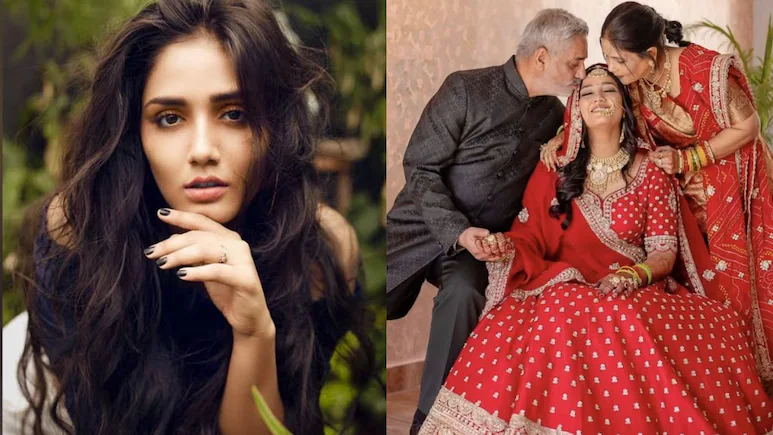
Schizophrenia, DID, depression, anxiety — these are real illnesses that deserve real clinical understanding, not courtroom props. When powerful accused parties reach for “she was mentally ill” as their first line of defence, they are doing two things simultaneously: defaming the dead and stigmatising millions of patients who had nothing to do with this tragedy.
Twisha Sharma was not “two people.” She was one woman with a ticket to home that she never used. That is what demands answers — not a diagnosis pulled from thin air by a retired judge and his wife, a former judicial officer/magistrate, trying to stay out of prison.
Mental illness is real. So is using mental illness as a weapon. India needs to learn the difference — urgently.
Comments

Hi, I’m Nishanth Muraleedharan (also known as Nishani)—an IT engineer turned internet entrepreneur with 25+ years in the textile industry. As the Founder & CEO of "DMZ International Imports & Exports" and President & Chairperson of the "Save Handloom Foundation", I’m committed to reviving India’s handloom heritage by empowering artisans through sustainable practices and advanced technologies like Blockchain, AI, AR & VR. I write what I love to read—thought-provoking, purposeful, and rooted in impact. nishani.in is not just a blog — it's a mark, a sign, a symbol, an impression of the naked truth. Like what you read? Buy me a chai and keep the ideas brewing. ☕💭 For advertising on any of our platforms, WhatsApp me on : +91-91-0950-0950 or email me @ support@dmzinternational.com


