
The Complete, Unfiltered Trump: Birth to Billionaire to Bluster
From an immigrant’s grandson to the most disruptive president in American history — every chapter, every contradiction, every scandal, laid bare.
Donald John Trump is the only man in American history who managed to go bankrupt six times, get impeached twice, get indicted on 91 criminal counts, lose an election, incite an insurrection, and still walk back into the White House. If you think that’s an accident or a miracle, you haven’t been paying attention. This is the full story.
Part One: The Roots — The Immigrants Who Built an Empire They Pretended Wasn’t There
Here is the first and most ironic truth about Donald Trump, the man who built his political career on keeping immigrants out: every single one of his grandparents was an immigrant, and only one of his parents was born in the United States.
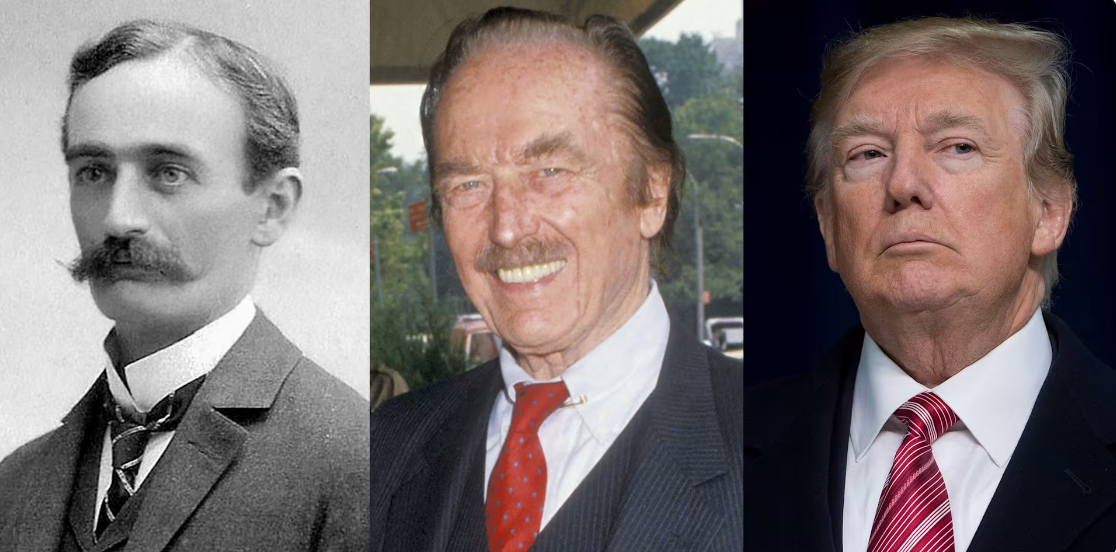
Friedrich Trump, Donald’s paternal grandfather, emigrated from Kallstadt in Bavaria, Germany, at just 16 in 1885. He was part of a million-German wave into America during that decade. He anglicized his name to Frederick and spent the Klondike Gold Rush years not mining gold but doing something cleverer — running restaurants and hotels for the men who were. At least one biographer has suggested these establishments also offered more carnal services, an accusation Donald has always denied. Friedrich died in 1918 at 49 during the Spanish flu pandemic, leaving a modest estate to his wife Elizabeth Christ Trump.
Mary Anne MacLeod, Donald’s mother, was born in 1918 on the Isle of Lewis in the Scottish Outer Hebrides, in a Gaelic-speaking fishing and crofting community of genuine poverty. She sailed to America in 1930 and met Fred Trump at a social party in Queens. She married him in 1936.
Fred Trump — Frederick Christ Trump Sr. — was born in the Bronx to Friedrich and Elizabeth. He built hundreds of homes and thousands of apartment units across Brooklyn and Queens using federal loan guarantees. He was investigated by a U.S. Senate committee in 1954 for profiteering on those federally subsidised projects, and again by New York State in 1966. He quietly and falsely claimed for decades to be of Swedish descent — a lie Donald perpetuated into the 1980s. Why Swedish? Because Fred had Jewish tenants and didn’t want anti-Semitic associations. This is the family myth-making that Donald Trump inherited and perfected.
The Family at a Glance:
- Grandparents: Friedrich Trump (German immigrant), Elizabeth Christ Trump (American-born); Mary MacAuley and Donald Smith (both Scottish)
- Parents: Fred Trump (born Bronx, USA) and Mary Anne MacLeod (born Isle of Lewis, Scotland)
- Siblings: Maryanne (judge), Fred Jr. (died of alcoholism, 1981, age 43), Elizabeth, Robert
- Wives: Ivana Zelníčková (1977–1992), Marla Maples (1993–1999), Melania Knauss (2005–present)
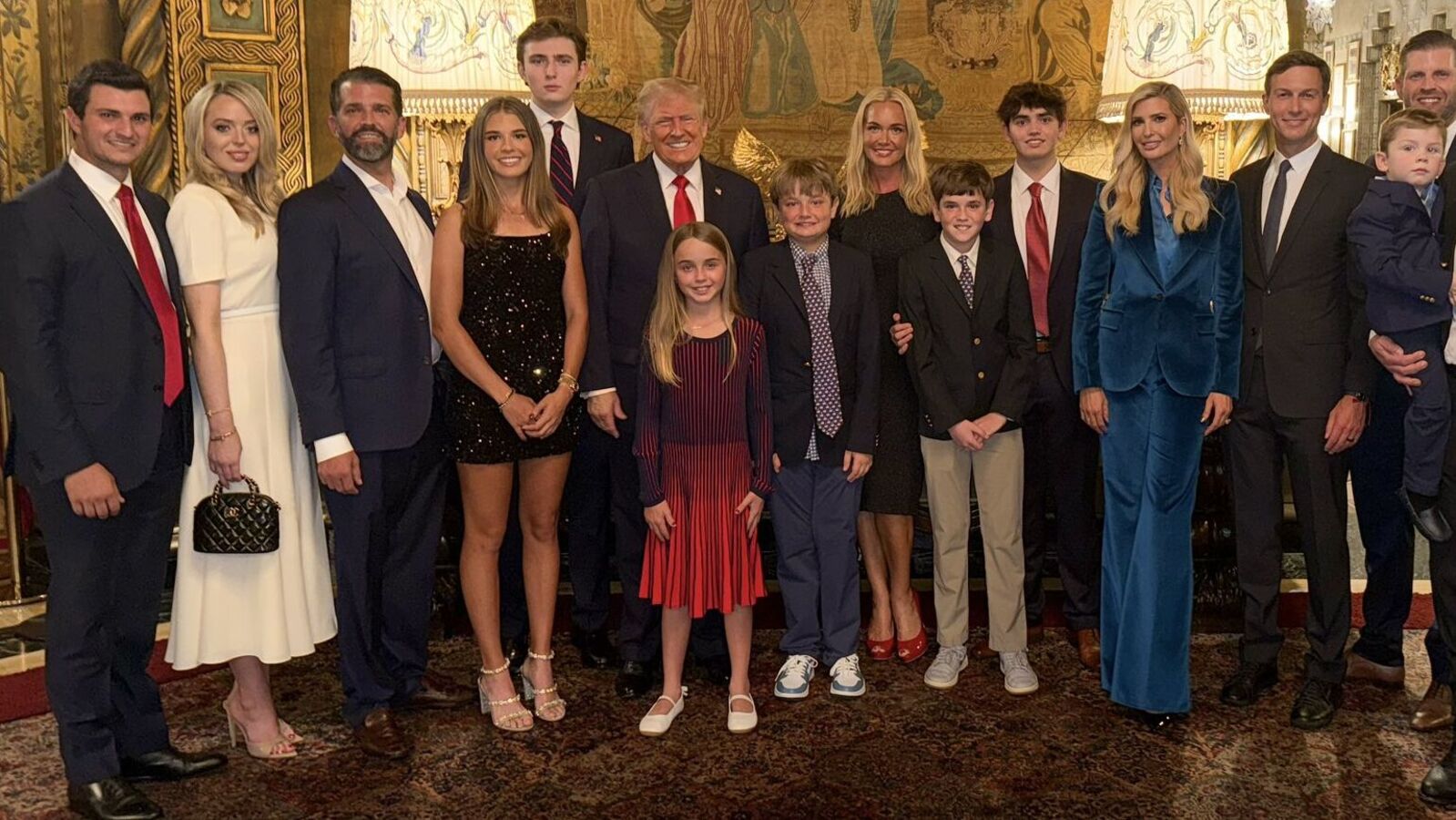
- Children: Donald Jr. (1977), Ivanka (1981), Eric (1984) by Ivana; Tiffany (1993) by Marla; Barron (2006) by Melania
- Grandchildren: 11
Part Two: The Boy — Jamaica Estates, the Military Academy, and Learning to Never Show Weakness
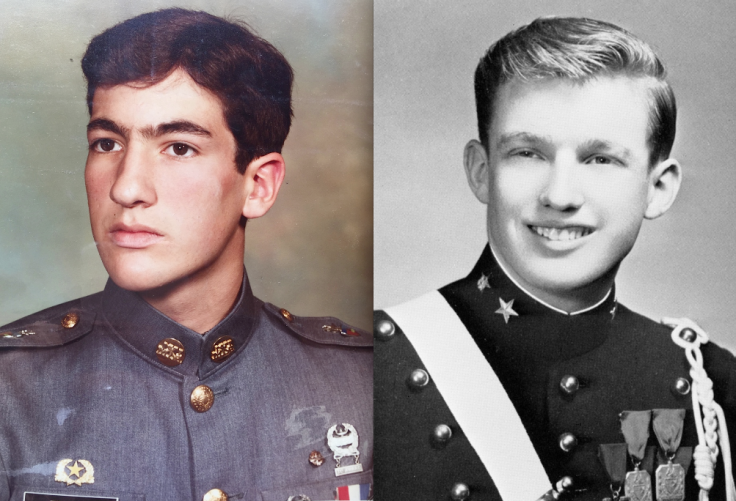
Donald John Trump was born on June 14, 1946, the fourth of five children, in a Tudor-style house Fred had built himself in Jamaica Estates, Queens. He grew up in a 23-room, nine-bathroom mansion — wealthy, yes, but not Manhattan-penthouse wealthy. Not yet.
Psychoanalysts who have studied Trump note the formative influence of Fred Trump Sr. — described by biographer Dan McAdams as “a brutal, endlessly acquisitive man who directed contempt toward others — including members of his own family — who demonstrated weakness of any kind.” In Fred’s world, losing was a character defect. Crying was weakness. Failure was disgrace. These lessons embedded themselves deeply in his fourth child.
Young Donald was energetic, dominant, and difficult. At 13, his parents enrolled him at New York Military Academy (NYMA), north of the city — a school designed to instil discipline in boys who needed it. Trump has said he enjoyed the drills. He excelled at baseball. He did not, however, volunteer for actual military service. During Vietnam, he collected five deferments: four for being a student, one for bone spurs in his heels — diagnosed conveniently by a podiatrist who was a tenant in a Fred Trump building. In the 1969 draft lottery, his birthday drew number 356 out of 366. He never served.
After NYMA, he briefly attended Fordham University in the Bronx, then transferred to the Wharton School of Finance and Commerce at the University of Pennsylvania, graduating in 1968 with a bachelor’s degree in economics. He has since spent decades invoking Wharton’s name as though the institution’s reputation launders his every decision. Penn’s own alumni publications have repeatedly noted that his academic record there was unremarkable.
His brother Fred Jr. — quiet, gentle, and drawn to flying — tried working in the family business before becoming an airline pilot. Fred Sr. reportedly belittled him for choosing airplanes over real estate. Freddy Trump died of alcoholism at 43. Donald says this tragedy made him a teetotaller — he doesn’t drink or smoke. His children from his first marriage have said this is true. Make of that what you will about the only form of self-discipline he has ever consistently maintained.
Part Three: The Business — The Deal-Maker, the Bankruptcies, and the Real Scorecard
In 1971, Trump took the reins of his father’s real estate company, renamed it the Trump Organization, and began the pivot from modest outer-borough housing to Manhattan glamour. In 1973, the federal government sued Trump Management for racial discrimination — Black applicants for apartments were allegedly being turned away or steered to Black-majority buildings. Trump and his father counter-sued for $100 million, calling it a smear. They eventually settled without admitting guilt.
The 1980s were Trump’s decade of maximum velocity. He transformed the derelict Commodore Hotel next to Grand Central into the Grand Hyatt. He built Trump Tower on Fifth Avenue — the gold-plated monument to his own name. He acquired casinos in Atlantic City: Trump Plaza, Trump Castle, and the Trump Taj Mahal. He bought the Plaza Hotel. He bought a Boeing 727. He bought a 282-foot yacht. He put his name on everything. His autobiography, The Art of the Deal (1987), became a bestseller — though it was mostly written by ghostwriter Tony Schwartz, who would later say publicly that he felt deep regret for creating the myth.
And then the 1990s arrived and the wheels came off.
Trump had borrowed approximately $5 billion in total, nearly $900 million of which he had personally guaranteed. When the economy turned in 1990, he couldn’t service the debt. Fred Trump, then in his 80s, had to purchase more than $3 million in casino chips at Trump Castle just so the casino could make an interest payment — later ruled an illegal loan by New Jersey regulators, who levied a $65,000 fine. Two Trump companies filed for bankruptcy: the Trump Taj Mahal in 1991 and the Trump Plaza Hotel in 1992. A 1993 biography was titled Lost Tycoon and declared him a “public laughingstock.” He filed four more business bankruptcies after that. Six in total.
“You have to use the laws to your advantage,” Trump told a crowd about his bankruptcies. His supporters heard: he’s clever. The banks and contractors he stiffed heard something else entirely.
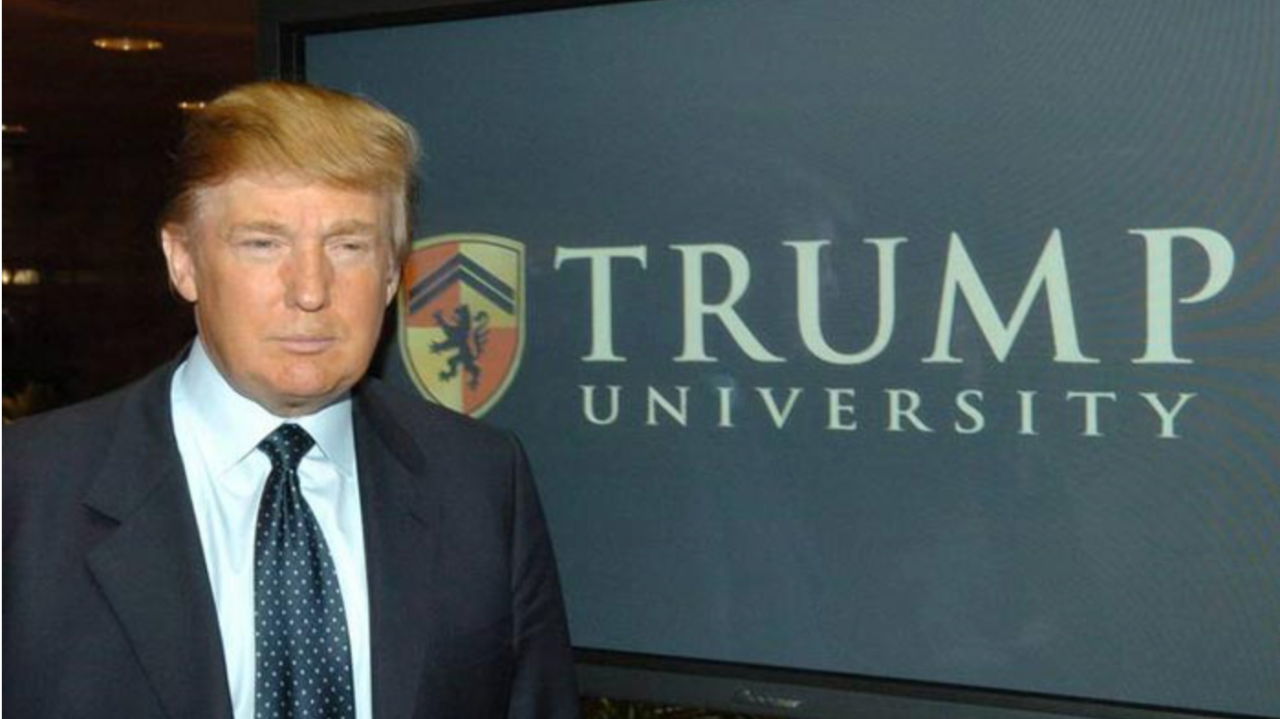
By the 2000s, Trump was largely shut out of traditional bank lending. German bank Deutsche Bank became his primary lender — a relationship that later drew intense congressional scrutiny. His licensing strategy replaced his building strategy: he’d slap the Trump name on buildings, golf courses, wines, steaks, a university, and a modelling agency — collecting fees without carrying the financial risk. Trump University, which promised to teach his real estate secrets, was sued for fraud and settled for $25 million in 2016.
The honest verdict: Trump is a survivor, not a builder. He inherited an estimated $413 million from his father according to a comprehensive 2018 New York Times investigation into tax records — a far cry from the “small loan of a million dollars” he’s fond of citing. His net worth has been estimated between $5 and $6 billion as of early 2026 by Forbes, boosted significantly by Truth Social stock holdings in a company that generates almost no revenue. Measured purely by return on inherited capital, he consistently underperformed what a simple index fund would have returned.
Part Four: The Marriages — Three Wives, Five Children, and the Prenuptial Architecture of Love
Ivana Zelníčková, a Czech model and businesswoman, became his first wife in 1977. She was a genuine partner in the Trump Organization’s early years, running the Plaza Hotel and the Atlantic City casinos. Their divorce in 1992 was tabloid gold — she reportedly claimed in a deposition that he had assaulted her, though she later clarified she didn’t mean “rape” in a criminal sense. She received a handsome settlement and a confidentiality agreement. Ivana died in July 2022 after a fall down the stairs at her Manhattan home.
Marla Maples was the affair that destroyed the Ivana marriage. She appeared at a Trump ski holiday in Aspen and reportedly confronted Ivana directly. Trump married Maples two months after she gave birth to their daughter Tiffany in 1993. They divorced in 1999. Tiffany grew up largely outside the Trump spotlight in California, graduating from Penn and Georgetown Law. She barely featured in either of his presidential campaigns.
Melania Knauss — born in 1970 in what is now Slovenia — met Trump at a fashion party in 1998 while working as a model in Milan, Paris, and New York. They married in 2005 at Mar-a-Lago. Their son Barron was born in 2006. Melania became only the second foreign-born First Lady in American history. She notoriously did not move into the White House immediately in 2017, remaining in New York until Barron’s school year ended. In 2024 she largely declined to campaign for his second term and released a memoir navigating the extraordinary tension of being married to a tornado.
Part Five: Jeffrey Epstein — The Friendship They Both Claimed Never Existed, After It Had to End
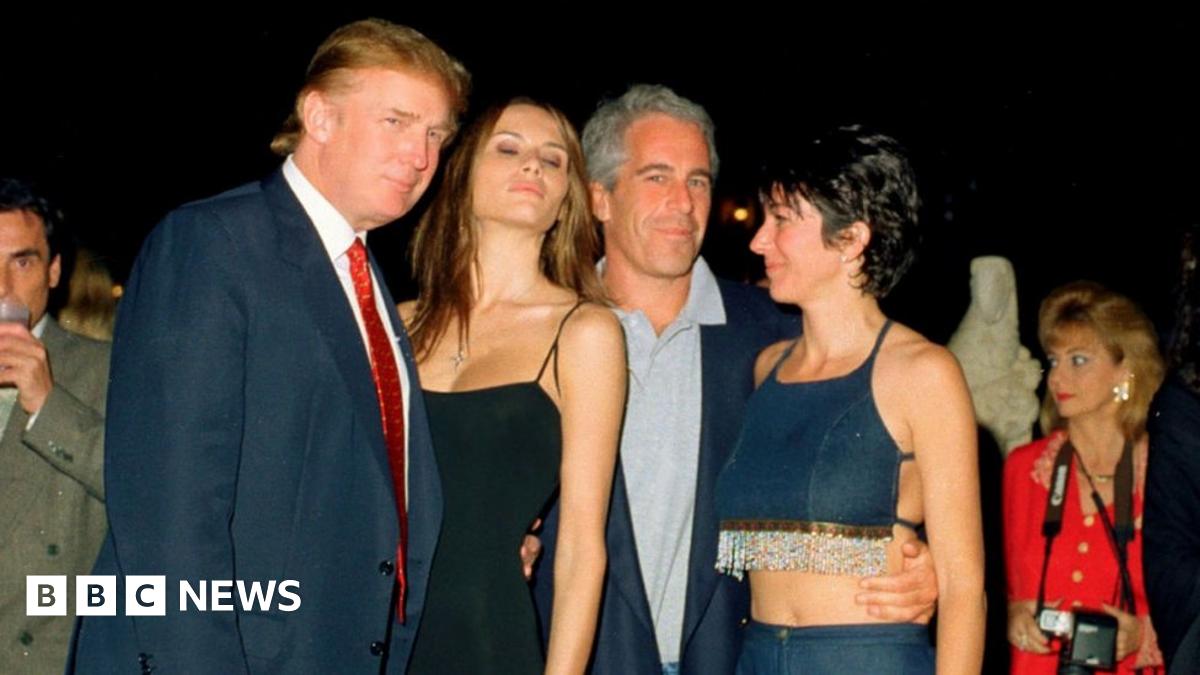
There are friendships, there are social connections, and there is what Trump had with Jeffrey Epstein — a man who would be convicted as a sex trafficker of minors before dying in a Manhattan jail cell in August 2019.
Trump has said he knew Epstein since the late 1980s. In a 2002 New York Magazine profile, he described Epstein as a “terrific guy” who is “a lot of fun to be with,” adding that Epstein “likes beautiful women as much as I do, and many of them are on the younger side.” This quote has aged exactly as badly as it deserves.
Between 1992 and the mid-2000s, the two men were photographed together at Mar-a-Lago and at Victoria’s Secret parties in New York. Trump flew on Epstein’s private jet at least seven times between 1993 and 1997. Epstein attended Trump’s 1993 wedding to Marla Maples. A Mar-a-Lago party in 1992 — filmed by NBC — shows the two men laughing together, with Ghislaine Maxwell visible in the background. Epstein reportedly referred to Trump as his “closest friend for ten years” in a 2019 interview, a characterization echoed by multiple people who knew both men.
A woman testifying at Ghislaine Maxwell’s sex trafficking trial stated that Epstein introduced her to Trump at Mar-a-Lago when she was 14. She alleged no improper behaviour by Trump in this interaction. Virginia Giuffre, another victim, worked as a locker-room attendant at Mar-a-Lago before Maxwell allegedly recruited her into Epstein’s abuse network at age 16. Epstein allegedly wrote in emails that Trump knew “about the girls.” Law enforcement has never charged Trump with any offence related to Epstein.
The relationship fractured in the mid-2000s, though even Trump’s explanation for why keeps changing. He has said Epstein “stole” young female employees from Mar-a-Lago’s spa and that he threw him out “persona non grata.” Others cite a bitter 2004 bidding war over a Palm Beach mansion that Trump won. When Epstein was arrested in 2019, Trump said he hadn’t spoken to him in fifteen years and that he was “not a fan.” The man he called “terrific” in 2002 became someone he “barely knew” by 2025 — despite thousands of photographs, flight logs, and witness accounts saying otherwise.
On the theory that Epstein was an intelligence operative for Israel’s Mossad: there is circumstantial evidence — his links to Robert Maxwell (Ghislaine’s father, a known intelligence-linked figure), his mysteriously acquired wealth, and the nature of the information he accumulated on powerful men. There is no confirmed, sourced, definitive evidence establishing him as a Mossad agent. What is undisputed is that Epstein held compromising information on extraordinarily powerful people, and that information died with him in ways that served many interests simultaneously.
Part Six: The Racism — It Wasn’t Just Rhetoric. It Was Architecture.
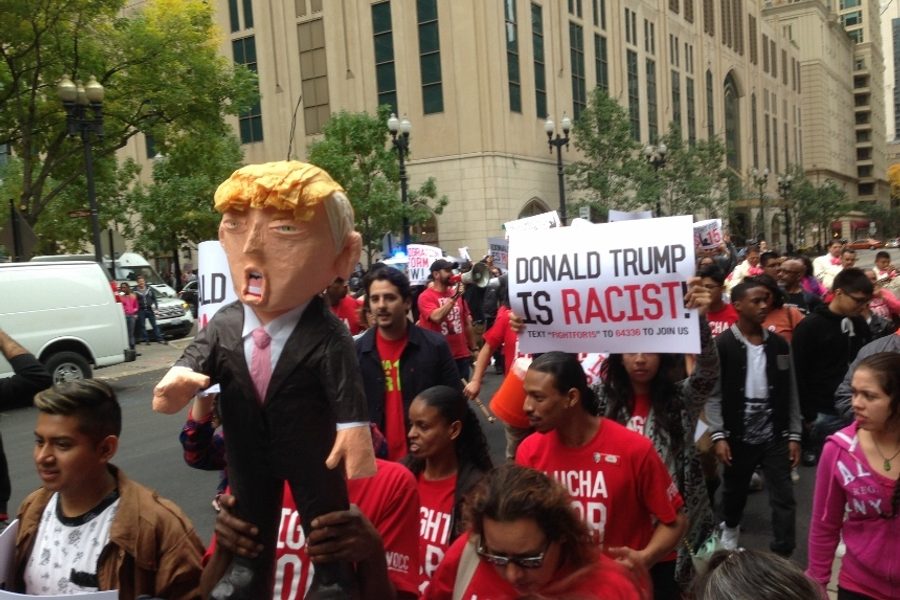
Trump’s racism predates his politics by decades.
In 1973, the Justice Department sued his company for racial discrimination in housing — Black applicants were allegedly turned away or steered to segregated buildings. He settled without admitting guilt.
In 1989, he took out full-page newspaper ads in all four major New York papers calling for the Central Park Five — five Black and Latino teenagers falsely accused of rape — to receive the death penalty. They were later fully exonerated by DNA evidence. Trump never apologised. As recently as 2019, he was still insisting they were guilty.
In 2011, Trump became the loudest voice of the “birther” conspiracy — the racist claim that Barack Obama, the first Black president, was not born in America and was therefore an illegitimate president. He spent years on this. When Obama released his long-form birth certificate, Trump briefly acknowledged it before casting doubt again. He claims credit for “forcing” its release, framing his racist harassment campaign as a public service.
His 2015 campaign announcement called Mexican immigrants “rapists” bringing crime and drugs. His 2017 administration separated over 4,400 children — some just months old — from their migrant parents at the border. By 2024, 1,360 of those children had still not been confirmed reunified with their families. During the 2024 campaign, he referred to immigrants as “barbarians,” “animals,” and “garbage.” He has called majority-Black cities “hellholes.”
His second-term executive orders immediately targeted diversity, equity and inclusion programmes across the federal government. He moved to ban the teaching of Black history and ethnic studies in federally funded institutions. He launched what his administration calls “the largest mass deportation programme in American history.”
This is not a man who occasionally says racially insensitive things. This is a man with a forty-year documented record of race-based policy, race-based rhetoric, and race-based political strategy. The through-line is not ambiguous.
Part Seven: The Politics — How a Reality TV Host Became the Most Powerful Man on Earth. Twice.
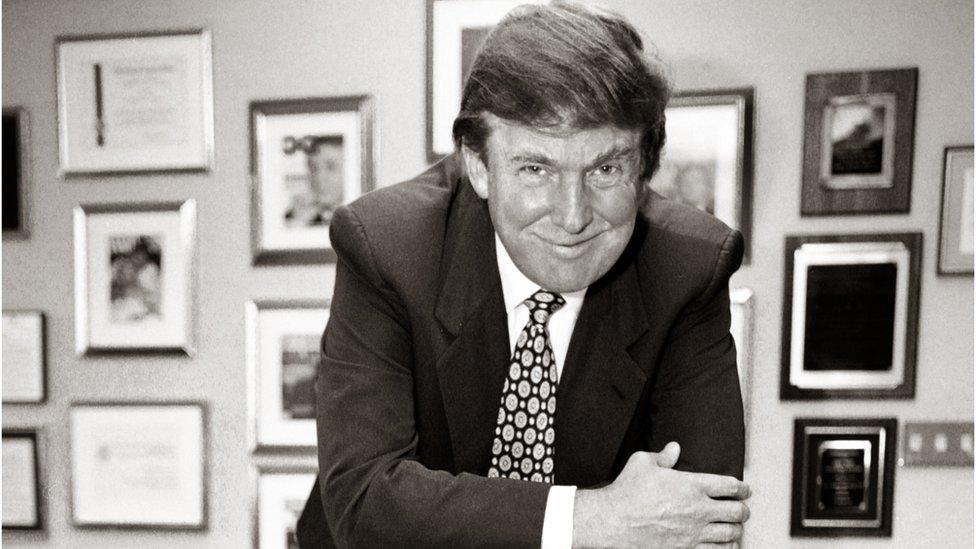
Trump’s political views across his adult life have been a case study in saying whatever serves his current interests. He was a registered Democrat for much of the 1980s and 1990s. He flirted with a presidential run in 2000 under the Reform Party. He has donated to both parties at various points. He has praised Hillary Clinton, Barack Obama, and Nancy Pelosi when it suited him.
From 2004 to 2015, he hosted The Apprentice on NBC, which reset his public image from bankrupt-businessman-turned-laughingstock to the embodiment of corporate genius. “You’re fired” became cultural shorthand. The show ran on mythology — Trump barely ran his businesses at this point. But it gave him something more valuable: a weekly national audience primed to believe in his genius.
On June 16, 2015, he rode a golden escalator at Trump Tower to announce his candidacy, flanked by paid actors hired to fill the crowd. The mainstream media treated it as entertainment. He exploited an estimated $2 billion in free media coverage during 2016 — more than any candidate in history. He won the Republican primary by dominating a fragmented field. He won the general election against Hillary Clinton despite losing the popular vote by nearly 3 million, via the Electoral College.
His first term (2017–2021) was chaotic and consequential in equal measure. He passed a massive tax cut disproportionately benefiting corporations and high earners. He appointed three Supreme Court justices who would later overturn Roe v. Wade. He separated families at the border. He pulled America out of the Paris Climate Agreement and the Iran nuclear deal. He was impeached twice — first for pressuring Ukraine to investigate Joe Biden by threatening to withhold military aid; second for inciting the January 6, 2021 insurrection at the US Capitol, which left five people dead and over 140 officers injured. Both times, the Republican-controlled Senate acquitted him.
He lost the 2020 election to Joe Biden by 7 million votes in the popular count. He refused to concede. He told his supporters the election was stolen — a claim that was rejected by 60 courts, his own Attorney General, his own Vice President, and every independent election authority that examined it. On January 6, 2021, he watched on television as his supporters breached the Capitol. He was later indicted on four federal criminal counts related to his attempts to overturn the election result.
Part Eight: 2024 — Why He Won, and What It Actually Tells You
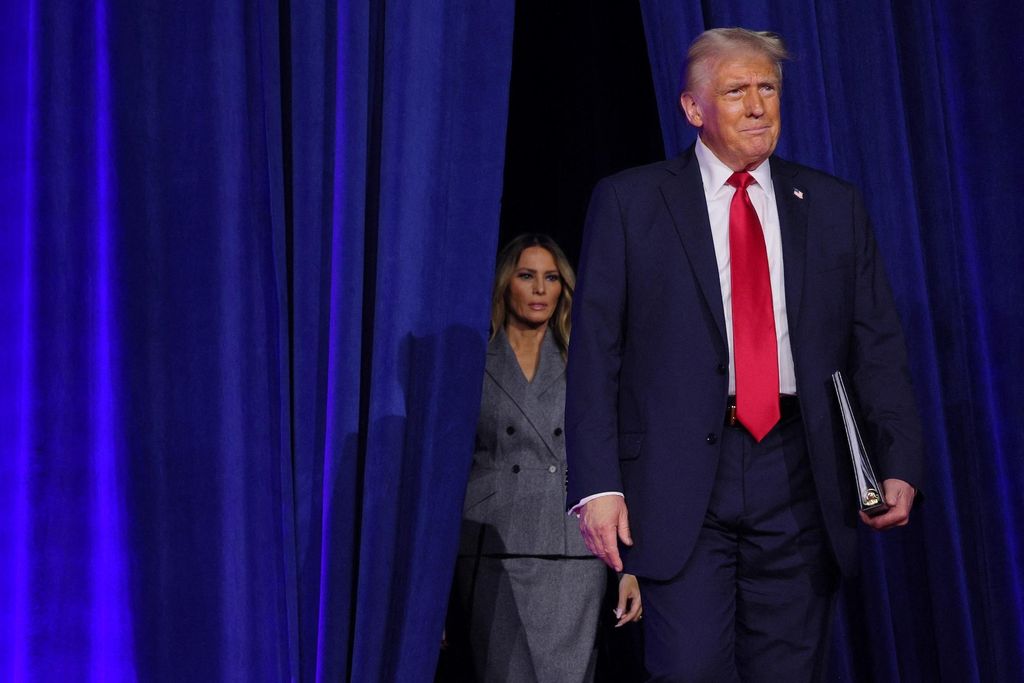
The reductive explanation — that Americans voted for Trump in 2024 purely because of racism — is politically satisfying but factually incomplete. The fuller picture is more damning, not less.
Trump won the 2024 election with 49.8% of the popular vote — the first Republican to win the popular vote since George W. Bush in 2004. He won 312 Electoral College votes. He did this by making significant gains among groups that have historically leaned Democratic: young Black men, Hispanic men, low-income voters of all races, and young people broadly. The economy and inflation ranked as the decisive issue across virtually every demographic group surveyed after the election.
What this means is that Trump’s second victory was partly enabled by Democratic failure — a president who aged visibly in office, a vice president who struggled to articulate a clear alternative vision, and a party that had drifted far enough left on cultural issues to alienate working-class voters of all ethnicities who felt economically squeezed and culturally condescended to.
But racism was not absent. A polling analysis confirmed that a substantial minority of white Republican voters were motivated by anxiety about white demographic decline — an anxiety Trump’s campaign explicitly stoked with rhetoric about immigrants being “garbage” and America being “invaded.” His base heard this and responded.
The honest answer is that people voted for Trump in 2024 for multiple, overlapping reasons: inflation, immigration anxiety, anti-elite resentment, nostalgia for cheaper eggs, genuine racism, and Democratic exhaustion. Reducing it to one cause flatters no one’s intelligence. But pretending the racial dimension wasn’t there flatters Trump’s.
Part Nine: The Personality — Is He a Narcissist? Ask 200 Psychologists.
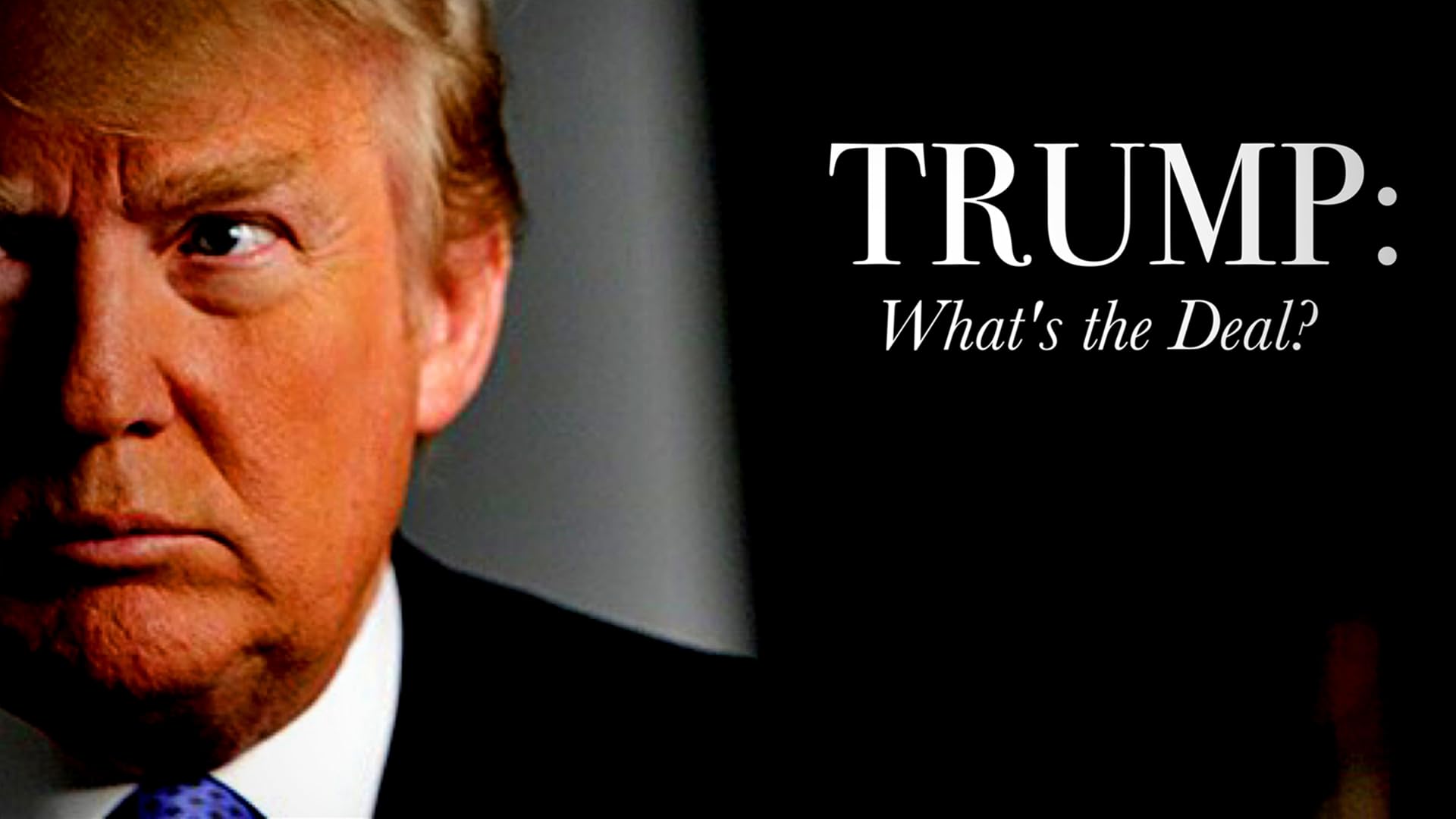
More than 200 mental health professionals signed an open letter before the 2024 election warning the public of Trump’s “malignant narcissism.” Earlier in his first term, a similar letter was signed by psychiatrists and psychologists. The American Psychiatric Association’s Goldwater Rule cautions against diagnosing public figures without a personal clinical assessment, so none of this constitutes a formal diagnosis. What it constitutes is pattern recognition — and the pattern is hard to miss.
The DSM-5 criteria for Narcissistic Personality Disorder include: a grandiose sense of self-importance, preoccupation with fantasies of unlimited success, belief in one’s special uniqueness, a need for excessive admiration, a sense of entitlement, interpersonal exploitation, lack of empathy, and arrogance. Clinicians who have assessed Trump’s public behaviour note that he meets most or all of these criteria through thousands of hours of documented conduct.
Psychiatrist Allen Frances — who literally wrote the DSM criteria for NPD — argues Trump is a narcissist but doesn’t technically meet the disorder threshold because he doesn’t appear to suffer from it. He makes others suffer instead. This is what some clinicians call malignant narcissism: narcissism fused with antisocial traits, sadism, and paranoia.
In practice this looks like: calling himself a “stable genius” repeatedly and publicly; claiming credit for scientific inventions and weather events; lying so constantly that PolitiFact found only 2.5% of his 2016 campaign statements were wholly true; never acknowledging error; responding to any criticism with the personal destruction of the critic; and running his organisations by hiring two people for the same job and letting them battle for his approval.
Was he always like this? Yes — the core personality has been documented consistently since the 1980s. What has changed is the uninhibited expression. He is less filtered in his second term, more openly contemptuous, more willing to say the quiet part loud. Whether this reflects age, the freedom of a final term, the removal of moderating advisors, or simply the fact that nothing has ever stopped him — probably all of the above.
He has called himself the best president in history, better than Lincoln. He has said he knows more about military strategy than his generals, more about technology than Silicon Valley, more about medicine than his doctors. He has boasted about the size of his hands, his crowd sizes, his television ratings, and his golf handicap — in press conferences, in Oval Office meetings, and in addresses to the United Nations.
He wakes before 6 a.m., spends his mornings watching Fox News, posting on Truth Social, and making calls. His formal workday typically begins around 11 a.m. He skips breakfast, rarely exercises beyond golf, consumes reported quantities of Diet Coke that alarm nutritionists, prefers McDonald’s and KFC, insists his steaks be served well-done with ketchup, and sleeps approximately four to five hours a night. He travels on Air Force One, flies by Marine One helicopter, and rides in “The Beast” — an armoured Cadillac limousine built to withstand a rocket attack. In his private life, he flew in a Boeing 757 branded “TRUMP” in block capitals on the fuselage. He has visited his own golf properties hundreds of times since returning to the presidency in 2025, at cost to the American taxpayer.
Part Ten: The Nobel Prize Theatre — The Art of Taking Credit for Other People’s Decisions
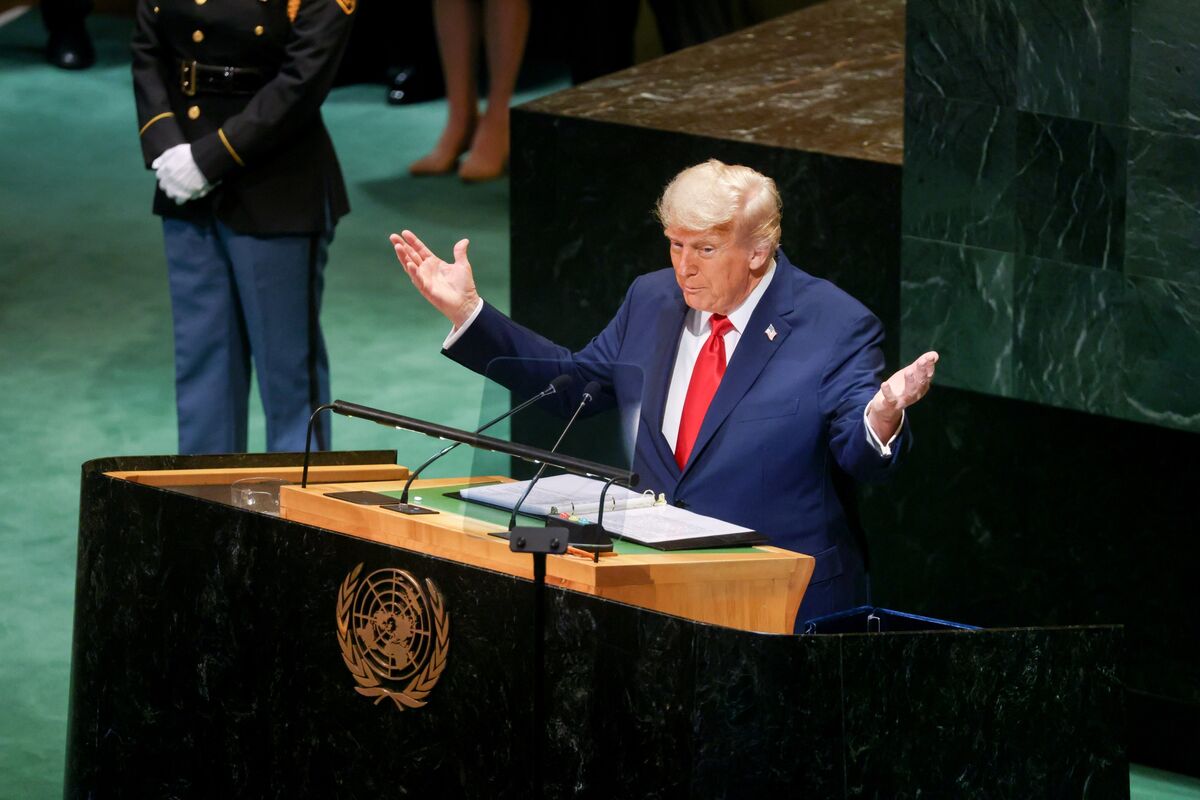
Nothing illustrates Trump’s character more precisely than his campaign for the Nobel Peace Prize in 2025.
He declared — repeatedly, in public, at the United Nations — that he had “ended seven wars,” then upgraded the count to eight. He claimed credit for ceasefires between India and Pakistan, Israel and Iran, Cambodia and Thailand, Rwanda and the Democratic Republic of Congo, Serbia and Kosovo, and Egypt and Ethiopia. He said he was “averaging about a war a month.”
The facts are considerably more complicated. India flatly denied Trump played any role in its ceasefire with Pakistan. India’s Foreign Secretary stated that Pakistan’s military contacted India directly to arrange the halt to hostilities. India’s External Affairs Minister subsequently said no foreign leader asked India to stop its military operations. When Trump told Prime Minister Modi that Pakistan was considering nominating him for the Nobel and implicitly suggested India should do the same, Modi declined. Trump then imposed 50% tariffs on Indian goods.
The Iran ceasefire came after Trump authorised US military strikes on three Iranian nuclear sites. Bombing a country and then claiming credit for the resulting ceasefire is a novel form of peacemaking. Cambodia and Thailand’s truce was also mediated by Malaysia and Chinese negotiators — not exclusively Trump. Rwanda and the DRC’s deal was described by foreign policy experts as significant but fragile. Kosovo and Serbia showed little evidence of an imminent war that required prevention. Egypt and Ethiopia had no deal on the table at all.
Pakistan nominated Trump for the Nobel — and then, within 24 hours, condemned the US airstrikes on Iran as a violation of international law. Iran denied that any peace talks with the US were even taking place while Trump was claiming credit for brokering them. Saudi Arabia’s relationship with Trump has followed his characteristic pattern: effusive flattery when money and oil flow, contemptuous demands when they don’t.
The Nobel Committee awarded the 2025 prize to Venezuelan democratic opposition leader María Corina Machado. The White House said the committee had “placed politics over peace.” Trump said he “didn’t do it for that.” It was perhaps the most transparently false statement he made that month — in a month of considerable competition.
The Iran Trap: How Trump’s Loyalty to Netanyahu Dragged America Into Its Most Dangerous War in a Generation
What began as Donald Trump playing geopolitical cheerleader for Benjamin Netanyahu has, as of today, metastasised into a full-scale war that the United States did not vote for, Congress did not authorise, and the American public increasingly does not support.
On February 28, 2026, the United States and Israel launched a joint military operation against Iran — killing Supreme Leader Ali Khamenei in an airstrike on his compound, a move so seismic that even Trump’s own team struggled to offer a consistent explanation for why it happened.
In the weeks since, the US military has struck over 8,000 Iranian military targets, Iran has retaliated by firing drones and ballistic missiles at US bases across Bahrain, Jordan, Kuwait, and the Gulf, and the Strait of Hormuz — through which nearly 20% of the world’s oil passes — has been effectively strangled by Iran, sending Brent crude screaming past $100 a barrel and triggering a global inflation shock that the IMF has warned will hit every economy on earth.
Now comes the next escalation that Trump genuinely did not see coming: Russia. While Moscow has stopped short of sending troops, it has been feeding Iran real-time satellite intelligence on the precise locations of US warships and aircraft — data that has enabled Iran to fire with far greater precision than it could have managed alone.
Russian-upgraded Shahed drones, fitted with Kremlin-developed navigation modules that resist electronic jamming, have struck a British airbase in Cyprus and been used against Gulf states hosting US forces.
Putin, who signed a comprehensive strategic partnership treaty with Iran in October 2025, is playing this brilliantly — bleeding American resources, watching oil revenues fill his war chest for Ukraine, and sitting back while Trump does the heavy lifting of destabilising the Middle East.
Meanwhile the justification for the war keeps changing by the hour: Trump’s officials have offered, at various points, that the attack was to pre-empt Iranian retaliation against US assets, to destroy Iran’s nuclear programme, to secure Iran’s oil resources, to achieve regime change, or to prevent an imminent threat — explanations that contradict each other and that the IAEA has partially dismantled by noting there was no confirmed nuclear weapons programme when the bombs started falling.
Iran has a new Supreme Leader, Mojtaba Khamenei, who has declared there is “no room for diplomacy,” and a top Iranian foreign policy official told CNN this week the country “can keep fighting.”
US boots on Iranian soil — a ground invasion option Trump has not formally ruled out — would be the kind of strategic miscalculation that defines a presidency in the worst possible way, and the world is watching to see if a man whose attention span reportedly does not outlast a Fox News segment is truly capable of managing the consequences of the fire he lit to keep Netanyahu warm.
Trump walks into press conferences and says the war will be over “soon” — the same word he used about Ukraine, which is also still burning. He berated a Fox News reporter for asking about Russia’s intelligence support to Iran at a meeting about college sports compensation.
He told the Saudi crown prince, America’s supposed ally in the region, to be grateful enough to “kiss his ass” for US protection — a remark that landed in Riyadh like a grenade and has since become global shorthand for American diplomatic incoherence.
The man who campaigned as the “peacemaker-in-chief,” who grumbled about not getting a Nobel Prize for stopping wars, has now started one that has no exit ramp, no congressional mandate, no coherent objective, and an opponent that is being quietly armed by a nuclear power that Trump spent his first months in office trying to befriend.
This is not strength. This is what happens when a narcissist who cannot admit miscalculation meets a war that doesn’t care about his branding.
The Verdict: So What Is He, Really?
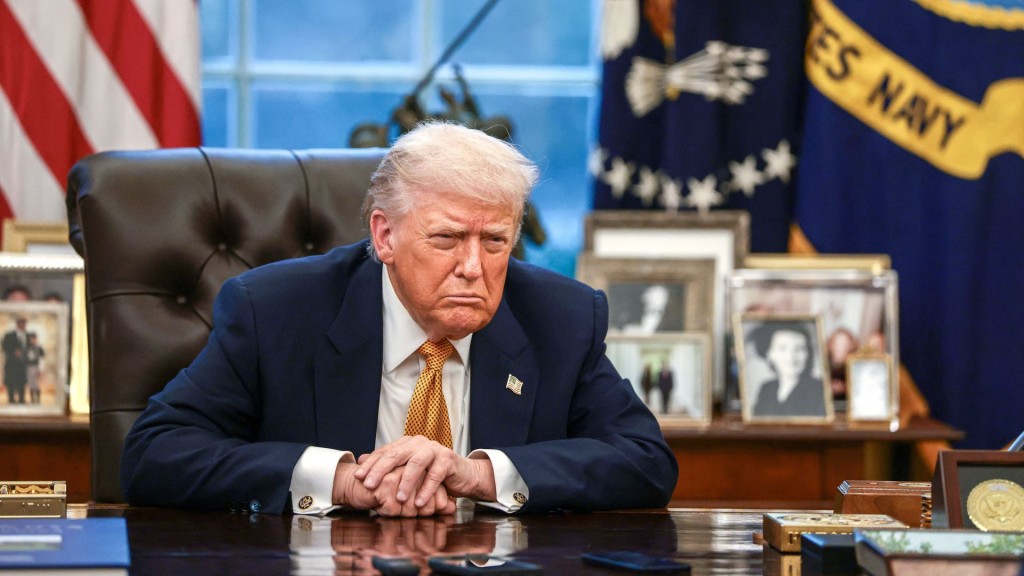
Donald Trump is the grandson of immigrants who built a mythology of nativism. He is the son of a man who taught him that weakness is unforgivable — and who shaped a personality so allergic to failure that failure became repackaged as genius at every turn.
He is a man who inherited hundreds of millions, went bankrupt six times, and convinced half of America he was a self-made genius. He is a man whose businesses are littered with lawsuits, frauds, and stiffed contractors — but who survived because he understood that in America, the story you tell about yourself matters more than the truth.
Is he a good businessman? He is a spectacular self-promoter who has occasionally built real things, but who by any objective financial measure consistently underperformed what a passive index fund would have returned on the same inherited capital.
Is he a good leader? He is a gifted performer who mistakes domination for leadership and applause for governance. Every organisation he has led has been marked by chaos, staff turnover, and the elevation of loyalty over competence.
Is he a racist? His documented record on housing discrimination, the Central Park Five, the birther movement, his immigration rhetoric across four decades, and his second-term executive orders form a consistent body of evidence that goes well beyond “racially insensitive.”
Is he a narcissist? By the observed behavioural criteria, profoundly so — though whether this constitutes a diagnosable clinical disorder or simply a catastrophically effective personality strategy is a question clinicians continue to debate.
What he is, most fundamentally, is a mirror. He reflects back to his supporters the rage, the sense of dispossession, the contempt for condescending elites, and the desire for a strongman who breaks things that polite society said couldn’t be broken. That mirror has twice been powerful enough to win the presidency of the United States.
That is not a reflection on Trump alone. It is a reflection on the country that chose him — and on the opposition that failed, twice, to offer anything compelling enough to stop him.
History will not be kind to him. But history, as he has demonstrated his entire life, is written by whoever is still standing and willing to insist loudest on the version they prefer.
You can read more blogs written by me on Trump in below links:
How Trump Gutted the CIA and Went to War on a Hunch
Hypersonic, Defiant, and Still Standing: Iran’s 31-Day War
The Clock Is Ticking: 3 Scenarios That Could Set the World on Fire — And the Corner Trump Has Painted Himself Into
Trump’s War in Iran: When Regional Battles Turn into a Global Humanitarian Crisis
Trump’s War in Iran: When Regional Battles Turn into a Global Humanitarian Crisis
Echoes of Power: Unpacking the Parallels Between Trump and Netanyahu
Echoes of Power: Unpacking the Parallels Between Trump and Netanyahu
Davos 2026: Trump, Greenland, Canada — and the Return of Power Politics
Davos 2026: Trump, Greenland, Canada — and the Return of Power Politics
Why Trump Wants Greenland: Strategic Ambitions in the Arctic
Why Trump Wants Greenland: Strategic Ambitions in the Arctic
How Trump’s America kidnapped Venezuela’s president Maduro in a daring midnight raid
How Trump’s America kidnapped Venezuela’s president Maduro in a daring midnight raid
Comments

Hi, I’m Nishanth Muraleedharan (also known as Nishani)—an IT engineer turned internet entrepreneur with 25+ years in the textile industry. As the Founder & CEO of "DMZ International Imports & Exports" and President & Chairperson of the "Save Handloom Foundation", I’m committed to reviving India’s handloom heritage by empowering artisans through sustainable practices and advanced technologies like Blockchain, AI, AR & VR. I write what I love to read—thought-provoking, purposeful, and rooted in impact. nishani.in is not just a blog — it's a mark, a sign, a symbol, an impression of the naked truth. Like what you read? Buy me a chai and keep the ideas brewing. ☕💭 For advertising on any of our platforms, WhatsApp me on : +91-91-0950-0950 or email me @ support@dmzinternational.com