
Without the Top 1%, Are We Still India?
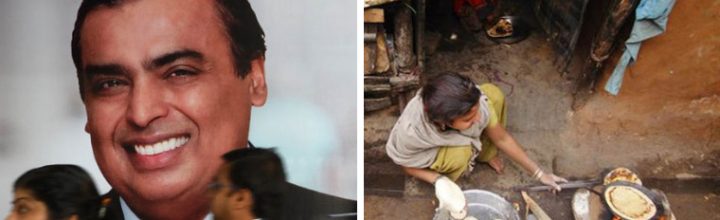
🇮🇳 A Reality Check on Inequality That Hurts More Than We Admit
🚫 Remove the Top 1%. Now What?
Imagine waking up in a version of India where the Ambanis, Adanis, Tatas, Birlas, Premjis, and all those billionaires and centimillionaires no longer existed. No lavish weddings that cost more than rural district budgets. No private jets flying to Davos or Dubai. No luxury malls filled with imported Italian marble and overpriced perfumes. No one hoarding land in metro cities or buying ₹200 crore bungalows in Lutyens’ Delhi.
Seems like poetic justice? A socialist’s dream?
Now take a deep breath — and open your eyes.
Because the India left behind may be far more fragile than we ever dared to admit.
📉 Strip Away the Billionaires, Strip Away the Illusion
Let’s be brutally honest:
India’s image as the “next global superpower” rests heavily on its top 1%.
- The GDP that we boast about?
A disproportionate chunk is created by the businesses, factories, and investments of the ultra-rich. - The stock market surge that gives us bragging rights?
Largely driven by the profitability of top corporations owned by a handful of families. - The global trust in India’s economy?
Rooted in unicorns, billion-dollar companies, and a few internationally respected tycoons.
Take them away — and we fall, hard.
So hard that we may not even match the economic metrics of middle-income African nations like Kenya or Ghana.
🏚️ What Remains Is a Crushed Middle Class and the Invisible Poor
Here’s the shocking truth most of us avoid:
- Only 3% of Indians pay income tax.
- More than 75% of Indians live on less than ₹150 per day.
- Rural India still struggles with basic toilets, clean water, and decent schools.
Take out the top 1% and India’s per capita income nosedives.
Take out the wealth creators and you expose a nation still haunted by:
- Child malnutrition
- Broken healthcare
- Rampant unemployment
- Brain drain
- Caste-crippled village economies
Our global rankings on HDI (Human Development Index) or Press Freedom or Air Quality already look like those of fragile African states. Remove the billionaires — and even our GDP rankings crumble.
💸 Who Let This Happen?
The blame isn’t just on the rich — it’s also on a governance model that never fixed the root issues:
- A colonial education system that creates obedient clerks, not innovators.
- A jobless growth model that measures success in Sensex points, not skills or social mobility.
- A political system that celebrates freebies while ignoring structural reforms.
- A society that confuses “jugaad” with innovation and “chalta hai” with acceptance.
🔥 Is the Top 1% the Problem — or the Symptom?
It’s easy to envy the ultra-rich.
But removing them doesn’t fix the roads.
Doesn’t hire teachers.
Doesn’t feed the hungry.
Doesn’t reform corrupt systems.
In fact, it could worsen things.
Because our real sickness is not wealth — it’s inequality, exclusion, and elitism.
And unless we raise the floor, cutting the ceiling solves nothing.
🧠 Final Thought:
A nation doesn’t become great by decapitating its tallest towers. It rises when every foundation stone is strengthened.
Instead of dreaming about a rich-less India, maybe we should work toward an India where being rich doesn’t mean being removed — and being poor doesn’t mean being forgotten.
What we need is not revenge on the top 1%.
What we need is dignity, opportunity, and equity for the bottom 99%.
Only then can we proudly say:
We are truly better than any broken statistic — or broken continent comparison.
Comments

Hi, I’m Nishanth Muraleedharan (also known as Nishani)—an IT engineer turned internet entrepreneur with 25+ years in the textile industry. As the Founder & CEO of "DMZ International Imports & Exports" and President & Chairperson of the "Save Handloom Foundation", I’m committed to reviving India’s handloom heritage by empowering artisans through sustainable practices and advanced technologies like Blockchain, AI, AR & VR. I write what I love to read—thought-provoking, purposeful, and rooted in impact. nishani.in is not just a blog — it's a mark, a sign, a symbol, an impression of the naked truth. Like what you read? Buy me a chai and keep the ideas brewing. ☕💭 For advertising on any of our platforms, WhatsApp me on : +91-91-0950-0950 or email me @ support@dmzinternational.com


