
The Birth Lottery: Why You Were Born Who You Are, Where You Are
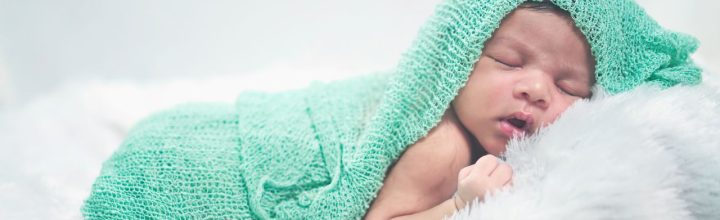
You did not choose your mother. You did not choose your father. You did not choose the country, the city, the language, or the religion you opened your eyes into. Before you could think, decide, or agree to anything, your entire starting point in life was already fixed. This is the birth lottery, and almost nobody talks about how total it is.
Compare this to death. Death also arrives without full control, but human beings have more say in it than they do in birth. A person can delay death through medicine, avoid it through caution, or in tragic cases, bring it early through an accident or by choice. There is a small window of human agency in death. In birth, there is none. You had zero vote in your parents, your family’s wealth, your nation’s laws, or even your own body.
Why Geography Decides So Much
A child born in a well-off family in Bangalore starts life with clean water, school admission, and a support system. A child born in a drought-hit village or a conflict zone starts life fighting for survival before age five. Neither child did anything to deserve their starting line. Economists call this “birthplace luck,” and studies on global inequality consistently find that where a person is born predicts their lifetime income and health outcomes more strongly than almost any other single factor, including individual effort in early life.
The Orphan Question
Now consider the harder case: children who lose the family lottery entirely. India carries the world’s largest population of children without parental care. Various estimates, compiled by UNICEF and cited across researchers, place the number of orphaned or abandoned children in India between 25 million and 31 million, more than the entire population of Sri Lanka or the Netherlands. During the COVID-19 pandemic alone, a study published in The Lancet estimated that more than 19 lakh Indian children lost a parent or caregiver between 2020 and 2021, twelve times higher than the government’s own official count at the time.
Children become orphans through many routes: disease, accidents, war, poverty-driven abandonment, or parents who simply cannot cope. None of these children asked for this outcome. Their brains, their potential, their hopes were exactly as formed as any other child’s. The only difference was circumstance, arriving before they were old enough to understand what circumstance even meant.
What Science Says About Birth Itself
Biologically, birth is not mysterious. It follows a fixed process: fertilization, cell division, and roughly forty weeks of development guided by DNA instructions inherited from two people who themselves had no say in their own birth. The randomness goes deeper than which family you land in. It reaches into which genes you inherit within that family. Every child receives roughly half their genetic material from each parent, but not the same half every time, which is why siblings from the same parents can look and think so differently.
Does Brain Capacity Come From Your Parents?
This is where research gets uncomfortable. Decades of twin studies, including the well-known Minnesota Study of Twins Reared Apart, have tracked identical twins separated at birth and raised in different households. Identical twins raised in completely different homes still show close similarity in intelligence test scores, closer than fraternal twins raised in the same home. Across many large studies, heritability of intelligence, meaning how much of the difference between people can be traced to genetics, is estimated between 50 and 80 percent in adults, and this figure tends to rise with age rather than fall. This does not mean a child’s intelligence is a fixed copy of a parent’s. Intelligence is shaped by hundreds of genes working together, not one single “smart gene.” Environment, nutrition, and schooling still matter, especially early on. But the baseline ease with which a brain absorbs and processes information does carry a real genetic signature, most of it decided the moment sperm met egg.
What Religions Say About This
Every major faith has tried to answer why we are born into a particular body and family. Hinduism and Sikhism trace it to karma, the idea that the soul carries forward the results of past actions across many lives, so the family and circumstances a person is born into are seen as a continuation of that account, not a random draw. Buddhism shares the idea of rebirth but frames liberation as breaking free from this cycle through the end of craving and ignorance. Sikhism adds the concept of hukam, the divine order, where karma decides the body one receives, but effort and God’s grace can still change the path ahead.
Islam and Christianity take a different route. Islam rejects rebirth entirely, holding that a person gets one life and one chance, with God alone deciding the family and place of birth as a test, not a punishment for a past life. Christianity, depending on the branch, ranges from the belief that God has a specific plan for every birth, to the view that birth circumstances are part of a broader mystery faith does not require solving. Across every tradition, the message lands in a similar place: the family and body you are born into is not something you argue with, only something you are asked to make the most of.
The Uncomfortable Truth
Put together, these findings say something most people avoid saying out loud. Your body, your baseline brain capacity, your nationality, your family’s resources, and even whether you have a family at all, were largely decided before you drew your first breath. Free will begins only after that starting point is already locked in.
This is not a reason for despair. It is a reason for humility. The next time success or failure looks purely like a personal achievement or a personal failure, remember the lottery that ran silently in the background long before anyone made a single choice. What you do with the ticket you were handed, that part is still yours.
Comments

Hi, I’m Nishanth Muraleedharan (also known as Nishani)—an IT engineer turned internet entrepreneur with 25+ years in the textile industry. As the Founder & CEO of "DMZ International Imports & Exports" and President & Chairperson of the "Save Handloom Foundation", I’m committed to reviving India’s handloom heritage by empowering artisans through sustainable practices and advanced technologies like Blockchain, AI, AR & VR. I write what I love to read—thought-provoking, purposeful, and rooted in impact. nishani.in is not just a blog — it's a mark, a sign, a symbol, an impression of the naked truth. Like what you read? Buy me a chai and keep the ideas brewing. ☕💭 For advertising on any of our platforms, WhatsApp me on : +91-91-0950-0950 or email me @ support@dmzinternational.com