
The Slow Fall of the White Coat
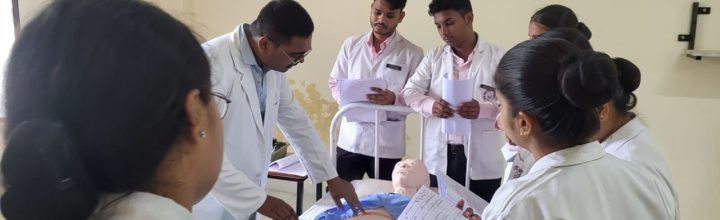
A government hospital advertised five doctor posts last month. Over a hundred MBBS graduates showed up outside the building, waiting for a chance that barely one in twenty would get. Ten years ago, this scene would have shocked people. Today, it barely makes news. This is the quiet, uncomfortable truth about medicine in India: the MBBS degree has stopped being the golden ticket it once was.
Recently, in a government medical college in Jammu & Kashmir, over 1200 MBBS doctors applied for just 10 temporary junior resident posts.
The numbers tell the story
Every year, around 20 lakh students sit for NEET, the entrance exam for medical college. Of these, only about 12 lakh qualify. But India has just over 1.2 lakh MBBS seats. That means even among those who clear the exam, only one in ten gets a seat. Among all who attempt NEET, the odds are closer to one in twenty.
This scarcity has created a strange two-tier system. Government seats, where fees are a few thousand rupees a year, go to the highest scorers. Everyone else is pushed toward private and deemed colleges, where the same degree can cost anywhere between fifty lakh and two and a half crore rupees over five years. Many of these seats are bought by parents for children who have little interest in medicine but a lot of pressure from family expectations built on an old, respected image of the “doctor son” or “doctor daughter.”
Five and a half years is only the beginning
MBBS itself takes five and a half years, including a mandatory one-year internship. After that, many states require a compulsory rural posting before a doctor is even allowed a full licence. By the time a young doctor is fully qualified to practise independently, they are often 25 or 26 years old. If they want to specialise, the real bottleneck begins.
India has about 85,000 postgraduate medical seats (MD, MS, and DNB combined) against 1.28 lakh MBBS seats. On paper, this looks manageable. In reality, it is not, because every year’s fresh MBBS graduates compete with thousands of doctors from previous years who did not get a PG seat and are trying again. The result is a doctor stuck in NEET-PG preparation into their late twenties or early thirties, with no income growth and no guaranteed outcome. Many spend three, four, even five attempts chasing a seat that never comes. Without an MD or MS, career options shrink sharply, and pay reflects that shrinkage. Fresh MBBS graduates working in small clinics or as duty doctors in tier-2 and tier-3 hospitals routinely earn twenty to thirty thousand rupees a month, a salary that would embarrass many engineering graduates from average colleges.
The corporate hospital trap
Doctors who do manage to specialise often head straight for large private multi-specialty hospitals, since the pay there is far better than in government service or a small private practice. But this comes with a catch that rarely gets discussed openly: many of these hospitals set monthly targets, tied to the number of tests, procedures, or admissions a doctor generates. Salaries and bonuses depend on hitting these numbers. A profession that is supposed to be about patient care starts looking a lot like a sales job with a stethoscope.
Going abroad is not an escape
Faced with crore-level fees at home, many families send their children to study medicine in countries like Russia, China, Ukraine, the Philippines, or Central Asian nations, where fees are a fraction of Indian private college costs. But this path has its own trap. To practise in India, these graduates must clear the FMGE, a licensing exam. Pass rates for this exam have historically been shockingly low, often between ten and twenty-five percent, meaning the vast majority of foreign medical graduates fail, sometimes repeatedly, and are left with a foreign degree that cannot be used at home. Those who try their luck in countries like Germany face another wall: tough medical language exams that test not just German fluency but medical German specifically, a bar that keeps many out even after years of study.
A profession, not a promise
Put all of this together, and the picture is clear. India now produces doctors the way it produces engineers: in large numbers, through an expensive and exhausting pipeline, with no guarantee of a matching reward at the end. The medical degree still demands enormous sacrifice, more years of study than almost any other profession, more debt for many families, and more risk of ending up unemployed or underpaid than most people realise. Meanwhile, the public still holds on to an older idea of what a doctor’s life looks like, an idea that has not kept pace with the maths.
Respect for the medical profession does not need to fade. But the system feeding it badly needs an honest look, at seat numbers, fee structures, target-driven hospitals, and the exams meant to filter foreign graduates. Until that happens, the coat may still be white, but the shine it once had is wearing off fast.
Comments

Hi, I’m Nishanth Muraleedharan (also known as Nishani)—an IT engineer turned internet entrepreneur with 25+ years in the textile industry. As the Founder & CEO of "DMZ International Imports & Exports" and President & Chairperson of the "Save Handloom Foundation", I’m committed to reviving India’s handloom heritage by empowering artisans through sustainable practices and advanced technologies like Blockchain, AI, AR & VR. I write what I love to read—thought-provoking, purposeful, and rooted in impact. nishani.in is not just a blog — it's a mark, a sign, a symbol, an impression of the naked truth. Like what you read? Buy me a chai and keep the ideas brewing. ☕💭 For advertising on any of our platforms, WhatsApp me on : +91-91-0950-0950 or email me @ support@dmzinternational.com