The 5 Levels of Wealth Nobody Teaches You in India
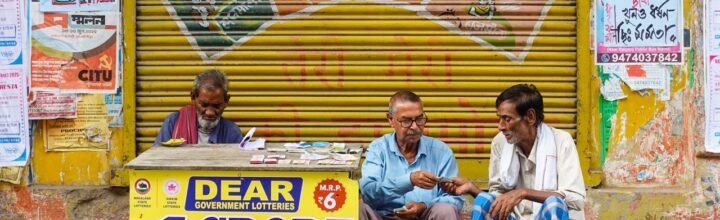
Here is a number that should bother you. According to the World Inequality Report 2026, India’s richest 10% hold about 65% of the nation’s wealth, and the top 1% hold about 40%. The bottom half holds only about 6.5%. Between 2014 and 2022, the net wealth of Indian billionaires grew more than 280%, while national income grew less than 28%.
A rickshaw driver and a business owner both love their families equally. The difference is options. Wealth has five levels, and most people never see the stairs.
Level 1: The debt trap
This is where most people are stuck. The RBI’s June 2026 Financial Stability Report shows household debt at 45.5% of GDP. Non-housing retail loans are 58.4% of all household borrowing, and nearly half of household debt is for consumption. Indians are borrowing to spend, not to build.
Illustrative: Suresh, 34, delivers food and earns ₹22,000 a month. He has a phone EMI, a bike EMI, and an app loan taken for his sister’s wedding. Every month the interest is paid first, and savings come last.
He is not alone. India’s gig workforce was 77 lakh in 2020-21, and NITI Aayog expects it to reach 2.35 crore by 2029-30. That is crores of people with no pension and no paid leave.
The “EMI life”
Illustrative: Meena earns well as a manager. She has a home loan until 55, then a car loan, then a child’s education loan. At retirement she owns a house but has little cash. Her income was high, but she never left Level 2.
Level 2: Stable, but fragile
You have a salary and some savings. But India’s household savings rate was only 6% of GDP in 2024-25, below pre-pandemic levels. One illness can undo years of work.
Level 3: Income that does not need your presence
Here work becomes a choice. Rent, dividends, or a business that runs without you can pay your bills.
One option I have found better than most is e-commerce. Think about a shop in a prime location. The rent is high, the shop is open only for fixed hours, and it serves only people who walk past. A shop for local customers is still useful. But my products on Amazon reach every corner of India, and a website can reach the world. Orders arrive at 2 AM while I sleep. I do not pay for a prime location. I pay for a listing, a website, and good stock.
Be honest about the work, though. The sale happens at night, but the effort happens in the day: good photos, honest descriptions, quality stock, fast packing, and quick replies to customers. Sleep sells only what the day built. Do that work well for a year, and you will have a system that earns without you standing at a counter.
Anyone can try this with a small start. A homemaker with a craft, a retired teacher with a skill, or an employee with a side product can begin with a few items.
Level 4: Money that multiplies
Here is the cost of waiting. Assume a ₹10,000 monthly SIP at 12% a year (this return is not guaranteed). In 30 years it becomes about ₹3.5 crore. In 20 years it becomes about ₹99 lakh. Waiting ten years can cost about ₹2.5 crore. Time is the asset most people waste first.
Level 5: Legacy
Azim Premji has committed about 67% of the economic ownership of Wipro to his foundation, which was valued at ₹1.45 lakh crore in 2019. His wealth now works for strangers’ children.
Many families fail at this level. Money moves down a family easily. Knowledge and values do not. Studies often warn that most family businesses do not survive to the third generation. The exact numbers are debated, but the warning is real.
A real example: debt turned into an asset
Ramesh Babu from Bengaluru is a barber. In one widely reported version of his story, he struggled with the EMIs on his car, and a relative suggested renting it out. That idea grew into a rental business. In 2004 he bought a Mercedes E-Class and moved into premium car rental. Today his fleet includes a Rolls-Royce Ghost.
Same debt, different use. Suresh’s loans buy things. Ramesh’s loan bought something that paid him back.
Five moves that work at any income
- Kill high-interest debt first. Loan apps and credit cards cost more than most investments earn.
- Buy health insurance before investing. One hospital bill can end a plan.
- Automate a SIP. Even ₹2,000 a month beats waiting for a bigger salary.
- Start a small online business with a product you understand. Keep your costs low and your quality high.
- Own at least one asset that pays you, not just one that you use.
The last question
Do not ask, “How much do I earn?” Ask, “How much of my income continues when I am not in the room?”
Most people spend their lives paying for the past. A few spend them building something that pays them after they stop.
Be one of the few.
Comments

Hi, I’m Nishanth Muraleedharan (Nishani)—an IT engineer turned internet entrepreneur with 25+ years of experience in the textile industry. As the Founder of "DMZ International Imports & Exports Pvt ltd" ( Handlooom.com) and President & Chairperson of the "Save Handloom Foundation" (DesiFusions.com), I’m committed to reviving India’s handloom heritage by empowering artisans through sustainable practices and advanced technologies like Blockchain, AI, AR & VR. I write what I love to read—thought-provoking, purposeful, and rooted in impact. nishani.in is not just a blog — it's a mark, a sign, a symbol, an impression of the naked truth. Like what you read? Buy me a chai and keep the ideas brewing. ☕💭 For advertising on any of our platforms, WhatsApp me on : +91-91-0950-0950 or email me @ nishani@nishani.in