
How Digital Thieves Are Looting Innocent Indians While Authorities Watch
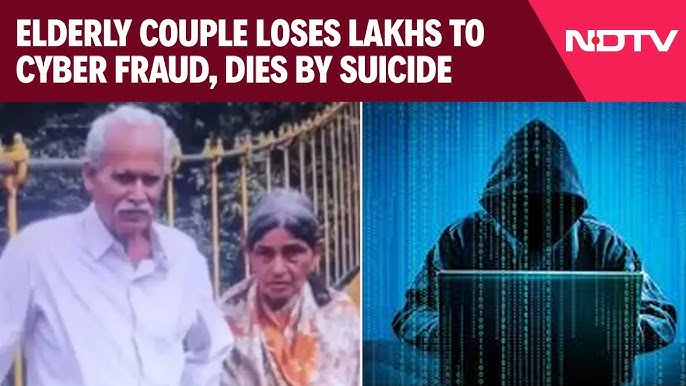
India woke up today to a chilling tragedy—an elderly couple in Bengaluru, harassed and extorted by digital scamsters, died by suicide after being duped of over ₹50 lakhs. The scam didn’t stop at looting them; the torment continued, pushing them to end their lives. This heartbreaking incident is not an isolated one. Every single day, lakhs to crores of rupees are being drained from innocent Indians, yet the scammers remain untouched, their bank accounts functional, and their operations thriving—often outside India’s borders.
🕵️♂️ The New Age Scams Bleeding India
Here’s how these scams are playing out in 2025:
1. Digital Arrest Scam
- The victim gets a call/video call from someone pretending to be from police or a government agency like the CBI, NCB, or RBI.
- They’re accused of being involved in a crime (like money laundering or narcotics).
- They’re told there’s a “digital arrest” warrant and to avoid jail, they must transfer money for “verification”.
- Some are kept on video call all day, mentally tortured until they give in and transfer money.
2. Courier Scam
- Callers claim a parcel in your name with illegal items (drugs, fake documents) was caught.
- Victims are blackmailed into transferring money for “investigation clearance”.
- Often involves impersonation of courier companies, customs officials, and police.
3. RBI/KYC Scam
- Fraudsters claim your bank account or wallet will be frozen if KYC isn’t updated.
- A fake link or app is shared, stealing OTPs and cleaning out bank accounts.
4. Mobile Phone Ban Scam
- Claims that your mobile IMEI is used in a crime or banned by TRAI.
- Victims are asked to pay penalties or share their identity documents urgently.
5. WhatsApp/Deepfake/Voice-Morphing Scams
- Scammers use AI tools to clone voices or create fake videos of loved ones begging for money.
- Messages come from hacked or spoofed WhatsApp numbers.
- Emotional manipulation is the weapon—they pretend to be in danger, urgently needing funds.
🌍 Where Are These Scams Coming From?

People who were trafficked and forced to work in scam centers in Myanmar.
Surprisingly, many of these scam call centers are not even based in India. Here’s a breakdown:
- Pakistan and China (esp. border regions): Most deepfake and social engineering scams.
- Nepal and Bangladesh: Smuggling of SIM cards, mule accounts.
- Cambodia & Myanmar: Cybercrime hubs using Indian-looking agents.
- Dubai & Nigeria: Major laundering centers.
- Inside India: Places like Jamtara (Jharkhand), Mewat (Haryana), Bharatpur (Rajasthan), and parts of Bihar still remain active for ground-level scams using fake bank accounts and mule identities.
🏦 Where Is the Money Going?
Shockingly, the stolen money often ends up in:
- Accounts opened using fake Aadhaar/PAN in Tier-2 and Tier-3 cities.
- Dormant or unused Jan Dhan accounts rented for ₹500 per month.
- Crypto wallets and gift card accounts, making the trail vanish.
Despite the RBI and banks having transaction traceability, these accounts remain operational. Why?
Because the response is reactive, not proactive. The scammer has vanished before the complaint even reaches the local police station.
🤖 Why Can’t India Catch Them?
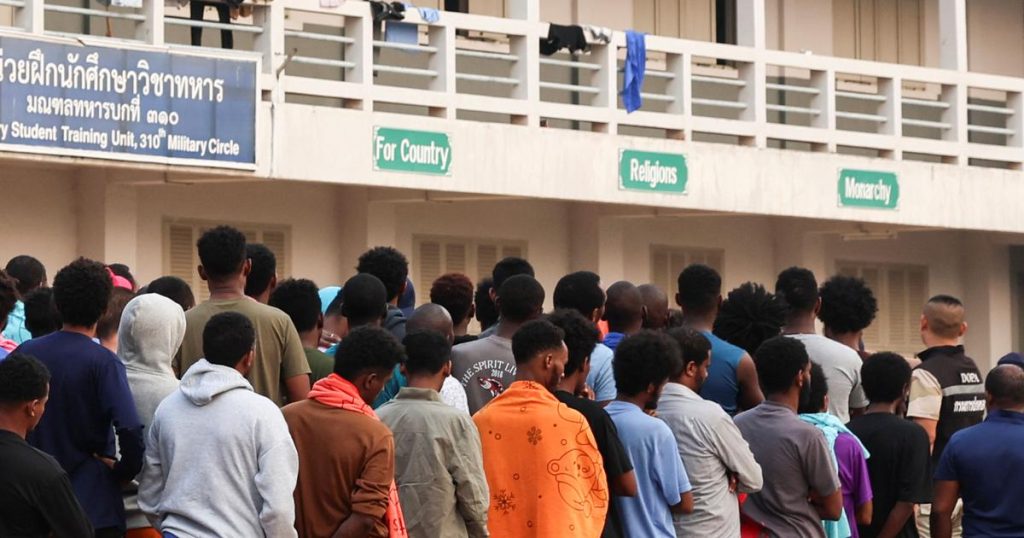
People who were rescued from scam call centers in Myanmar queue up for food at a shelter in Thailand.
- Low coordination between cybercrime cells across states.
- Lack of AI-driven fraud detection despite AI being widely used by scammers.
- Delay in banking system red flags: Banks still wait for complaints instead of proactively blocking suspicious flows.
- No global collaboration with scam-heavy regions like Cambodia, Nigeria, and Dubai.
- Poor victim awareness, especially among senior citizens.
🛡️ How Do We STOP This Scamdemic?
✅ Short-Term Measures:
- Mass awareness campaigns on digital arrest and WhatsApp scams, especially on TV and local language radio.
- Mandatory scam simulation training for banks, police, and telecom operators.
- Bank freeze protocols for suspicious accounts to be activated in <5 minutes based on AI patterns.
✅ Long-Term Solutions:
- Blockchain-based identity verification to prevent mule accounts.
- AI-enabled fraud detection platforms across banks and payment gateways.
- India-led Interpol Cyber Unit: A special cybercell with international coordination.
- Deepfake and Voice Clone detection tools on WhatsApp and mobile devices.
- Mandatory scam report hotlines at every local police station with immediate response teams.
🔐 Tips for Citizens to Stay Safe
- 🚫 Never click on unknown links claiming to be from banks, RBI, police, or courier services.
- 📞 Always verify numbers and call back official helplines.
- 🎭 Don’t trust video or voice calls asking for urgent money—even if they look like family.
- 🔐 Enable 2FA (two-factor authentication) on all your banking and wallet apps.
- 📢 Report all frauds at https://cybercrime.gov.in immediately.
💔 Final Thought
The suicide of the Bengaluru couple is a slap in the face of a system that is slow, scattered, and shockingly toothless against digital terrorism. India, with its space missions and AI startups, cannot remain a silent bystander as its citizens are digitally lynched by scamsters every day. If we can send satellites to Mars, we can surely catch a scammer with a fake Aadhaar. All it takes is political will, tech expertise, and citizen unity.
Let’s demand accountability. Let’s protect each other. And let’s build a scam-free digital India.
Comments

Hi, I’m Nishanth Muraleedharan (also known as Nishani)—an IT engineer turned internet entrepreneur with 25+ years in the textile industry. As the Founder & CEO of "DMZ International Imports & Exports" and President & Chairperson of the "Save Handloom Foundation", I’m committed to reviving India’s handloom heritage by empowering artisans through sustainable practices and advanced technologies like Blockchain, AI, AR & VR. I write what I love to read—thought-provoking, purposeful, and rooted in impact. nishani.in is not just a blog — it's a mark, a sign, a symbol, an impression of the naked truth. Like what you read? Buy me a chai and keep the ideas brewing. ☕💭 For advertising on any of our platforms, WhatsApp me on : +91-91-0950-0950 or email me @ support@dmzinternational.com