
India’s New Obsession With Life on Wheels: Why More of Us May Soon Want to Trade a Fixed Address for a Caravan
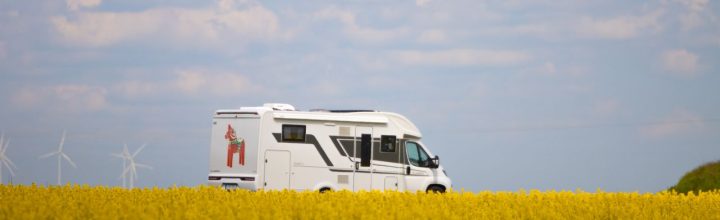
For generations, the Indian dream was remarkably predictable.
Study.
Get a good job.
Buy a house.
Buy a car.
Get married.
Raise children.
Retire.
And eventually, spend most of your time inside the house you worked your entire life to buy.
We were taught that success meant becoming more settled.
More permanent.
More rooted.
A bigger house.
A better address.
A more prestigious neighbourhood.
But something interesting is beginning to happen.
Some Indians are asking a completely different question.
What if the dream is not to stay in one place?
What if retirement is not about sitting at home?
What if family travel does not always mean booking another hotel?
What if your home could travel with you?
And what if the greatest luxury is not owning a bigger house—but having the freedom to wake up somewhere completely different tomorrow morning?
Welcome to India’s slowly growing obsession with van life, campervans, caravans and motorhomes.
And unlike what many people imagine, this is no longer a lifestyle reserved for celebrities.
In fact, some of the most interesting stories are coming from ordinary Indians who are simply deciding to live differently.
From Bollywood Vanity Vans to Ordinary Indians Building Homes on Wheels
For a long time, caravans in India belonged to a very exclusive club.
Film stars had vanity vans.
Politicians had campaign vehicles.
Celebrities travelled with luxury caravans.
And occasionally, we would see a giant motorhome on the road and turn our heads to watch it disappear.
But almost nobody looked at it and thought:
“Maybe I can do that too.”
That is changing.
The campervan movement in India has grown significantly in recent years, particularly after the pandemic, as travellers began looking for more independent and flexible ways to travel. Reports from across India have documented a growing community of people converting ordinary vehicles and travelling with their families for weeks or even months at a time.
And perhaps the most interesting part is this:
There is no single “van-life person.”
There are young families.
Solo travellers.
Entrepreneurs.
Digital workers.
Adventure enthusiasts.
Pet owners.
And increasingly, senior citizens and retired couples.
India’s van-life revolution is not being created by one generation.
It is being created by people at completely different stages of life who are all discovering the same thing.
You do not have to stop travelling because you are getting older.
And you do not have to wait until you are old to start living.
Meet the Couple in Their 60s Who Are Still Moving Forward
One of the most beautiful examples of this idea comes from the YouTube channel Ghoomna Firnaa.
Here is a couple in their 60s travelling across India in their own Tempo Traveller.
But what makes their story particularly inspiring is not merely their destination.
It is how they got there.
Their vehicle is not some ₹1 crore imported European motorhome.
Their Tempo Traveller has been partially converted and built by the design of senior citizen himself with couple of workshop people’s help.
He did not wait for someone to create the perfect vehicle for him.
He created what he could.
He adapted.
He learned.
He built.
And then he traveled.
Think about what that represents.
How many people in their 60s begin telling themselves:
“I am getting too old.”
“How much travelling can I do now?”
“I should probably slow down.”
Meanwhile, somewhere in Ladakh, a senior couple is proving that age and adventure do not necessarily have to move in opposite directions.
Perhaps retirement was never meant to be the end of movement.
Perhaps it was supposed to be the beginning of it.
Imagine spending your entire working life waiting for the day you finally have time—and then finally using that time to see the country you spent your entire life living in.
There is something deeply powerful about that.
Then There Is the Young Family Who Decided to Build the Dream Themselves
At the other end of life is another fascinating story.
A young man named Sam decided not to simply buy a professionally built luxury campervan.
He converted his own new vehicle bought for conversion and for that upgraded from his Eeco to Tempo Traveler now.
And that is where his story becomes particularly important.
He is travelling with his wife.
His child.
And his dog.
A family travelling together—not from one hotel room to another, but inside a home they helped create.
What is particularly fascinating is that much of the campervan conversion work was done by Sam himself.
That is the real van-life culture we often see abroad.
People don’t always wait for a manufacturer to sell them a perfect motorhome.
They buy a vehicle.
They learn.
They cut.
They measure.
They design.
They make mistakes.
They improve.
And slowly, an ordinary vehicle becomes a home.
If someone were to approach a professional custom caravan builder and ask for every feature added to a serious, fully equipped DIY campervan, the conversion alone could potentially become extremely expensive.
Depending on the equipment and build quality, a premium conversion involving insulation, cabinetry, electrical systems, batteries, solar power, refrigeration, water systems, beds, kitchen equipment and other features can easily run into many lakhs of rupees.
But DIY changes the equation.
Not because everything should be built carelessly.
And certainly not because safety and legal compliance should be ignored.
But because knowledge can replace a surprising amount of labour cost.
The internet has done something extraordinary.
A person can watch how people in other parts of the world build campervans.
Learn about electrical systems.
Study solar power.
Understand space-saving furniture.
Explore water systems.
Watch hundreds of layouts.
And then ask:
“Why can’t I build something like this in India?”
And increasingly, Indians are doing exactly that.
A Senior Citizen. A Force Urbania. A Beautifully Built Home on Wheels.
Then there is another story.
Another senior citizen.
But this time, a different approach.
Instead of personally building everything, he worked with a custom caravan builder to transform a Force Urbania into a proper motorhome.
The result is impressive.
The vehicle demonstrates what becomes possible when Indian automotive platforms are combined with thoughtful design and professional customisation.
And suddenly, three completely different stories begin to reveal one larger trend.
A retired couple in their 60s.
A young family travelling with their child and dog.
Another senior traveller investing in a professionally built Urbania motorhome.
Different ages.
Different budgets.
Different approaches.
But the same dream.
Freedom to move without leaving home behind.
The Most Surprising Part? You Don’t Need a ₹30 Lakh Motorhome.
This may be the biggest misconception stopping people from even thinking about van life.
People see a beautiful motorhome and immediately think:
“This is only for rich people.”
But the Indian van-life movement is proving something else.
You can camp big.
But you can also camp small.
Very small.
The Indian campervan movement is becoming increasingly creative because people are using whatever vehicle makes sense for their budget.
And that includes vehicles nobody would traditionally associate with a motorhome.
The Indian Express has documented this growing culture of highly customised travel vehicles—from relatively simple low-cost conversions to modified vans and larger platforms—and described how local fabricators, carpenters and welders are becoming part of the ecosystem.
The question is no longer:
“Which motorhome should I buy?”
The new question is:
“Which vehicle can become my motorhome?”
The Maruti Eeco: India’s Budget Van-Life Hero?
Take the Maruti Eeco.
For most Indians, it is simply a practical people carrier.
A school van.
A family vehicle.
A small commercial vehicle.
Nothing glamorous.
But for a budget-conscious traveller?
It can become something else entirely.
Foldable sleeping arrangements.
Storage boxes.
A portable kitchen.
A roof rack.
An awning.
Solar-powered lighting.
Camping equipment.
A portable power station.
Suddenly, you do not need a giant motorhome to experience van life.
You have a tiny home on wheels.
Of course, space is limited.
Nobody should pretend otherwise.
An Eeco will never give you the interior space of a Force Traveller.
But perhaps that is also the point.
The Indian van-life movement is teaching us that freedom does not always require luxury.
Sometimes, it simply requires enough.
Enough space to sleep.
Enough storage.
Enough food.
Enough power.
Enough courage to leave.
Tata Yodha, Pickups and the Rise of the Indian Overlander
Pickup trucks may create another major category of Indian motorhomes.
Vehicles such as the Tata Yodha offer something very different from a van.
Instead of converting the passenger cabin, a camper module can potentially be designed around the cargo area, depending on the vehicle, design and applicable regulations.
The platform is attractive because it offers payload capacity and a separate area that can potentially support a removable or purpose-designed living module.
Imagine it.
A pickup.
A compact living cabin.
A bed.
Storage.
Solar power.
Water.
Cooking facilities.
And the ability to travel into places where a large motorhome might feel too bulky.
The Toyota Hilux.
Isuzu V-Cross.
Tata Yodha.
Other pickup platforms.
These vehicles could increasingly become the foundations of India’s overlanding culture.
But there is one major lesson here.
Do not assume that because something can be built mechanically, it can automatically be used legally on Indian roads.
The chassis should not be casually cut or altered.
Weight matters.
Vehicle specifications matter.
Registration matters.
Structural modifications matter.
A beautiful camper build should never begin with enthusiasm and end with an RTO problem.
Design the dream.
But first understand the law.
The Force Traveller May Become India’s Classic Campervan Platform
For people who want a genuinely liveable full-time campervan, the Force Traveller remains one of the most obvious platforms to consider.
It has space.
It has height.
It has a wide service network.
And it already exists in multiple configurations.
A lower-seat configuration can potentially make more sense for someone who is planning a personal camper build than purchasing a high-passenger-capacity configuration and later trying to redesign everything.
The ideal question is not:
“How many passengers can I carry?”
It is:
“How comfortably can I live?”
A proper motorhome needs space for things ordinary passenger vehicles were never designed to accommodate.
A bed.
Storage.
Food.
Cooking.
Water.
Electrical equipment.
Ventilation.
Possibly a refrigerator.
A workspace.
And for longer journeys, perhaps even a compact washroom solution.
That is why a serious conversion can become expensive.
The base vehicle itself is only the beginning.
Current pricing varies substantially depending on the Force Traveller configuration, and prospective buyers should check the exact variant and current on-road pricing rather than relying on a single estimated figure.
Then comes the conversion.
A basic build may cost a few lakhs.
A serious build can cost much more.
A premium conversion with high-quality electrical systems, solar power, lithium batteries, insulation, custom cabinetry, water systems, refrigeration and a professional interior can become a very significant investment.
In some cases, the conversion can cost almost as much as another vehicle.
That sounds crazy.
Until you realise what you are building.
You are not buying furniture for a car.
You are building a house that must survive potholes.
White Number Plate or Yellow Number Plate? Choose the Legal Structure Before the Dream
This is one of the most important things prospective caravan owners need to understand.
People sometimes become focused on the colour of the number plate.
But the real issue is not the colour.
The real issue is the vehicle’s approved registration category and intended usage.
A private vehicle legitimately registered for private use may be more suitable for someone travelling personally with their family rather than operating a commercial passenger service.
That can provide practical advantages for personal ownership and family travel.
But a white number plate is not simply something that should be assumed because a person wants to use the vehicle privately.
The exact vehicle configuration, seating capacity, registration category and applicable RTO requirements should be confirmed before purchase and conversion.
The Government’s Parivahan framework provides the official registration structure, and any major change or modification should be discussed with the relevant authorities and experts before money is spent on a build.
This is why I would strongly recommend one rule to every future caravan owner:
Do the paperwork before you build the wardrobe.
The wardrobe is the easy part.
India Is Not Yet Ready for Van Life. But Van Life Is Coming Anyway.
Let’s be honest.
India is not yet an RV paradise.
We do not have the massive network of motorhome parks found in some Western countries.
We do not have a fully mature nationwide ecosystem for dumping grey water and black water.
Parking can be difficult.
Large cities can be a nightmare.
Road conditions vary dramatically.
And sometimes, finding a peaceful place to stop is harder than finding a mountain.
Existing caravan travellers have also pointed to practical problems involving infrastructure, parking, waste disposal and differing state-level practices.
But this is exactly how cultures change.
First, people start doing something.
Then other people notice.
Then businesses appear.
Then infrastructure follows.
India’s caravan rental market is already becoming more visible, with multiple caravan travel options now being marketed to Indian travellers.
Today, you may need to plan carefully.
Tomorrow, perhaps there will be dedicated caravan parks.
Safe overnight parking.
Fresh-water refill points.
Waste disposal facilities.
Repair networks.
Caravan-friendly tourism routes.
And specialised motorhome dealerships.
Every mature culture begins somewhere.
The Real Revolution Is Not Happening Inside the Vehicle
This is the most important part.
The real revolution is happening inside people’s minds.
A retired couple is asking:
“Why should we stop travelling now?”
A young family is asking:
“Why should we wait until our children grow up?”
A solo traveller is asking:
“Why should I wait for someone to come with me?”
A person sitting in a corporate office is asking:
“Do I really have to spend every holiday rushing through airports and checking out of hotels?”
And perhaps someone reading this is asking:
“Could I actually do this?”
The answer is probably yes.
Maybe not in a ₹50 lakh luxury motorhome.
Maybe not immediately.
Maybe not across India for six months.
But perhaps in a small converted vehicle.
A weekend.
A week.
A month after retirement.
A family road trip.
A solo journey.
A dog in the passenger seat.
A simple bed in the back.
A kettle.
A folding chair.
And a place to wake up that you did not know existed yesterday.
Maybe the Indian Dream Is Changing
For decades, the dream was:
Buy land. Build a house. Stay there.
Maybe the next generation will add something else.
Buy a vehicle. Build a home inside it. And go.
Not forever.
Not necessarily full-time.
But whenever life begins feeling too predictable.
Because perhaps the greatest thing about owning a home on wheels is not that you have to keep moving.
It is that you can.
The couple in their 60s travelling through Ladakh.
The young father building a campervan with his own hands.
The family travelling with a child and a dog.
The senior citizen turning a Force Urbania into a beautiful motorhome.
The traveller sleeping inside a converted Eeco.
The person building an adventure camper on a pickup.
They are all part of something bigger.
They are quietly rewriting an old Indian belief.
That a successful life must eventually become more fixed.
Maybe it does not.
Maybe the second half of life is not supposed to become smaller.
Maybe it is supposed to become wider.
Wider roads.
Wider landscapes.
Wider experiences.
And perhaps a completely different view outside your window every morning.
After all, we spend our entire lives trying to build a place we can call home.
Perhaps one day, we may realise something extraordinary.
Home was never the building.
Home was whoever was sitting beside us.
And if that is true, perhaps we can take home anywhere.
Even to Ladakh.
Even in an old Tempo Traveller.
Even with a child, a dog and a DIY campervan.
Even in a tiny Eeco.
Because perhaps the future of travel is not about finding the perfect hotel.
Perhaps it is about building a life you do not need a holiday to escape from.
And maybe, somewhere on a highway in India, your next home is already waiting for you.
It just needs wheels.
Comments

Hi, I’m Nishanth Muraleedharan (also known as Nishani)—an IT engineer turned internet entrepreneur with 25+ years in the textile industry. As the Founder & CEO of "DMZ International Imports & Exports" and President & Chairperson of the "Save Handloom Foundation", I’m committed to reviving India’s handloom heritage by empowering artisans through sustainable practices and advanced technologies like Blockchain, AI, AR & VR. I write what I love to read—thought-provoking, purposeful, and rooted in impact. nishani.in is not just a blog — it's a mark, a sign, a symbol, an impression of the naked truth. Like what you read? Buy me a chai and keep the ideas brewing. ☕💭 For advertising on any of our platforms, WhatsApp me on : +91-91-0950-0950 or email me @ support@dmzinternational.com