
Is a Car Really a Liability? Sometimes, It Can Be One of Your Greatest Assets
Everywhere you look, there is financial advice telling us the same thing:
“A car is a depreciating asset.”
“A car is a liability.”
“Don’t buy a second car when you already have one.”
“Think about the EMI, fuel, insurance, maintenance and depreciation.”
And financially, they are absolutely right.
A car generally loses value. It needs fuel. It needs insurance. It needs servicing. It needs tyres, repairs and, occasionally, an unexpectedly painful bill from the service centre.
But there is something those calculations don’t capture.
The emotional value of owning something you once dreamed of.
My relationship with cars started long before I could afford one
Since childhood, I was fascinated by the Tata Safari.
Those old Safari advertisements, especially the “Make Your Own Road” philosophy, stayed in my mind when I was very young. The vehicle wasn’t just another car to me. It represented freedom, adventure, status and the possibility of going somewhere beyond the ordinary.
Then life moved on.
I finished my studies and came to Bangalore for work. And one of my biggest personal goals was simple:
One day, I wanted to own a Tata Safari.
I worked, saved and eventually bought a used Safari from Kerala.
For the next three to four years, I experienced the vehicle I had imagined owning for years.
Was it financially sensible?
Probably not.
The Safari had its share of problems. Maintenance was not cheap, and there were plenty of moments when I wondered why I had bought it in the first place.
But there was something that depreciation calculations couldn’t measure.
The feeling of driving the vehicle you had dreamed about since childhood.
And the road presence of that old Safari was something else.
It had a personality.
Even when newer cars were around, the Safari had an imposing presence on the road. For me, that experience alone made those years memorable.

Eventually, however, the maintenance became too much. I had to let it go.
And then came the next question:
What next?
The second dream was very different
After several years of driving the Safari, my priorities had changed.
This time, I wanted an automatic.
I searched extensively and eventually became fascinated by the Volkswagen Polo GT TSI.
The seven-speed automatic, the performance, the compact size and that aggressive look made it incredibly attractive.
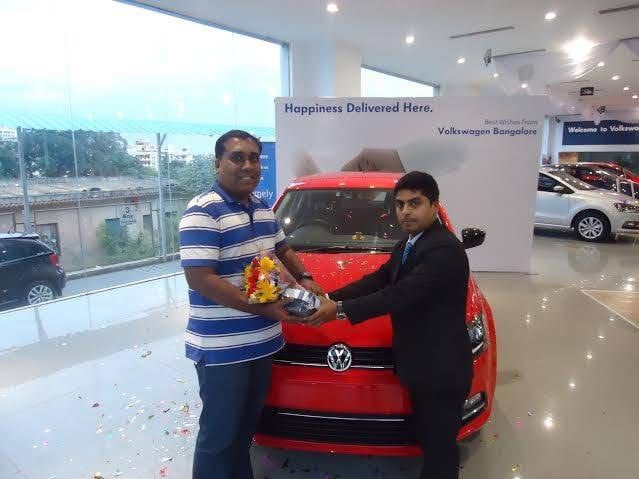
So I sold the Safari and bought a red Polo GT TSI.
And honestly?
I loved it.
The car was fun to drive. It was quick, stylish and extremely enjoyable.
I enjoyed driving it every single day.
Even people who saw that red GT TSI noticed it.
Was buying it a financially appreciating investment?
Of course not.
But was it a bad investment?
I don’t think so.
Because an investment isn’t always about what you get back when you sell something.
Sometimes the return is the experience you get while owning it.
Then practicality took over
After four or five years, travelling with the family started exposing one major limitation.
With everyone and everything inside, the car would sometimes get too low and the underbody could hit the road.
So I started looking for something with better ground clearance.
That’s when another vehicle caught my attention:
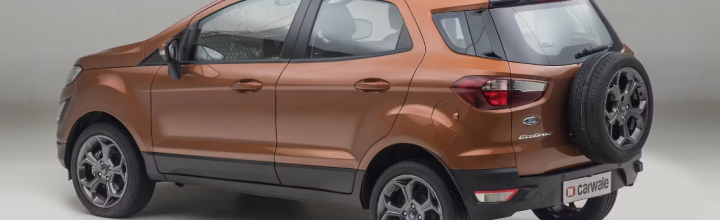
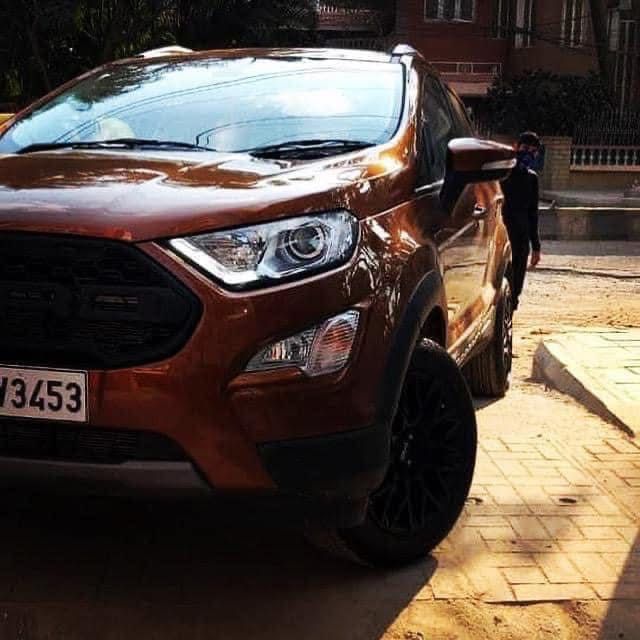
the Ford EcoSport automatic.
I didn’t spend forever debating it.
I sold the Polo and bought the EcoSport.
And it turned out to be an excellent decision for my requirements.
It handled Bangalore traffic well. It was comfortable for mountain driving. It had the ground clearance I needed and was much more practical for travelling with family.
Its automatic gearbox wasn’t as responsive or exciting as the Polo GT TSI’s seven-speed automatic, but the EcoSport gave me something more important at that stage of my life:
practical freedom.
Interestingly, soon after I bought it, Ford stopped its passenger vehicle business in India.
Yet the vehicle itself was so good that I still want to keep it for as long as possible.
And that’s where my thinking about cars has changed.
A car can depreciate in money and appreciate in memories
If you look purely at a spreadsheet, my Safari, Polo and EcoSport are all depreciating liabilities.
No argument there.
But life isn’t a spreadsheet.
Suppose someone spends ₹10 lakh on a car and eventually sells it for ₹5 lakh.
Financially, they lost ₹5 lakh in value.
But during those years, that car may have taken them across thousands of kilometres, carried their family on holidays, helped them reach work every day, taken them into the mountains, witnessed birthdays, arguments, laughter, road trips and countless ordinary mornings.
What exactly was the return on that ₹5 lakh?
You can’t put all of it into an Excel sheet.
Not Everyone Cares About the Car — And That’s Fine
There is another distinction we need to make before judging whether a car is a liability or an asset. There are people who simply don’t care what they drive. They buy whatever is affordable and practical for them—whether that is a Maruti Alto, a Hyundai, a Tata, a Toyota or even a Defender—and use it simply to get from Point A to Point B. For them, a car is transportation, nothing more.
This article is not really about them. I am talking about the motorheads—the people who research for weeks or months before buying a vehicle, compare engines, transmissions, safety, ground clearance, driving dynamics, reliability, features, service costs and resale value, watch countless reviews, visit dealerships and sometimes know more about a particular model than the salesperson selling it. For such people, a vehicle is not merely a machine that moves them from one place to another; it is something they have consciously chosen and often genuinely enjoy owning and driving.
And then there is the popular financial-planning argument that, particularly in metros, you don’t really need to own a car at all—you can use Uber, Ola, public transport and other alternatives and invest the money you would otherwise spend on the car.
On paper, that can make perfect financial sense. In real life, however, transportation is not always available exactly when you need it.
You may suddenly need to leave home for an emergency, have an early-morning flight, return late at night, travel with elderly parents or children, carry luggage, make multiple stops, drive somewhere where cabs are scarce, or simply need a vehicle immediately without waiting for a driver to accept the ride.
There are also situations where drivers cancel or refuse trips, availability becomes poor during peak demand, fares surge, or a journey that normally takes ₹300 suddenly costs considerably more. And if you are trying to reach an airport at a critical time, waiting for a cab, dealing with cancellations or searching for another vehicle can turn a comfortable journey into a race against the clock—and, yes, sometimes even mean missing a flight.
So the question is not simply “Is Uber or Ola cheaper than owning a car?” It is “What value do you place on immediate access, reliability, flexibility, privacy and freedom of movement?”
For someone who rarely travels and lives next to excellent public transport, owning a car may genuinely be unnecessary. But for someone who travels frequently, drives long distances, takes road trips, travels with family or simply values the freedom of having a vehicle ready whenever they want it, the calculation is very different. A spreadsheet can calculate depreciation. It cannot calculate the value of being able to pick up your keys and leave.
Another completely different category are—people who buy cars primarily as status symbols. They may not particularly care about the make, model, engine, age or even whether the car is new or used. If they have the money, they simply keep buying more and more luxurious vehicles.
One or two cars may actually be used while the rest sit quietly in the garage, sometimes for months. Some don’t even drive themselves and keep a driver permanently behind the wheel. That is a different class of car ownership altogether, where the car is less about mobility or driving pleasure and more about wealth, image and social status.
There is nothing inherently wrong with that either—people are free to spend their money on what gives them satisfaction—but it should not be confused with the choices of someone who genuinely enjoys driving, researches every purchase and sees a vehicle as part of their lifestyle.
But there is an important catch
This doesn’t mean we should justify every expensive car purchase by calling it a “dream.”
That’s where financial discipline matters.
If buying a car puts you into crushing EMI debt, prevents you from saving, destroys your emergency fund or compromises your family’s financial security, then calling it a dream doesn’t magically make it a good decision.
Dreams need funding. They don’t get a free pass from mathematics.
There is a huge difference between:
“I can afford this dream, and I choose to spend part of my money on it.”
and
“I cannot afford this, but I desperately want it, so I’ll borrow heavily and figure out the consequences later.”
The first can be a conscious life choice.
The second can become a financial trap.
Why shouldn’t we own anything that depreciates?
This is where I disagree with extreme personal-finance thinking.
If we followed the rule that we should only buy things that appreciate, we would eliminate a huge part of life.
A sofa depreciates.
A television depreciates.
A phone depreciates.
A camera depreciates.
A holiday disappears completely.
A restaurant meal becomes a memory within hours.
And yet we spend money on these things.
Why?
Because the purpose of money isn’t simply to accumulate more money.
Money is also a tool to experience life.
Of course, we should build appreciating assets—property, investments, businesses, retirement savings and other forms of long-term wealth.
But after securing the foundation, there should also be room for some things that simply make us happy.
My cars were never just cars
The Safari was a childhood dream.
The Polo GT TSI was a driving passion.
The EcoSport became a practical family companion.
Each one belonged to a different stage of my life.
And now I have another vehicle dream connected to my retirement years.
I won’t reveal that one yet.
There are still a few goals I need to achieve before that dream becomes a reality.
And perhaps that’s the most important part.
A dream vehicle should not be something that destroys your finances. It should be something that motivates you to strengthen them.
Work harder.
Save more.
Build more.
Achieve your goals.
And then, when you finally turn the key of the vehicle you dreamed about for years, you get to experience something that no financial calculator can measure.
That moment when you look at the vehicle and think:
“I actually did it.”
So yes, call a car a depreciating liability if you want.
From an accountant’s perspective, you may be completely right.
But from the perspective of a human being who has worked for years, sacrificed, achieved goals and wants to enjoy some of the rewards of that effort?
Sometimes a car can be an asset—not because it makes you richer, but because it makes the journey of becoming successful worth something.
Dream big.
Work hard.
Build your appreciating assets.
Be financially responsible.
But don’t become so obsessed with accumulating wealth that you forget why you wanted financial freedom in the first place.
We don’t work all our lives just to die with the best balance sheet.
We work so that, somewhere along the journey, we can look around and say:
“I dreamed about this once. And I made it happen.”
Comments

Hi, I’m Nishanth Muraleedharan (also known as Nishani)—an IT engineer turned internet entrepreneur with 25+ years in the textile industry. As the Founder & CEO of "DMZ International Imports & Exports" and President & Chairperson of the "Save Handloom Foundation", I’m committed to reviving India’s handloom heritage by empowering artisans through sustainable practices and advanced technologies like Blockchain, AI, AR & VR. I write what I love to read—thought-provoking, purposeful, and rooted in impact. nishani.in is not just a blog — it's a mark, a sign, a symbol, an impression of the naked truth. Like what you read? Buy me a chai and keep the ideas brewing. ☕💭 For advertising on any of our platforms, WhatsApp me on : +91-91-0950-0950 or email me @ support@dmzinternational.com