
The Journal Entry #015 : The ice is melting. The armies are coming.
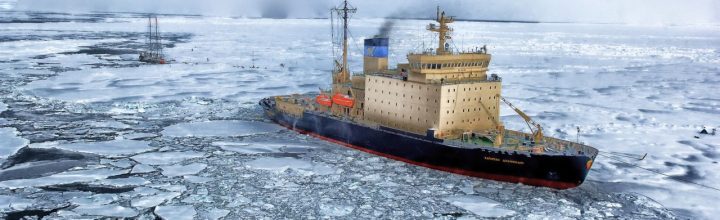
There is a place on Earth where the temperature is rising, the ice is disappearing, new trade routes are emerging, trillions of dollars in resources are attracting attention—and military powers are quietly preparing for confrontation.
It is not Ukraine.
It is not Gaza.
It is not Taiwan.
It is the Arctic.
And while the world is distracted by the wars of today, the foundations of tomorrow’s conflict may already be forming beneath the melting ice.
For thousands of years, the Arctic had the greatest defence system ever created.
Ice.
No army built it. No government controlled it. No military could defeat it.
But now that defence system is disappearing.
And behind the retreating ice, the world’s most powerful nations are seeing something very different.
Shipping routes.
Oil and gas.
Rare earth elements.
Critical minerals.
Submarine corridors.
Military positions.
And power.
The world map is quietly being redrawn
Look at a normal world map and the Arctic appears to be at the top—remote, frozen and irrelevant.
Look at the world from above the North Pole, and suddenly everything changes.
Russia, the United States, Canada, Greenland and Northern Europe become neighbours across one enormous strategic ocean.
The Arctic is not the end of the world.
It may become the centre of the next global power struggle.
As sea ice retreats, countries are preparing for a future in which northern shipping routes could become increasingly important. A shorter route between Asian and European markets could change global logistics.
But wherever valuable trade routes appear, military interests usually follow.
History has shown us this repeatedly.
First come the explorers.
Then the traders.
Then the corporations.
Then the flags.
Then the soldiers.
This is no longer a climate story
In February 2026, NATO launched Arctic Sentry, strengthening military coordination and surveillance across the Arctic and High North.
Russia has spent years modernising its northern military infrastructure and maintaining a massive icebreaker advantage.
NATO countries are increasing exercises, surveillance, submarines, airfields and cold-weather military capabilities.
China is not geographically an Arctic nation, but it has made no secret of its interest in Arctic shipping, energy and resources.
The uncomfortable truth is simple:
The Arctic is becoming militarised while it is melting.
Humanity is watching one of the greatest environmental transformations in history—and asking how quickly we can build ships, mines, ports, military bases and supply chains inside it.
Greenland is the warning
For most people, Greenland was once just a giant white shape on a school map.
Not anymore.
Its strategic location and critical mineral potential have pushed it into the centre of international attention.
Rare earth elements are essential for modern electronics, electric vehicles, wind turbines, communication systems and advanced weapons.
The future economy needs them.
The future military needs them.
And whoever controls their supply chains gains enormous power.
The wars of the twentieth century were shaped by oil.
The conflicts of the twenty-first century may be shaped by lithium, cobalt, nickel, graphite and rare earth elements.
The weapons may change.
Human behaviour apparently does not.
The most terrifying paradox
Here is where this story becomes almost absurd.
We are overheating the planet.
The Arctic ice is melting.
That melting is increasing access to new shipping possibilities and natural resources.
We may then extract those resources to manufacture electric vehicles, batteries, wind turbines and other technologies designed to fight climate change.
Read that again.
We damage the planet.
The damage exposes economic opportunities.
We exploit those opportunities.
Then we call part of the process a green transition.
Perhaps the greatest danger facing humanity is not climate change alone.
It is our ability to turn every crisis into another market before solving the crisis itself.
The next war may begin very quietly
The first shot may not be fired by a soldier.
It could begin with damage to an underwater cable.
A disputed shipping route.
A mining licence.
A submarine detected in the wrong waters.
A drone flying over a military installation.
A radar warning that someone misunderstood.
Then alliances activate.
Warships move.
Aircraft scramble.
Politicians make speeches.
Markets panic.
And suddenly the frozen wilderness that almost nobody was watching becomes the place everybody is talking about.
The Arctic is melting faster than geopolitics can remain calm.
The world believes it is discovering new shipping routes and mineral wealth.
Perhaps it should ask a darker question.
What if the melting ice is not revealing the future of global trade?
What if it is revealing the location of the next great war?
Comments

Hi, I’m Nishanth Muraleedharan (also known as Nishani)—an IT engineer turned internet entrepreneur with 25+ years in the textile industry. As the Founder & CEO of "DMZ International Imports & Exports" and President & Chairperson of the "Save Handloom Foundation", I’m committed to reviving India’s handloom heritage by empowering artisans through sustainable practices and advanced technologies like Blockchain, AI, AR & VR. I write what I love to read—thought-provoking, purposeful, and rooted in impact. nishani.in is not just a blog — it's a mark, a sign, a symbol, an impression of the naked truth. Like what you read? Buy me a chai and keep the ideas brewing. ☕💭 For advertising on any of our platforms, WhatsApp me on : +91-91-0950-0950 or email me @ support@dmzinternational.com