The Journal Entry #015 : The world has gone water bankrupt. We just haven’t received the notice yet.

A country can print more money.
A bank can be rescued.
A company can restructure its debt.
A billionaire can lose everything and start again.
But what happens when a civilisation spends water that nature can no longer replace?
In January 2026, a United Nations University report introduced the world to a terrifying new reality.
Global water bankruptcy.
Not water shortage.
Not drought.
Not water stress.
Bankruptcy.
The difference is frightening.
A drought is temporary. Rain may return.
A crisis suggests that, with enough effort, we can return to normal.
Bankruptcy means something much darker.
In many places, we have withdrawn so much water, polluted so much of what remains and damaged so many aquifers, wetlands, rivers, glaciers and soils that the old “normal” may no longer be realistically recoverable.
We are not waiting for the water crisis.
In parts of the world, the crisis may already have graduated into something worse.
We have been living on water credit
Human civilisation has behaved as if underground water were an unlimited bank account.
Every year, nature deposits water through rain, snow, rivers and groundwater recharge.
And every year, humanity withdraws it.
The system works only when withdrawals remain within what nature can replenish.
But we discovered pumps.
Then industrial agriculture.
Then megacities.
Then factories.
Then millions of borewells.
We began withdrawing tomorrow’s water to finance today’s growth.
For decades, this looked like development.
A new city.
Another industrial corridor.
More irrigated farmland.
More apartments.
More golf courses.
More bottled water.
More data centres.
More consumption.
GDP increased.
But underneath our feet, an invisible account was being emptied.
And unlike financial debt, nature does not negotiate repayment schedules.
Four billion people already live with the warning
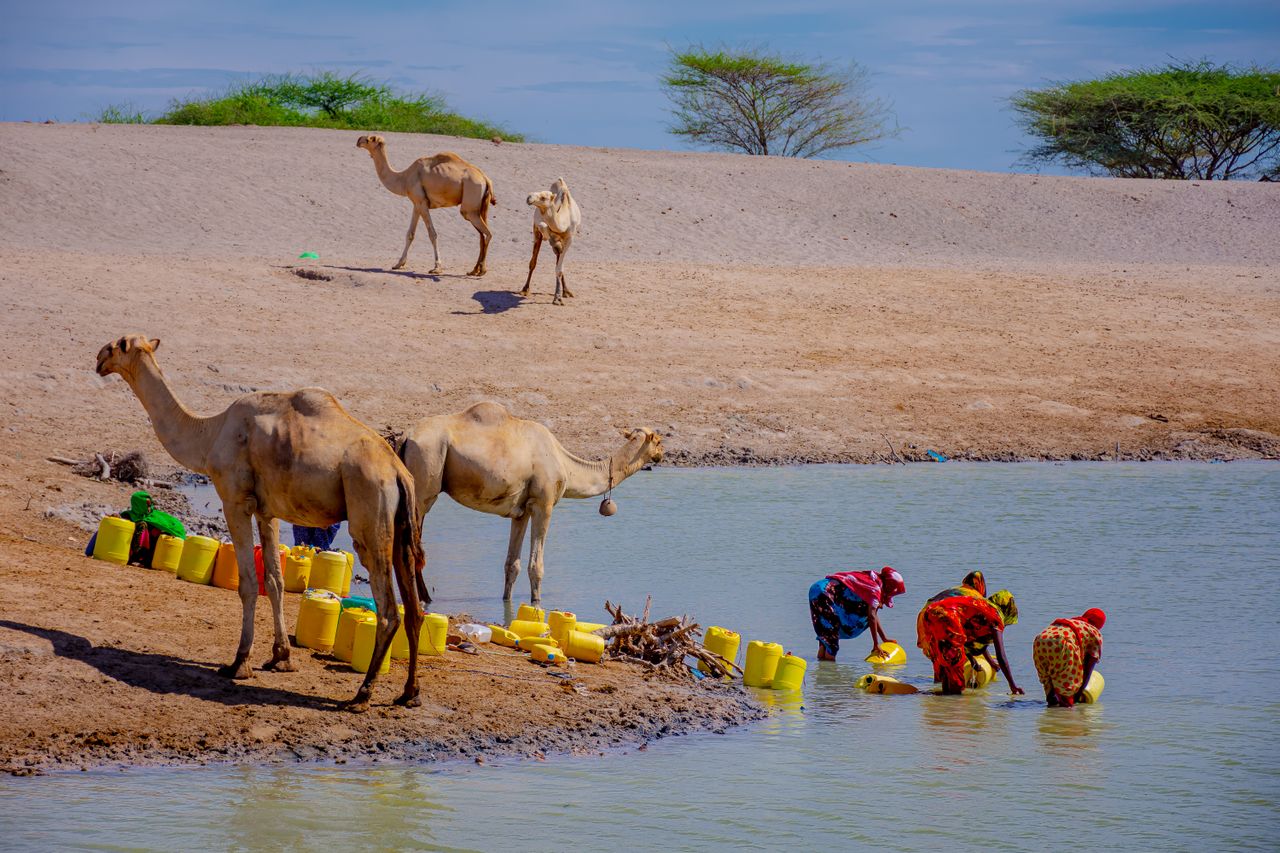
Nearly four billion people experience severe water scarcity for at least one month each year.
Around 2.2 billion people still lack safely managed drinking water, while billions more lack safely managed sanitation.
These are not numbers from a dystopian novel.
This is the world we live in today.
Yet water remains strangely invisible in political debate.
Stock markets receive minute-by-minute coverage.
Oil prices move, and governments panic.
Currencies fall, and central banks intervene.
But an aquifer can decline silently for decades beneath a city, and almost nobody notices until borewells begin to fail.
That may be the most dangerous characteristic of the coming water age.
The crisis can remain invisible until the day it becomes personal.
India should be terrified
India’s relationship with groundwater is extraordinary.
Our farms, cities, industries and households depend heavily on water pulled from beneath the earth.
Millions of pumps work like millions of straws inserted into an underground reserve that took decades, centuries or even longer to accumulate.
The problem is brutally simple.
In many stressed areas, we can pump water much faster than nature can replace it.
When one borewell fails, we drill deeper.
When that fails, deeper again.
We call this a solution.
But drilling deeper is not creating water.
It is searching for the remaining balance in an account we have already overdrawn.
Now imagine the consequences if water availability becomes increasingly unreliable across major agricultural regions.
Food prices rise.
Farm incomes collapse.
Rural migration accelerates.
Cities become more crowded.
Tanker economies grow.
Industries compete with communities.
States fight states.
And politicians discover that people can tolerate many things—but not an empty tap.
The metros are not waiting for 2050
If you live in Bengaluru, Delhi, Chennai, Hyderabad or Mumbai, water bankruptcy is not some distant story about villages, deserts or the year 2050.
It is slowly entering the cities where millions of Indians are buying apartments, building technology parks, expanding airports and celebrating economic growth.
And Bengaluru may be one of the clearest warnings.
The city that became India’s Silicon Valley is building apartments, offices and technology campuses faster than it can secure water for them. Large parts of Bengaluru, especially its rapidly expanded outer areas, depend heavily on borewells and water tankers. When groundwater falls, the solution has often been brutally simple: drill deeper or bring water from somewhere else.
But what happens when “somewhere else” also begins running out?
In 2024, Bengaluru received a preview of that future when thousands of borewells failed or weakened and tanker prices became a daily obsession. The danger has not disappeared. In 2026, tanker demand again rose sharply in several parts of the city as borewells dried and groundwater declined.
Bengaluru is not running out of water tomorrow morning. But it is already displaying the symptoms of a city living beyond its local water balance: growing demand, falling groundwater, dependence on distant river water and an expanding tanker economy.
And Bengaluru is not alone.
Delhi lives under extreme water stress, caught between enormous demand, groundwater pressure, pollution and dependence on water flowing from outside its boundaries.
Chennai has already experienced something close to the nightmare. In 2019, its major reservoirs nearly emptied, forcing residents, businesses and even hospitals to depend heavily on tankers and emergency supplies. The city has since improved parts of its water strategy, but its dependence on unpredictable monsoons remains a warning.
Hyderabad may be entering an even more dangerous phase. Its population and water connections have grown rapidly while supply has struggled to keep pace. Groundwater depletion has become severe, particularly in fast-growing peripheral areas where apartments and communities depend on borewells and tankers.
Mumbai appears safer because of its reservoir system and heavy monsoon rainfall. But that creates a dangerous illusion. A city can receive catastrophic floods during one part of the year and still face water insecurity during another. Climate change is not simply about receiving less rain. It is also about receiving rain at the wrong time, in extreme bursts, while failing to capture enough of it.
The question is no longer, “Which Indian metro will run out of water first?”
That is the wrong question.
The real question is: How many Indian cities are already surviving by borrowing water from rivers, aquifers and neighbouring regions faster than those systems can safely provide it?
Water bankruptcy may not arrive in 2030, 2040 or 2050 on one dramatic morning.
For some neighbourhoods, it has already arrived.
It just comes in a tanker.
The next migration crisis may begin with a dry well
We imagine refugees escaping wars.
But what happens when the enemy is not an army?
What happens when it is a river that no longer reaches where it once did?
A reservoir that does not refill?
A well that goes dry?
A harvest that fails repeatedly?
Water bankruptcy could become one of the great migration engines of this century.
People do not remain where survival becomes impossible.
They move.
First from villages to towns.
Then from towns to cities.
Then across borders.
And when millions of desperate people move, geopolitics moves with them.
Borders harden.
Nationalism rises.
Governments fall.
Old tensions return.
The water crisis does not have to cause a war directly.
It only needs to make everything else more unstable.
The wars may not be called water wars
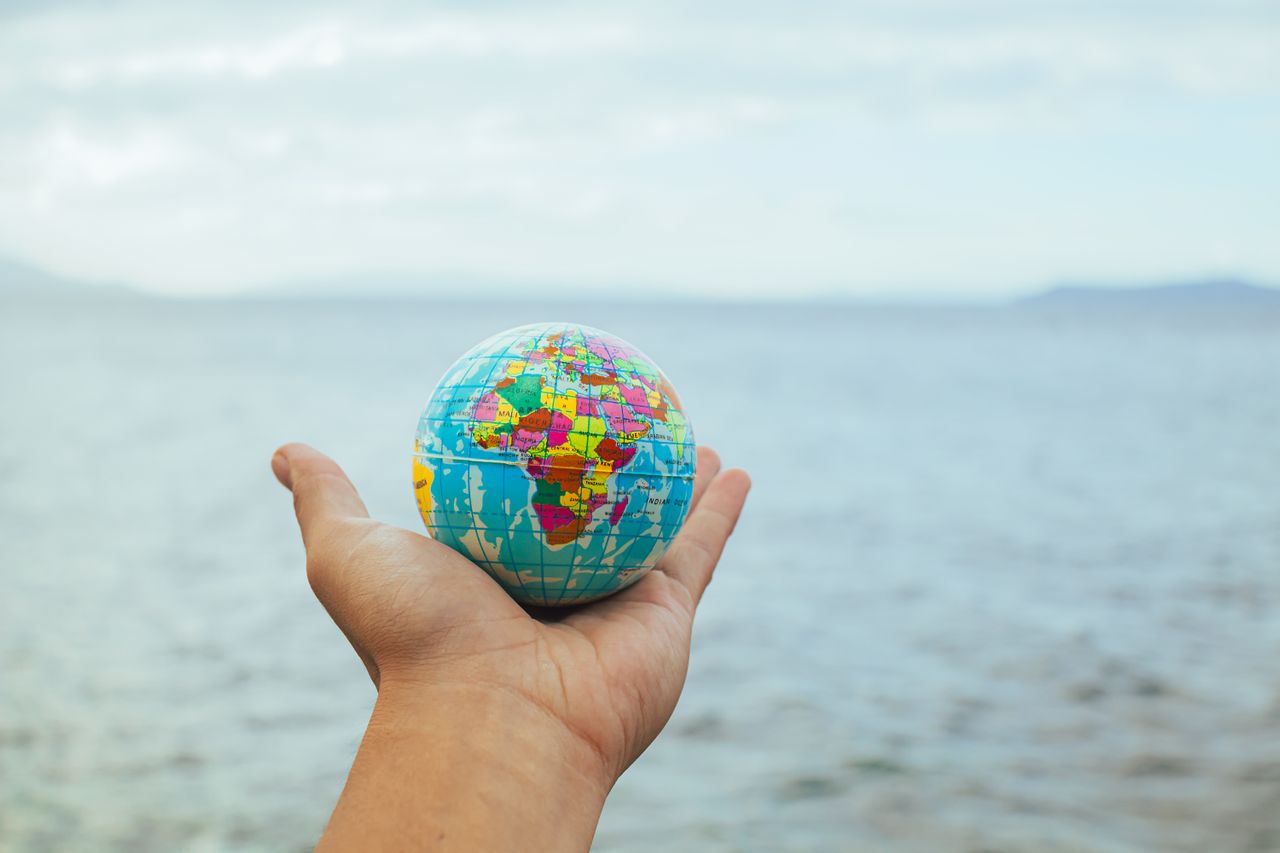
Future wars may never officially be described as wars over water.
They will have other names.
Border disputes.
Security operations.
Anti-terror campaigns.
Protection of national interests.
Territorial conflicts.
But behind the speeches and flags may sit a quieter question:
Who controls the river?
Many of the world’s great rivers cross national borders.
Upstream countries build dams.
Downstream countries fear reduced flows.
Climate change makes rainfall patterns less predictable.
Populations grow.
Demand rises.
Trust disappears.
Now add food insecurity, energy demand and nationalism.
The result is not difficult to imagine.
A civilisation can survive political arguments.
It can survive recessions.
It can survive stock market crashes.
It cannot survive without water.
We are trying to buy our way out
Technology will help.
Desalination can create freshwater from the sea.
Wastewater can be recycled.
Agriculture can become more efficient.
Cities can repair leaking infrastructure.
Industries can reuse water.
But technology has become our favourite excuse for avoiding uncomfortable questions.
What if the real problem is not that we lack technology?
What if the real problem is that we refuse to accept limits?
We want unlimited cities.
Unlimited construction.
Unlimited consumption.
Unlimited industrial growth.
Unlimited extraction.
On a planet with limited rivers, limited aquifers and increasingly unstable rainfall.
That is not development.
That is mathematics waiting to punish us.
One morning, the tap will explain everything
The most frightening thing about water bankruptcy is that it will not arrive everywhere with an announcement.
There may be no breaking-news banner.
No declaration of war.
No dramatic explosion.
Life will continue normally.
Until one summer becomes hotter.
One reservoir becomes emptier.
One borewell must be drilled deeper.
One tanker becomes more expensive.
One farmer loses another crop.
One family leaves its village.
One city begins fighting another region for water.
And one morning, millions of people turn a tap.
Nothing comes out.
Only then may we understand what bankruptcy really means.
Money is an agreement between humans.
Water is an agreement with nature.
And nature does not offer bailouts.
Comments

Hi, I’m Nishanth Muraleedharan (also known as Nishani)—an IT engineer turned internet entrepreneur with 25+ years in the textile industry. As the Founder & CEO of "DMZ International Imports & Exports" and President & Chairperson of the "Save Handloom Foundation", I’m committed to reviving India’s handloom heritage by empowering artisans through sustainable practices and advanced technologies like Blockchain, AI, AR & VR. I write what I love to read—thought-provoking, purposeful, and rooted in impact. nishani.in is not just a blog — it's a mark, a sign, a symbol, an impression of the naked truth. Like what you read? Buy me a chai and keep the ideas brewing. ☕💭 For advertising on any of our platforms, WhatsApp me on : +91-91-0950-0950 or email me @ support@dmzinternational.com