
SIR: An Old Idea With a New Weight
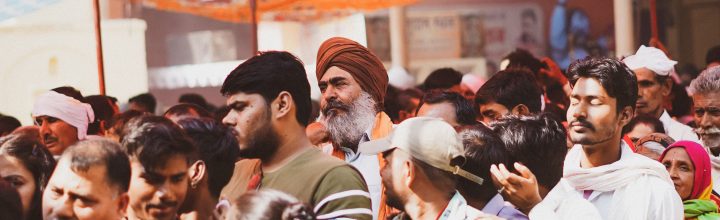
A voter list is a promise. The question today is who gets to keep it.
The Special Intensive Revision, or SIR, is a deep house-to-house check of India’s voter list. Many people think it is new. It is not. The ECI says intensive revisions have been held since the 1950s, and the present exercise is the ninth.
Where it began
The first round ran from 1952 to 1956 under the first Chief Election Commissioner, Sukumar Sen, after Partition. It aimed to fix serious flaws in the 1951–52 rolls, including many women who were missing. That was the Nehru government.
The ECI’s own records list later rounds in 1957, 1961, 1965–66, 1983–84, 1987–89, 1992–95 and 2002–04. Sources group these years differently, so counts vary. They fall under Nehru, Shastri, Indira Gandhi, Rajiv Gandhi, Narasimha Rao and Vajpayee. So the idea belongs to no single party. The present round, under the Modi government, is the ninth.
What is different this time
The old rounds mainly checked age and address. This round makes the voter prove more. Back in 1983, the ECI said a name already on the roll should not be deleted just because someone alleged foreign nationality. The person making the claim had to bring proof. The burden was on the accuser. Now it sits on the voter.
The scale is also very large. Bihar went first in 2025. Phase II covered 12 states and union territories, and the rolls there shrank by about 10.2%. Phase III, announced in May 2026, covers 16 states and three union territories and about 36.73 crore voters. The deletion of around 13 crore voters has drawn heavy criticism.
The citizenship question
It is not true that every voter must prove citizenship from scratch. In Bihar, voters not on the old 2003 roll had to give proof from a list of 11 documents, and Aadhaar, voter ID and ration cards were first left out. The Supreme Court pushed the ECI to include Aadhaar.
In the later phases, the method changed. The forms were changed to link each voter to their own record, or a parent’s record, in the last intensive revision. Documents were needed only when no link could be made. Voters who cannot link are called “unmapped”. The ECI’s software also flags “logical discrepancies” such as spelling differences or odd age gaps with parents.
The Form 6 controversy
This is the newest flashpoint. The online Form 6 for new voters was changed in July. Applicants must now link their parents’ details to the previous SIR roll, or they cannot proceed. The ECI says this helps verify eligibility and prevents ineligible people from being enrolled. Critics say it is a back-door citizenship test for young and first-time voters.
The Supreme Court has now said it neither approved nor rejected the revised form. The form did not exist when it decided the Bihar case in May 2026.
The split inside the Commission
The Indian Express reported that Election Commissioners Sukhbir Singh Sandhu and Vivek Joshi objected on record at least 14 times in ten months. Reported objections include Form 6 changes and the centralisation of the ERONet voter software. Some decisions were said to be taken without their knowledge.
The ECI’s reply is that all decisions, including SIR, were taken unanimously, and individual views are not decisions of the Commission. Both statements cannot be fully true. This is a report and a denial, and the court record must settle it.
Why this time is an issue
There are four reasons.
- The burden has shifted. The voter must now show more than before.
- The process kept changing. The Form 6 rule arrived after the court had ruled.
- The scale is huge. Lakhs of names removed in a state can change an election result.
- Trust is thin. Protests demanding Gyanesh Kumar’s resignation and a halt to SIR were held in several cities in October 2026.
The other side
The ECI’s case is simple. Migration and urbanisation leave the rolls full of dead, shifted and duplicate names. A clean list is good for every honest voter. In May 2026 the Supreme Court upheld SIR as lawful and said the ECI may check citizenship to a limited extent. The same court said those removed on suspicion must get a fair hearing and can go to a competent authority.
That is the heart of the matter. A clean roll is a fair goal. A clean roll built by removing the poor, the migrant and the undocumented is not.
What I think matters most
Many Indians, especially women, the poor and migrant workers, never kept a paper trail. Their right to vote is older than any form. A government can clean a list without shrinking a democracy, but only if it is slow, open and patient.
The voter list should be a door, not a gate. If it becomes a gate, we will have fewer voters and a weaker nation.
Comments

Hi, I’m Nishanth Muraleedharan (also known as Nishani)—an IT engineer turned internet entrepreneur with 25+ years in the textile industry. As the Founder & CEO of "DMZ International Imports & Exports" and President & Chairperson of the "Save Handloom Foundation", I’m committed to reviving India’s handloom heritage by empowering artisans through sustainable practices and advanced technologies like Blockchain, AI, AR & VR. I write what I love to read—thought-provoking, purposeful, and rooted in impact. nishani.in is not just a blog — it's a mark, a sign, a symbol, an impression of the naked truth. Like what you read? Buy me a chai and keep the ideas brewing. ☕💭 For advertising on any of our platforms, WhatsApp me on : +91-91-0950-0950 or email me @ support@dmzinternational.com