The Day Gen Z Made Delhi Blink: What Dharmendra Pradhan’s Resignation Really Means
A Nishani.in Opinion
History rarely changes because of one speech.
It changes because millions of people refuse to stop asking the same question.
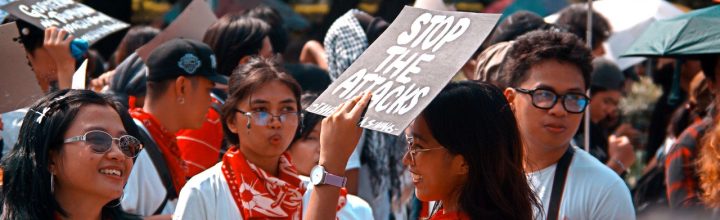
That appears to be the biggest lesson from the resignation of Union Education Minister Dharmendra Pradhan after weeks of nationwide student protests over examination integrity and paper leak allegations.
But this story did not begin with a resignation letter.
It began with a hunger strike.
It began with people willing to sacrifice comfort to make the nation uncomfortable.
Before the Crowds Came, There Was Silence
When Sonam Wangchuk began his hunger strike at Jantar Mantar, many believed it would become another forgotten protest.
Days became weeks.
The hunger strike continued.
Eventually, authorities removed him from the protest site, believing perhaps that removing one protester would remove the protest itself.
Instead, something unexpected happened.
The Cockroach Janta Party (CJP) continued the fast.
The protest changed from being about one activist to becoming a movement.
And movements are much harder to remove than individuals.
Why Did Students Refuse To Move On?
The issue was never just one examination.
It became about trust.
Students spend years preparing for competitive exams.
Families invest savings.
Some take loans.
Many sacrifice childhood itself.
When allegations of repeated examination irregularities emerge, students don’t merely lose marks.
They lose faith.
And once trust disappears, government assurances become much less effective.
The Difference Between Earlier Generations And Gen Z
Previous generations protested.
Gen Z documents everything.
Every speech.
Every promise.
Every police action.
Every negotiation.
Every contradiction.
…is captured, clipped, translated, shared, and discussed within minutes.
There is no “tomorrow’s newspaper.”
There is only “today’s timeline.”
That changes politics.
A New Political Battlefield
Governments once managed public opinion through television debates and newspaper headlines.
Gen Z doesn’t wait for either.
Instagram.
YouTube.
X.
WhatsApp.
Telegram.
Independent creators.
Student influencers.
Memes.
Short videos.
Information now travels faster than official press conferences.
Narratives no longer belong exclusively to governments or traditional media.
They belong to whoever earns public attention.
When Assurances Are No Longer Enough
The government repeatedly promised investigations, stricter action against those responsible for exam leaks, fast-track courts, and reforms to restore confidence in the examination system. However, many protesters believed that these promises were not enough without visible accountability.
Whether one agrees with that demand or not, it became clear that many students believed institutional promises alone were insufficient.
That shift is politically significant.
Was This Only About One Minister?
Probably not.
Resignations in parliamentary democracies often result from multiple pressures arriving simultaneously.
Among the factors widely reported were:
- Sustained nationwide student protests.
- The continuing controversy over examination integrity.
- Sonam Wangchuk’s prolonged hunger strike and the public reaction after his removal from Jantar Mantar.
- The Cockroach Janta Party taking the movement forward through continued fasting and nationwide mobilisation.
- Opposition parties increasing political pressure.
- Parliamentary disruption.
- Ongoing investigations.
- National media attention.
- The government’s broader political assessment.
Reducing the story to one organisation, one activist, or one event misses the complexity.
Movements succeed when many streams merge into one river.
The Biggest Victory Was Psychological
Perhaps the greatest achievement was not a resignation.
It was proving that young citizens can remain organised long enough to influence the national conversation.
For years, many believed that large governments simply outlast protests.
This episode challenged that assumption.
Whether temporary or permanent, it has changed public expectations.
What BJP Must Learn From This
Every political party eventually faces a defining moment.
For the BJP, this is one of them.
For over a decade, the party has successfully managed political crises through quick messaging, strong leadership, and decisive narratives.
But Gen Z has introduced a new challenge.
They don’t wait for television debates.
They don’t depend on political spokespersons.
They don’t forget yesterday’s statements.
Everything is archived.
Everything is searchable.
Everything is compared.
Every contradiction becomes a viral reel.
This generation doesn’t merely consume information.
It investigates it.
That changes the rules of politics.
The Era Of Digital Accountability
In previous years, governments could often calm public anger by announcing committees, investigations, or future reforms.
Today, citizens ask different questions.
Who is responsible?
Who is accountable?
What action has actually been taken?
Young people are increasingly measuring governments by outcomes rather than announcements.
That represents a significant shift in democratic expectations.
What Could Change Going Forward?
This episode may encourage governments of every political party to rethink how they respond to public crises.
Possible changes include:
- Faster acknowledgement of emerging issues before they escalate.
- Greater transparency in competitive examinations.
- Better digital communication with students.
- Earlier engagement with protesters instead of delayed negotiations.
- Quicker administrative accountability where failures occur.
- More cautious handling of peaceful protests, recognising that every action is instantly recorded and shared online.
- Stronger efforts to rebuild public trust rather than relying only on official statements.
Whether these changes happen remains to be seen, but the political landscape has undoubtedly evolved.
Democracy Has Entered A New Phase
India has always had elections.
Now it has something equally powerful.
Continuous public scrutiny.
Every citizen carries a camera.
Every student carries a publishing platform.
Every protest can become national within hours.
Power has not disappeared.
But power is no longer one-way.
Final Thought
Governments should never fear criticism.
They should fear silence.
Because silence means people have stopped believing change is possible.
The events of the past few weeks suggest that India’s youngest generation still believes change is possible—and is willing to organise, persist, and demand accountability.
Whether one supports or opposes the protests, one reality is difficult to ignore.
The relationship between citizens and power is changing.
The next generation is not waiting for permission to participate in democracy.
They are already rewriting how it works.
Comments

Hi, I’m Nishanth Muraleedharan (also known as Nishani)—an IT engineer turned internet entrepreneur with 25+ years in the textile industry. As the Founder & CEO of "DMZ International Imports & Exports" and President & Chairperson of the "Save Handloom Foundation", I’m committed to reviving India’s handloom heritage by empowering artisans through sustainable practices and advanced technologies like Blockchain, AI, AR & VR. I write what I love to read—thought-provoking, purposeful, and rooted in impact. nishani.in is not just a blog — it's a mark, a sign, a symbol, an impression of the naked truth. Like what you read? Buy me a chai and keep the ideas brewing. ☕💭 For advertising on any of our platforms, WhatsApp me on : +91-91-0950-0950 or email me @ support@dmzinternational.com