The Deal With No Name: What the US-Iran Agreement Really Contains
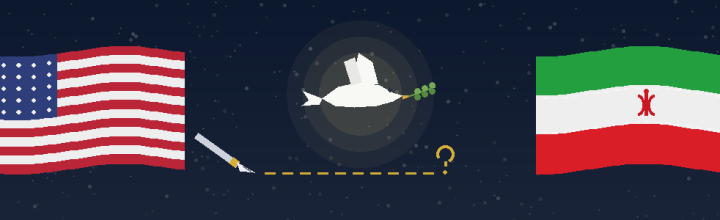
After 104 days of war, West Asia may finally be moving toward peace. On June 11, President Trump announced that he had cancelled the strikes planned against Iran that evening. His reason: the deal had been “brought to the highest level of Iranian leadership and approved.” He said the signing could happen as early as this weekend, possibly Saturday or Monday, at a ceremony in Europe. Geneva, which hosted the earlier rounds of talks between US envoys Steve Witkoff and Jared Kushner and Iranian Foreign Minister Abbas Araghchi, is the most likely venue. Trump will not attend. Vice President Vance will sign for the United States.
One note of caution before celebrating. Iran’s Foreign Ministry spokesman Esmaeil Baghaei said Tehran “has not reached a final conclusion on the agreement.” Trump has claimed a deal was close at least 38 times since February. This time the details are specific, which is why markets believe it. But the ink is not yet on paper.
What is actually in the deal
This is not a peace treaty. It is a memorandum of understanding, an MOU. It has no grand name like the JCPOA of 2015. Trump himself called it “a little conceptual.” Here is what the draft contains, based on US officials and mediator leaks:
- A 60-day period, extendable by mutual consent, during which both sides stop fighting.
- The Strait of Hormuz reopens immediately. Iran clears the mines it laid. No tolls on shipping.
- The US ends its naval blockade of Iran once the deal is signed.
- Iran commits in writing to never pursue a nuclear weapon.
- The US agrees to negotiate sanctions relief and the release of roughly 12 billion dollars in frozen Iranian assets during the 60 days.
- A mechanism for Iran to receive goods and humanitarian aid.
- An end to the Israel-Hezbollah war in Lebanon.
The countries involved go beyond Washington and Tehran. Oman was the chief mediator throughout, with Qatar and Pakistan hosting earlier rounds. Trump said the final points were approved by “all parties involved,” including Middle East countries. The Gulf states, who took Iranian missile fire during this war, are backers of the deal even if they are not signing it.
The uranium question
Here is the part most reports gloss over. The uranium is not in this deal. The MOU only says that the disposal of Iran’s highly enriched uranium and the future of its enrichment program will be the first items negotiated during the 60-day window. The real nuclear treaty comes later, if it comes at all.
Why does this matter? Because the uranium is the entire reason this war started. The IAEA estimated Iran held 440.9 kilograms of uranium enriched to 60 percent before the June 2025 strikes. Trump claimed American bombs “totally obliterated” the nuclear sites. The IAEA chief has indicated the stockpile is largely intact, much of it buried under rubble at Isfahan. So the US destroyed buildings, not material. Sixty percent enrichment is one short step from the 90 percent needed for a bomb, a matter of weeks.
Iran’s position is firm: the stockpile does not leave the country. Sending it abroad, Tehran believes, would invite the next attack. The compromise being discussed is dilution inside Iran under IAEA supervision, possibly with Kazakhstan as a fallback destination. Until that future agreement is signed and verified, Iran keeps its leverage. That is the uncomfortable truth inside this peace.
Where does Israel stand
Netanyahu has said Israel is not a party to the emerging deal. That sentence carries weight. Israel started this war alongside the US on February 28 with one open goal: change the regime in Tehran. Netanyahu said even after the April ceasefire that Israel “still has goals to complete.” Trump’s answer was blunt: Netanyahu “won’t have any choice” but to accept the deal, because “I call the shots.”
After 100-plus days, both Washington and Tel Aviv have learned the same lesson the hard way. The Islamic Republic did not collapse. Its leadership was targeted in the very first strikes, its economy is battered, and yet the regime stands. Regime change by airpower failed in Iraq’s neighbor just as analysts warned it would. Iran’s enemies must now live with the same government they tried to remove, and that government will remember everything.
The GCC and Jordan dilemma
The Gulf states wanted this war stopped before it started. Oman’s foreign minister flew to Washington one day before the bombs fell. They were ignored, and then they paid the price. Iranian missiles and drones hit GCC countries directly because they host American bases and war machinery. Several expelled Iranian diplomats. The US is now reportedly offering Iranian frozen assets to compensate Gulf allies for damage, which Tehran angrily rejects.
The lesson for Riyadh, Abu Dhabi, Doha, and Amman is permanent. Hosting US forces no longer buys safety; it buys targeting. Expect the GCC to push for three things: written security guarantees from Washington, quiet restoration of ties with Tehran, and more strategic neutrality in the next crisis. Jordan, squeezed between all sides, will follow the same path.
What the future looks like
Best case: the MOU holds, the 60-day talks produce a real nuclear agreement, oil flows, and India’s energy bill drops. Worst case: this becomes another broken ceasefire in a war that has already broken several. The deal has no name, no nuclear teeth yet, an angry Israel outside the room, and a wounded regime inside it. Peace this fragile is still better than war. But nobody should confuse a signature in Geneva with the end of this story.
Comments

Hi, I’m Nishanth Muraleedharan (also known as Nishani)—an IT engineer turned internet entrepreneur with 25+ years in the textile industry. As the Founder & CEO of "DMZ International Imports & Exports" and President & Chairperson of the "Save Handloom Foundation", I’m committed to reviving India’s handloom heritage by empowering artisans through sustainable practices and advanced technologies like Blockchain, AI, AR & VR. I write what I love to read—thought-provoking, purposeful, and rooted in impact. nishani.in is not just a blog — it's a mark, a sign, a symbol, an impression of the naked truth. Like what you read? Buy me a chai and keep the ideas brewing. ☕💭 For advertising on any of our platforms, WhatsApp me on : +91-91-0950-0950 or email me @ support@dmzinternational.com