
The Quiet Invasion: When Foreign Products Take Over Everything
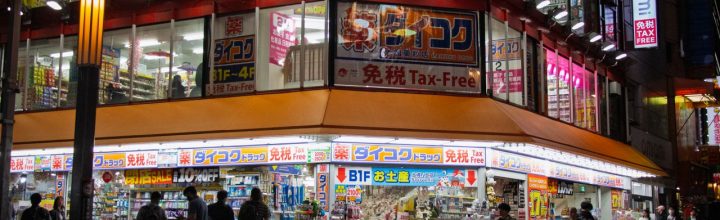
No soldiers cross the border.
No tanks arrive at the capital.
No warning sirens sound.
Instead, something much quieter happens.
A phone arrives from another country. Then a television. Then medicines. Then machinery. Then batteries, solar panels, computer chips, fertilizers, toys, clothing and thousands of everyday products.
They are cheaper. They are convenient. People buy them.
Local factories struggle to compete.
One closes.
Then another.
And eventually, a country discovers something uncomfortable:
It can no longer easily make what it once produced itself.
This is the quiet invasion.
Not an invasion of territory.
An invasion of dependence.
Cheap Today Can Become Expensive Tomorrow
Consumers naturally choose better prices.
If a foreign product costs ₹500 and a locally produced alternative costs ₹700, most people will ask a simple question:
“Why should I pay more?”
It is a reasonable question.
But there is another question we rarely ask:
“What happens if everyone makes the same choice for twenty years?”
A local factory doesn’t disappear because one person buys an imported product.
It disappears because millions of people repeatedly make similar decisions.
Once the factory closes, skilled workers leave.
Suppliers disappear.
Machines stop being maintained.
Knowledge slowly disappears.
And rebuilding the same industry later may cost far more than protecting its capability in the first place.
The Most Dangerous Dependency Is the One You Don’t Notice
Nobody worries about dependence when everything is working.
A country may import most of its pharmaceutical ingredients, electronic components or critical industrial equipment.
As long as ships arrive and international trade continues, everything looks normal.
Then a pandemic happens.
A war disrupts shipping.
A geopolitical dispute changes trade relationships.
A major producer decides to restrict exports.
Suddenly, something that looked like an ordinary commercial relationship becomes a national vulnerability.
The frightening part is that dependence doesn’t announce itself.
You discover it when the supply stops.
Technology Makes the Problem Bigger
Imagine a country that can assemble millions of smartphones but cannot manufacture the critical components inside them.
Is it technologically independent?
A country may build electric vehicles but depend on foreign batteries.
It may manufacture computers but depend on imported chips.
It may have sophisticated hospitals but depend on foreign medical equipment or pharmaceutical ingredients.
It may produce energy but depend on imported technology to generate or store it.
This creates an important distinction:
Assembly is not always the same as capability.
A country can look industrially powerful while remaining deeply dependent underneath the surface.
The Race to the Bottom Has a Price
Globalisation has created extraordinary benefits.
Consumers get more choices.
Businesses access larger markets.
Products become cheaper.
Technology spreads faster.
There is nothing inherently wrong with importing products.
The danger begins when a country loses the ability to produce too many strategically important things.
Because once domestic capability disappears, price is no longer the only consideration.
You have also lost resilience.
And resilience is expensive to rebuild.
What Happens to the Next Generation?
There is another consequence that rarely appears in economic statistics.
Skills disappear.
If a country stops making something for twenty years, an entire generation may grow up without learning how to make it.
The engineers move elsewhere.
The technicians retire.
The suppliers shut down.
The apprentices never arrive.
Eventually, a country may have consumers who know how to use advanced products but fewer people who know how to manufacture them.
A nation can lose an industry without losing its appetite for the industry’s products.
That is the dangerous part.
The Future May Belong to Countries That Know What Not to Depend On
Complete self-sufficiency is unrealistic.
No country can efficiently manufacture everything it consumes.
The smarter question is different:
Which capabilities can we afford to lose?
Food?
Medicine?
Energy?
Defence equipment?
Semiconductors?
Telecommunications?
Critical minerals?
Industrial machinery?
Digital infrastructure?
The answer will differ from country to country.
The goal isn’t necessarily to stop importing.
It is to ensure that a country isn’t helpless when imports suddenly become unavailable.
The Quiet Invasion Doesn’t Need an Enemy
Perhaps the most uncomfortable part of this story is that there may be no villain.
Foreign companies are simply selling products.
Consumers are simply looking for value.
Businesses are simply trying to reduce costs.
Governments are trying to encourage trade and economic growth.
Everyone can make a perfectly rational decision.
Yet millions of rational decisions can collectively create an irrational vulnerability.
That is how dependence grows.
Quietly.
Conveniently.
Almost invisibly.
Until one day a country looks around and asks:
“If the world stops selling this to us tomorrow, can we still make it ourselves?”
If the answer is no, the invasion has already happened.
The most powerful country in the future may not be the one that produces everything.
It may be the one that has never allowed itself to become incapable of producing what truly matters.
Comments

Hi, I’m Nishanth Muraleedharan (also known as Nishani)—an IT engineer turned internet entrepreneur with 25+ years in the textile industry. As the Founder & CEO of "DMZ International Imports & Exports" and President & Chairperson of the "Save Handloom Foundation", I’m committed to reviving India’s handloom heritage by empowering artisans through sustainable practices and advanced technologies like Blockchain, AI, AR & VR. I write what I love to read—thought-provoking, purposeful, and rooted in impact. nishani.in is not just a blog — it's a mark, a sign, a symbol, an impression of the naked truth. Like what you read? Buy me a chai and keep the ideas brewing. ☕💭 For advertising on any of our platforms, WhatsApp me on : +91-91-0950-0950 or email me @ support@dmzinternational.com