
The Great Mystery of Death: Where Does the Soul Go After Death?
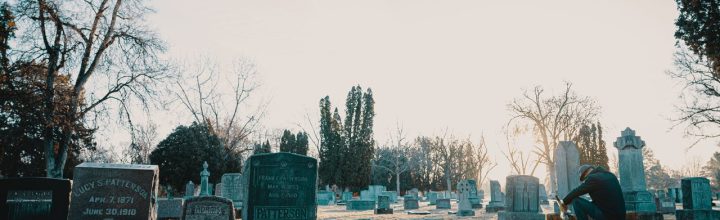
One day, you will disappear.
Not your photographs.
Not immediately your name.
Not the memories others have of you.
You.
The heart will stop. The lungs will become silent. The body you spent decades protecting will begin to return to the earth.
And then comes the question that no human being can answer with absolute certainty:
Where do you go?
Do you enter another world?
Are you reborn?
Does your consciousness continue somewhere beyond the physical universe?
Or is death simply the end of everything you have ever called “me”?
For thousands of years, human beings have stood before this terrifying mystery. We have built religions, philosophies, rituals and entire civilizations around it.
But the Ashtavakra Gita asks an even more disturbing question.
What if the person you believe dies was never the real “you” in the first place?
The body dies. But does the Self die?
Look at yourself ten years ago.
Your face was different.
Your body was different.
Your thoughts were different.
Your fears were different.
Your ambitions were different.
Even many of your beliefs have probably changed.
Yet you still say, “That was me.”
Something has remained while almost everything else has changed.
The Ashtavakra Gita, one of the profound texts of Advaita Vedanta, directs attention toward this unchanging awareness.
According to its teaching, our deepest identity is not the body, the mind, our possessions or even our personality.
These are things we experience.
But who is the one experiencing them?
That question takes us into territory where ordinary logic begins to tremble.
What if death is only the death of an identity?
We normally imagine death as a journey.
A person exists here.
Then the body dies.
And the soul supposedly travels somewhere else.
Heaven.
Hell.
Another birth.
Another dimension.
Another existence.
But Advaita Vedanta challenges the assumption behind the question itself.
If the true Self is pure consciousness, then where could it possibly go?
Consider a clay pot.
There is space inside the pot.
There is space outside the pot.
When the pot breaks, does the space inside travel somewhere?
No.
The pot disappears.
The separation disappears.
The space was never truly separate.
The Ashtavakra Gita points toward a similarly radical understanding of the Self.
Perhaps the body is the temporary “pot.”
And perhaps consciousness was never confined to it in the way we imagined.
Then what happens after death?
This is where things become uncomfortable.
We want definite answers.
We want someone to tell us:
“After you die, this is exactly what will happen.”
But neither philosophy nor science can give us experimentally verified certainty about an afterlife.
Religious traditions offer different explanations—heaven, hell, reincarnation, karma, liberation and other possibilities.
The Ashtavakra Gita is less interested in satisfying our curiosity about the next world.
Instead, it turns the question around.
Why are you waiting for death to discover who you are?
If you want to know what the Self is, investigate it now.
Before the funeral.
Before the last breath.
Before the body becomes still.
The frightening possibility of reincarnation
Indian philosophical traditions have spent centuries exploring karma and rebirth.
The individual appears to move through a cycle of birth and death, carrying the consequences of actions and attachments.
But the Ashtavakra Gita takes the inquiry deeper.
It asks us to question the very identity that says:
“I am this person.”
My career.
My family.
My wealth.
My reputation.
My successes.
My failures.
My memories.
My fears.
My desires.
We build an enormous psychological structure around these things and call it “me.”
Then death comes and begins dismantling it.
The disturbing question is:
If everything that makes up your personal identity can disappear, what exactly is left?
Death may be the greatest mirror
We spend our lives behaving as though we have unlimited time.
We postpone the things that matter.
We chase money.
We compete for status.
We carry grudges for years.
We worry about strangers’ opinions.
We accumulate possessions we cannot take with us.
And somewhere in the background, death waits silently.
It does not negotiate.
It does not care about wealth.
It does not care about social status.
It does not care how many followers you have.
Eventually, every human being meets the same mystery.
And perhaps this is why the contemplation of death can transform life.
When you genuinely understand that everything you possess is temporary, the question changes from:
“How much can I get?”
to:
“What is actually worth having?”
Perhaps we are asking the wrong question
We keep asking:
“Where will I go after I die?”
But perhaps the more frightening question is:
“Who am I right now?”
Who is the person looking through your eyes?
Who is aware of your thoughts?
Who notices your happiness and your sadness?
Who watches the body grow older?
Who remembers the child you once were?
And if everything about the person you call “me” is constantly changing, what is the unchanging presence behind it all?
The Ashtavakra Gita invites us to look there.
Not tomorrow.
Not after death.
Now.
The mystery remains
Perhaps there is another world.
Perhaps there is reincarnation.
Perhaps consciousness survives the body.
Perhaps it does not.
Humanity still does not possess a universally proven answer.
But the ancient wisdom of the Ashtavakra Gita offers something more challenging than an answer.
It offers a question.
What if you have spent your entire life trying to protect an identity that was never permanent?
Your body will eventually disappear.
Your possessions will belong to someone else.
Your photographs will fade.
Your name may one day be forgotten.
Even the people who love you will eventually leave this world.
Yet, according to Advaita Vedanta, the deepest Self is not something that was born and therefore is not something that can truly die.
If that is true, then perhaps death is not the greatest mystery.
The greatest mystery is that we spend our entire lives afraid of losing ourselves without ever discovering who we truly are.
And perhaps that is the question we should be brave enough to ask before death comes knocking.
Comments

Hi, I’m Nishanth Muraleedharan (also known as Nishani)—an IT engineer turned internet entrepreneur with 25+ years in the textile industry. As the Founder & CEO of "DMZ International Imports & Exports" and President & Chairperson of the "Save Handloom Foundation", I’m committed to reviving India’s handloom heritage by empowering artisans through sustainable practices and advanced technologies like Blockchain, AI, AR & VR. I write what I love to read—thought-provoking, purposeful, and rooted in impact. nishani.in is not just a blog — it's a mark, a sign, a symbol, an impression of the naked truth. Like what you read? Buy me a chai and keep the ideas brewing. ☕💭 For advertising on any of our platforms, WhatsApp me on : +91-91-0950-0950 or email me @ support@dmzinternational.com