
The Untold Story of Bengaluru’s NICE Road – India’s Most Famous Private Highway
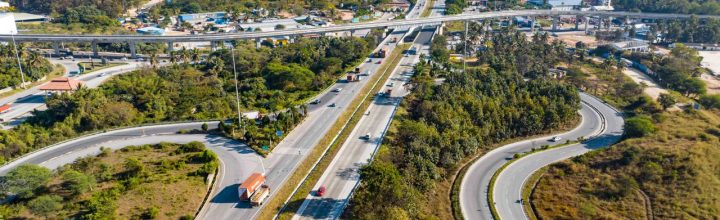
If you have ever driven through Bengaluru, chances are you have used the famous NICE Road. Every day, thousands of commuters pay tolls without realizing something extraordinary—this is not a government-built road. It is one of India’s largest privately developed road projects.
For many Bengaluru residents, it is surprising to learn that the road is owned and operated by a private company rather than the government. But how did one businessman receive permission to build such a massive road? Why has the project remained controversial for nearly three decades? And has the owner actually made billions from it?
Here’s the fascinating story.
The Vision Behind NICE Road
The company behind the project is Nandi Infrastructure Corridor Enterprises (NICE), led by entrepreneur Ashok Kheny, who served as its Managing Director.
During the early 1990s, Bengaluru’s traffic was growing rapidly. The existing Bengaluru–Mysuru highway passed directly through busy city roads such as Kengeri and numerous towns on the way to Mysuru. Heavy trucks, buses, and cars shared the same roads with local traffic, leading to long traffic jams and slow travel.
To solve this problem, the Karnataka Government conceived the Bengaluru–Mysuru Infrastructure Corridor (BMIC) project in 1994–95. Instead of simply building another highway, the vision was much bigger.
The proposal included:
- A six-lane expressway between Bengaluru and Mysuru
- A Peripheral Ring Road around western Bengaluru
- Link roads connecting major highways
- Five integrated townships
- Commercial development to help finance the project
The project was awarded to NICE under a public-private partnership model.
Is NICE Road Really Private?
Yes—but with an important clarification.
The road itself is privately financed, built, operated and maintained by NICE under agreements with the Karnataka Government. The land was not personally owned by Ashok Kheny. Instead, land was acquired through government processes for the infrastructure project and then provided under concession agreements to NICE for construction and operation.
So, Ashok Kheny did not simply buy thousands of acres and decide to build a highway. The project originated as a government-approved infrastructure partnership.
Where Does NICE Road Run?
The completed NICE Peripheral Road is approximately 40 km long and forms a western bypass around Bengaluru.
It connects:
- Hosur Road (Electronic City)
- Bannerghatta Road
- Kanakapura Road
- Mysuru Road
- Magadi Road
- Tumakuru Road
Instead of entering the crowded city, vehicles can bypass Bengaluru entirely using this corridor.
Although the original BMIC proposal envisioned a full Bengaluru–Mysuru expressway of about 111–113 km, only a small portion of that expressway was ever constructed because of prolonged legal and land disputes.
How Did It Change Bengaluru Traffic?
Before NICE Road became operational:
- Trucks heading north or south had to travel through city roads.
- Traffic between Electronic City, Mysuru Road and Tumakuru Road frequently passed through congested junctions.
- Travel times across western Bengaluru were significantly longer.
After NICE Road opened:
- Long-distance trucks shifted to the peripheral road.
- Many private vehicles began avoiding central Bengaluru.
- Logistics companies saved considerable travel time.
- Industrial traffic between Hosur Road, Peenya and Tumakuru Road improved dramatically.
Although Bengaluru’s vehicle population has since exploded, NICE Road still serves as one of the city’s most important bypass routes.
Why Was the Project So Controversial?
Few infrastructure projects in India have faced as much controversy.
Major allegations included:
- Excess land acquisition
- Compensation disputes involving farmers
- Political opposition
- Environmental concerns
- Delays in handing over land
- Court cases lasting decades
Supporters argued the project would transform Karnataka’s infrastructure.
Critics claimed more land was acquired than required and questioned aspects of the township component.
These disputes prevented the original Bengaluru–Mysuru expressway from being completed as planned.
How Much Did It Cost?
The project has evolved over many years, making exact figures difficult because of cost escalations and phased construction.
Early estimates in the 1990s were only a few thousand crore rupees.
As delays continued, financing costs, inflation and legal battles significantly increased the total investment.
Industry estimates generally place investments in the completed infrastructure at several thousand crore rupees, though no universally accepted audited lifetime figure has been publicly confirmed.
How Many Toll Plazas Are There?
Unlike national highways where a single toll often covers a long stretch, NICE Road follows a section-wise tolling system.
Motorists pay based on the sections they actually use between major junctions.
The main toll collection points correspond to different corridor segments connecting:
- Hosur Road
- Bannerghatta Road
- Kanakapura Road
- Mysuru Road
- Magadi Road
- Tumakuru Road
This “pay-as-you-use” approach has been part of the concession model from the beginning.
Has NICE Already Recovered Its Investment?
This is one of the most common questions.
The honest answer is nobody outside the company knows for certain.
NICE has never publicly disclosed complete cumulative toll collections or lifetime profits.
The company has consistently stated that delays, litigation and incomplete land acquisition affected the project’s financial viability, while critics argue that toll revenues have been substantial.
Without audited public financial disclosures, it is impossible to accurately state how much profit has been earned.
Who Is Ashok Kheny?
Ashok Kheny is an entrepreneur and infrastructure developer best known for leading the NICE project.
For decades, he became synonymous with the Bengaluru–Mysuru Infrastructure Corridor. He also entered politics, serving as an MLA and remaining active in Karnataka’s public life.
His career has been marked by both praise and criticism.
Supporters view him as someone who introduced modern private infrastructure development in Karnataka.
Critics associate him with one of the state’s longest-running land and political controversies.
Regardless of opinion, few individuals have influenced Bengaluru’s road infrastructure as much as he has.
A Road That Changed Bengaluru Forever
Whether one agrees with the project or not, NICE Road permanently changed how Bengaluru moves.
It became Karnataka’s first major access-controlled private expressway corridor, reducing pressure on many city roads and providing a faster route for commuters and freight.
Even today, every vehicle that enters NICE Road is part of an infrastructure experiment that began over 30 years ago—a bold attempt to build world-class highways through a public-private partnership.
The full Bengaluru–Mysuru vision was never realized, but the completed sections remain among the busiest and most recognizable roads in Karnataka.
The next time you drive on NICE Road, remember that you’re not just using another highway—you’re travelling on one of India’s most ambitious and debated infrastructure projects.
Comments

Hi, I’m Nishanth Muraleedharan (also known as Nishani)—an IT engineer turned internet entrepreneur with 25+ years in the textile industry. As the Founder & CEO of "DMZ International Imports & Exports" and President & Chairperson of the "Save Handloom Foundation", I’m committed to reviving India’s handloom heritage by empowering artisans through sustainable practices and advanced technologies like Blockchain, AI, AR & VR. I write what I love to read—thought-provoking, purposeful, and rooted in impact. nishani.in is not just a blog — it's a mark, a sign, a symbol, an impression of the naked truth. Like what you read? Buy me a chai and keep the ideas brewing. ☕💭 For advertising on any of our platforms, WhatsApp me on : +91-91-0950-0950 or email me @ support@dmzinternational.com