
When a Guru Promises You Cannot Die—and Physics Interrupts
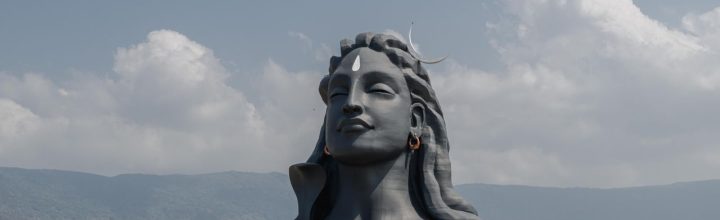
There is a profound difference between offering spiritual comfort and making claims about physical reality.
One can believe in meditation. One can seek spiritual guidance. One can undertake a difficult pilgrimage in search of meaning.
But when a spiritual leader tells followers something as absolute as “Everyone will come back. I will not let you die,” the words cross a dangerous line.
They are no longer merely poetry.
They become a promise.
And today, that promise deserves to be questioned.
A devastating disaster near the Nepal–Tibet border has left 77 pilgrims associated with an Isha Foundation Kailash pilgrimage group missing and unaccounted for. Reports say the group was caught in the catastrophic flooding near the Gyirong border region. As of September 2, there has been no confirmed resolution regarding their fate. The wider disaster has killed more than a thousand people and left thousands missing.
This is not the moment for cheap celebration, mockery or hatred. There are families waiting for news. There are people who may still be alive. There are parents, spouses and children living through unimaginable uncertainty.
But compassion for the victims does not require silence about the claims made by those in positions of enormous spiritual influence.
In an earlier address to Kailash pilgrims, Sadhguru was reported as saying:
“Everyone will come back. I will not let you die.”
That is an extraordinary statement.
Not “I hope everyone returns safely.”
Not “We will take every possible precaution.”
Not “Nature is unpredictable, and every journey involves risk.”
Instead, it was an absolute assurance.
And that is precisely where the real question begins.
Faith is personal. Safety is not.
People have the right to believe that a guru’s grace protects them spiritually. That is faith.
But no spiritual leader has the right to blur the boundary between spiritual belief and physical invincibility.
Mountains do not recognise enlightenment.
Rivers do not recognise devotion.
Floods do not check whether the people in their path are disciples.
Gravity does not pause because someone has received a blessing.
The laws of physics are spectacularly democratic.
They apply to gurus and followers alike.
Which is why spiritual leaders must be especially careful with words that can influence people’s perception of danger.
A follower may hear, “I will not let you die,” and interpret it emotionally.
But some followers may interpret it literally.
That is the problem with absolute claims made by people whose followers attribute extraordinary wisdom, authority or even supernatural qualities to them.
The more powerful the influence, the greater the responsibility.
Spiritual authority should not be exempt from accountability
When everything goes well, spiritual leaders are often credited.
A successful journey becomes proof of grace.
A recovery becomes proof of divine intervention.
A coincidence becomes a miracle.
But when tragedy strikes, suddenly the explanation changes.
Then come nature, karma, destiny, geography, weather, human error and the laws of physics.
We cannot have it both ways.
If a leader accepts credit for supernatural protection when followers survive, then difficult questions cannot be dismissed when that protection apparently fails.
That does not mean a spiritual leader caused a natural disaster.
It does not mean anyone should be blamed for the flood itself.
It means that claims made before the disaster must be judged honestly after the disaster.
Words have consequences.
Especially when spoken by people whose words shape the decisions and beliefs of thousands.
The 77 missing pilgrims deserve more than becoming an argument in a culture war between believers and critics.
Their families deserve answers.
And the public deserves honesty.
Not mystical certainty before the journey and scientific realism after tragedy.
A guru may offer meaning.
A guru may offer courage.
A guru may offer emotional strength.
But nobody should promise immunity from death.
Because when nature arrives with forty feet of water, mud and rock, spirituality is not a substitute for emergency planning, risk assessment, communication systems and respect for physical reality.
Faith may help human beings face death.
It should never be marketed as an insurance policy against it.
And perhaps that is the question this tragedy leaves behind:
When a spiritual leader promises, “I will not let you die,” what exactly should a follower believe?
And more importantly—
who takes responsibility when reality proves that promise wrong?
Comments

Hi, I’m Nishanth Muraleedharan (also known as Nishani)—an IT engineer turned internet entrepreneur with 25+ years in the textile industry. As the Founder & CEO of "DMZ International Imports & Exports" and President & Chairperson of the "Save Handloom Foundation", I’m committed to reviving India’s handloom heritage by empowering artisans through sustainable practices and advanced technologies like Blockchain, AI, AR & VR. I write what I love to read—thought-provoking, purposeful, and rooted in impact. nishani.in is not just a blog — it's a mark, a sign, a symbol, an impression of the naked truth. Like what you read? Buy me a chai and keep the ideas brewing. ☕💭 For advertising on any of our platforms, WhatsApp me on : +91-91-0950-0950 or email me @ support@dmzinternational.com