
Saurav Das: When Facts Become More Powerful Than Noise
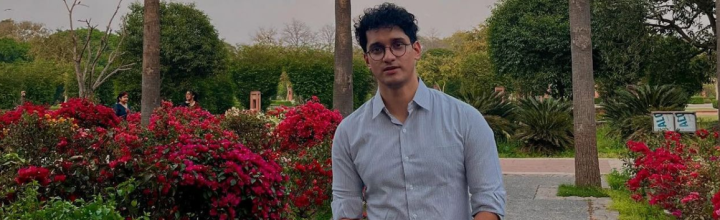
In an era where television debates are often dominated by shouting matches, Saurav Das has emerged as a different kind of political communicator. Before becoming the Chief Spokesperson of the Cockroach Janta Party (CJP), he built his reputation as an investigative journalist focused on governance, judicial accountability, transparency, and public policy. His journey demonstrates that influence is not always created through political inheritance or celebrity status; sometimes it is earned by consistently asking uncomfortable questions backed by evidence.
Das studied Journalism and Mass Communication at Amity University, where his interest in public accountability reportedly began at a young age. While still a student, he started using the Right to Information Act to seek official records and expose administrative shortcomings. Those early efforts gradually established him as a researcher who preferred documents over rumours and records over rhetoric.
His work later expanded beyond RTIs into investigative journalism. Rather than chasing sensational headlines, he concentrated on subjects such as governance failures, legal institutions, policing, transparency, and policy implementation. This approach earned him recognition among readers interested in data-driven reporting rather than opinion-based journalism.
Many observers have noticed his communication style. He rarely appears hurried even during confrontational interviews. Instead of responding emotionally, he generally structures his arguments in a sequence—presenting the issue, citing supporting facts, explaining the consequences, and finally stating the party’s position. This disciplined method often allows viewers to follow the discussion without unnecessary distractions.
His appearances during the education reform protests significantly increased his national visibility. Whether clarifying misinformation, responding to media questions, or addressing negotiations with government representatives, he consistently projected a composed image that contrasted with the intensity of the surrounding political environment.
His long-term political ambitions also remain uncertain. Public statements indicate that his current priority is representing CJP’s positions on education, governance, and accountability. Predicting future leadership roles or organisational goals beyond those publicly expressed would be speculation rather than analysis.
Perhaps the most important lesson from Saurav Das’s rise is not about one individual but about the changing nature of public leadership. A generation raised on instant opinions is beginning to value documented evidence. RTIs, investigative research, and careful communication are slowly becoming political tools as influential as slogans. Whether one agrees with his views or not, his journey suggests that credibility is built over years through preparation, consistency, and knowledge—not merely through speaking the loudest.
In a democracy flooded with information, facts remain the strongest form of persuasion. Personalities may capture attention, but evidence sustains public trust. That may ultimately be the real significance of Saurav Das’s emergence in India’s political conversation.
Comments

Hi, I’m Nishanth Muraleedharan (also known as Nishani)—an IT engineer turned internet entrepreneur with 25+ years in the textile industry. As the Founder & CEO of "DMZ International Imports & Exports" and President & Chairperson of the "Save Handloom Foundation", I’m committed to reviving India’s handloom heritage by empowering artisans through sustainable practices and advanced technologies like Blockchain, AI, AR & VR. I write what I love to read—thought-provoking, purposeful, and rooted in impact. nishani.in is not just a blog — it's a mark, a sign, a symbol, an impression of the naked truth. Like what you read? Buy me a chai and keep the ideas brewing. ☕💭 For advertising on any of our platforms, WhatsApp me on : +91-91-0950-0950 or email me @ support@dmzinternational.com