SIR in India: Strengthening Democracy or Raising New Questions? A Balanced Look at Electoral Roll Reforms and the Future of Indian Elections
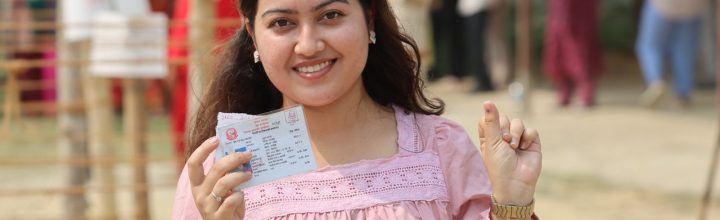
India is the world’s largest democracy. Every election—from a village panchayat to the Lok Sabha—is a massive logistical exercise involving nearly one billion eligible voters. For democracy to function effectively, one principle is non-negotiable:
“One eligible citizen, one vote, one time.”
Yet over the decades, concerns have repeatedly surfaced about duplicate voter entries, deceased voters remaining on electoral rolls, voters who have permanently shifted but continue to appear in previous constituencies, and allegations of non-citizens finding their way onto voter lists. These concerns have intensified in recent years, leading the Election Commission of India (ECI) to undertake Special Intensive Revision (SIR) of electoral rolls in selected areas.
The initiative has sparked intense political debate. Supporters describe it as a necessary exercise to protect the sanctity of elections. Critics fear that genuine citizens could be excluded if the process is not implemented carefully.
So, what exactly is SIR? Why is it controversial? What are the arguments from both sides? And can India move towards an even stronger election system using biometric authentication?
Let’s examine the issue in detail.
What is Special Intensive Revision (SIR)?
Special Intensive Revision (SIR) is an exercise conducted by the Election Commission of India to verify and update electoral rolls more comprehensively than during routine annual revisions.
Its primary objectives include:
- Removing duplicate voter entries
- Removing names of deceased voters
- Removing names of people who have permanently shifted
- Correcting errors in voter details
- Adding newly eligible voters
- Ensuring only eligible citizens remain on electoral rolls after due verification
Unlike routine revisions, SIR involves more extensive verification through Booth Level Officers (BLOs), document checks, and public claims and objections.
The Election Commission has stated that the objective is to improve the accuracy and integrity of electoral rolls while ensuring that every eligible citizen has the opportunity to be included.
Why Does India Need Electoral Roll Verification?
India has experienced unprecedented migration over the last three decades.
Millions of people:
- Move between states for employment.
- Shift cities for education.
- Purchase homes elsewhere.
- Relocate permanently after retirement.
- Move after marriage.
Many never remove their names from previous constituencies.
As a result, electoral rolls can contain outdated records.
Common issues include:
1. Duplicate Voter Entries
A person may appear in:
- Old hometown
- Current city
- Another constituency
Although casting multiple votes is illegal, duplicate entries create unnecessary administrative risks.
2. Deceased Voters
Families often do not report deaths to election authorities.
As a result:
- Names remain on electoral rolls for years.
- Polling officials must continue maintaining those records.
- Public confidence suffers.
3. Shifted Voters
Someone who moved permanently ten years ago may still remain on an old voter list.
Updating these records is essential for accurate electoral rolls.
4. Incorrect Details
Electoral rolls may contain:
- Wrong age
- Wrong address
- Misspelled names
- Incorrect photographs
These issues also require correction.
5. Questions Around Citizenship
One of the most politically debated aspects concerns allegations that some individuals who are not Indian citizens may have been entered on electoral rolls.
The Election Commission’s responsibility is to ensure that only those legally entitled to vote remain enrolled. Determining citizenship, however, is governed by Indian law and due process—not by political claims alone. Any action to remove a voter must follow the legal procedures laid down in the Representation of the People Act and related rules.
Why Does the BJP and NDA Support SIR?
The ruling BJP and its allies argue that clean electoral rolls are essential for free and fair elections.
Their main arguments include:
- Every genuine Indian citizen should vote.
- No duplicate entries should exist.
- Dead voters should be removed.
- People who permanently shifted should vote only in their new constituency.
- Electoral fraud becomes more difficult when rolls are accurate.
- Public trust in elections improves.
Supporters also argue that many other democracies regularly update their voter databases and that India, with nearly one billion electors, must maintain similarly accurate records.
What Does the Opposition Say?
Congress and several INDIA alliance parties have expressed concerns about the implementation of SIR rather than rejecting clean electoral rolls as an objective.
Their concerns include:
- Genuine voters may be removed because of documentation issues.
- Poor citizens may struggle to produce required documents.
- Migrant workers could face difficulties.
- Elderly citizens may not possess historical records.
- The exercise should not be rushed close to elections.
- There must be strong safeguards against wrongful exclusion.
Some opposition leaders have also questioned whether adequate public awareness and grievance mechanisms exist for affected voters.
These concerns highlight the importance of balancing electoral integrity with voter inclusion.
What Do Election Experts Say?
Many election experts agree on two broad principles:
- Electoral rolls should be as accurate as possible.
- No eligible voter should be disenfranchised because of administrative errors.
Experts generally recommend:
- Multiple opportunities for document submission.
- Easy correction mechanisms.
- Transparent appeals process.
- Public verification.
- Digital tracking of applications.
- Independent oversight.
The Election Commission’s Position
The Election Commission maintains that:
- Electoral rolls must be continuously updated.
- Citizens have opportunities to file claims and objections.
- Booth Level Officers conduct verification.
- Appeals are available where names are omitted or deleted.
- The objective is accuracy, not exclusion.
The Commission has repeatedly stated that maintaining clean electoral rolls is one of its constitutional responsibilities.
India’s Existing Digital Identity Ecosystem
India already operates one of the world’s largest digital identity infrastructures.
Biometric authentication is routinely used across multiple sectors.
Examples include:
Public Distribution System (Ration)
Millions authenticate using fingerprints or iris scans before receiving subsidized food grains.
Pension Authentication
Many pensioners verify their identity through Aadhaar-based biometric systems or digital life certificates.
Banking e-KYC
Banks use Aadhaar-based authentication (where permitted by law) for customer verification.
Government Welfare Schemes
Various Central and State government schemes use Aadhaar authentication to reduce duplicate beneficiaries and improve service delivery.
Passport Enrolment
Applicants provide biometric information such as fingerprints and photographs during the passport application process.
Employee Attendance
Many government departments and public institutions use biometric attendance systems.
Scholarships and Benefits
Several education and welfare programmes use Aadhaar-linked identity verification to ensure benefits reach intended recipients.
If Biometrics Work Elsewhere, Should They Be Used in Elections?
This question is increasingly being discussed.
Many citizens ask:
“If biometrics help prevent duplicate beneficiaries in welfare schemes, can they also strengthen elections?”
It is an important policy debate.
Possible Advantages of Biometric Authentication at Polling Stations
If implemented with strong legal safeguards, biometric authentication could offer several potential benefits:
1. Reduced Duplicate Voting
Fingerprint or iris verification could make it significantly harder for one individual to vote multiple times using duplicate entries.
2. Faster Identity Verification
Polling officers could verify identity more efficiently, reducing impersonation risks.
3. Cleaner Electoral Rolls
Biometric deduplication could help identify duplicate registrations more effectively than name-based matching alone.
4. Greater Public Confidence
A secure authentication process may strengthen trust in election outcomes.
5. Better Audit Trail
Authentication logs could help investigate disputes while preserving ballot secrecy.
Challenges of Biometric Voting
Biometrics are not a complete solution and come with important challenges:
- Fingerprints of manual labourers may be difficult to capture accurately.
- Elderly voters may face authentication issues.
- Equipment failures could disrupt polling.
- Internet connectivity cannot be assumed everywhere.
- Privacy concerns must be addressed.
- India would require a strong legal framework governing data use.
- Secret ballots must remain fully protected.
For these reasons, any move toward biometric authentication would require extensive testing, public consultation, and parliamentary approval.
A Possible Future Model for Indian Elections
Rather than replacing the existing system overnight, India could consider a phased approach:
Step 1
Maintain regular Special Intensive Revision exercises to keep electoral rolls accurate.
Step 2
Strengthen digital voter registration and update mechanisms.
Step 3
Introduce optional biometric verification in pilot projects with legal safeguards and independent evaluation.
Step 4
Use technology to detect duplicate registrations while ensuring that no eligible voter loses the right to vote without due process.
Step 5
Retain manual verification and appeal mechanisms so that voters are never turned away solely because of a biometric mismatch.
International Perspective
Many democracies periodically update voter rolls, but practices vary widely.
Some countries use national identity databases to assist voter registration. Others rely on local population registers or continuous voter enrolment. A smaller number use biometric voter registration or verification, particularly in parts of Africa and Latin America, to address duplicate registrations and impersonation.
There is no single global model. Each country balances election integrity, accessibility, privacy, cost, and legal safeguards differently.
Electoral Integrity Must Go Hand in Hand with Inclusion
The debate around SIR reflects a broader challenge faced by democracies worldwide:
How can governments prevent fraud while ensuring that every eligible citizen can vote?
Supporters see SIR as a way to improve the accuracy of electoral rolls and strengthen public confidence in elections.
Critics argue that implementation must be transparent, adequately resourced, and accompanied by strong safeguards so that no eligible voter is excluded because of documentation gaps or administrative errors.
Both perspectives point to legitimate democratic values—integrity and inclusion—that should be pursued together rather than in opposition.
Final Thoughts
India has successfully conducted elections for over seven decades on an extraordinary scale. As the electorate continues to grow, improving the accuracy of voter rolls will remain an important responsibility.
Special Intensive Revision is one tool aimed at achieving that objective. Whether it fully meets its goals will depend on how fairly, transparently, and consistently it is implemented.
Looking ahead, technologies such as biometric authentication, digital verification, and improved data management may offer additional ways to strengthen electoral processes. However, these innovations must be introduced carefully, with robust legal protections, independent oversight, respect for privacy, and accessible alternatives for every voter.
A democracy is strongest not only when every eligible citizen can vote, but also when every citizen has confidence that each vote is genuine, counted fairly, and protected equally.
The future of Indian elections lies in combining technological innovation with constitutional values—ensuring that electoral integrity and universal franchise reinforce one another, rather than compete.
Comments

Hi, I’m Nishanth Muraleedharan (also known as Nishani)—an IT engineer turned internet entrepreneur with 25+ years in the textile industry. As the Founder & CEO of "DMZ International Imports & Exports" and President & Chairperson of the "Save Handloom Foundation", I’m committed to reviving India’s handloom heritage by empowering artisans through sustainable practices and advanced technologies like Blockchain, AI, AR & VR. I write what I love to read—thought-provoking, purposeful, and rooted in impact. nishani.in is not just a blog — it's a mark, a sign, a symbol, an impression of the naked truth. Like what you read? Buy me a chai and keep the ideas brewing. ☕💭 For advertising on any of our platforms, WhatsApp me on : +91-91-0950-0950 or email me @ support@dmzinternational.com