
99.32 Lakh Voters Gone from Karnataka’s Electoral Roll: A Cleanup of Democracy or a Test of Its Integrity?
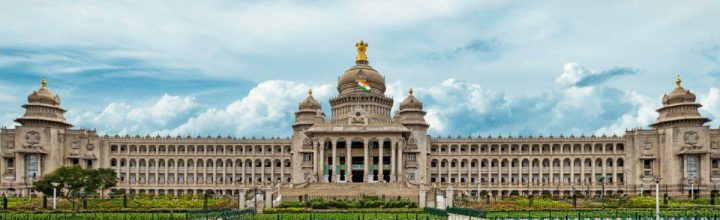
When nearly one crore names disappear from a voter list, the most important question is not who wins the political argument. It is whether every eligible citizen still has the right to vote.
Karnataka has released its final electoral roll following a Special Intensive Revision (SIR), and the numbers demand serious public attention.
Before the exercise, the state had approximately 5.54 crore registered voters. The final roll contains approximately 4.55 crore. That is a net reduction of 99.32 lakh names.
This is not a minor administrative correction. It is a change on a scale that deserves scrutiny, transparency and answers that go beyond political slogans.
But before jumping to conclusions, we must distinguish between what the numbers establish and what they do not.
The Question Behind the Numbers
According to reports citing the Election Commission’s data, the revision covered people recorded as deceased, permanently shifted, absent during enumeration, duplicated in the electoral database and other cases requiring verification.
Cleaning up electoral rolls is necessary. Dead people should not remain registered indefinitely. Duplicate entries must be addressed. People who have permanently moved should have their registration updated according to the rules.
An accurate voter list is essential to free and fair elections.
But here is the uncomfortable question: How do we ensure that the process designed to remove ineligible entries does not accidentally remove eligible citizens?
A database can be corrected. A person’s democratic right, once denied at the polling booth, cannot be restored for that election simply by correcting the record later.
That is why the quality of the verification process matters just as much as its stated objective.
Nearly One Crore Deletions Do Not Mean Nearly One Crore Fake Voters
This distinction is crucial.
The headline figure of 99.32 lakh represents the net reduction in the registered electorate. It does not mean that investigators proved all those people were fraudulent voters.
Official explanations include people recorded as deceased, shifted, absent or duplicated, along with other cases. These categories have different meanings and require different forms of verification.
Someone who has permanently moved is not necessarily a fraudulent voter. Someone who was temporarily unavailable when officials visited is not necessarily ineligible. And a person whose name appears in duplicate records is not automatically evidence of deliberate electoral fraud.
The figures should therefore be examined category by category.
How many names were removed because the voters had died? How many because they had permanently moved? How many were genuinely duplicated? How many could not be contacted? And how many were found ineligible after individual scrutiny?
These are not technical details to be buried in an administrative report. They are essential information for citizens to judge whether the exercise was fair.
The Real Test Is What Happens to the Eligible Voter
Reports say approximately 43.82 lakh voters received notices during the revision, while around 61,867–61,960 people were found ineligible following the notice-and-hearing process.
These figures concern different stages of the exercise and should not be confused with the total reduction in the electorate.
The important question is whether every person whose eligibility was questioned received a fair opportunity to establish their status.
Did the notice reach the individual? Was there sufficient time to respond? Could the person access the necessary documents? Were reasons recorded for decisions? Was an effective appeal mechanism available?
Consider an elderly citizen who has lived in the same neighbourhood for decades but was unavailable during a verification visit. Consider a migrant worker who spends months away from home. Consider a low-income family that moves frequently for work. Consider a first-time voter who assumes that being registered previously means their name will automatically remain on the list.
Administrative processes must account for the realities of ordinary life.
Democracy cannot function on the assumption that every citizen has the time, technology, documentation and resources to navigate a complicated verification system without assistance.
Politics Must Not Replace Evidence
The revision has also triggered political allegations about attempts to remove voters through Form 7 applications.
The Chief Electoral Officer reportedly stated that approximately 2.28–2.29 lakh such applications were received and that no voter was deleted solely on the basis of the disputed bulk applications.
That statement deserves consideration. So do legitimate questions about how applications were submitted, how they were verified and whether established procedures were followed.
However, an allegation is not proof. Equally, an official denial should not end every legitimate inquiry.
If a political party alleges voter suppression, it should produce verifiable evidence. If the Election Commission says the process was lawful, it should make the relevant records and explanations accessible enough for meaningful scrutiny.
Neither political outrage nor official reassurance is a substitute for evidence.
The standard should be the same regardless of which party benefits from the outcome.
Why Transparency Matters More Than Political Victory
Imagine two possible outcomes.
In the first, the revision removes millions of genuinely invalid entries, corrects duplicate registrations and produces a more accurate electoral roll. That would be a legitimate administrative achievement.
In the second, even a relatively small number of eligible citizens lose their registration because of errors, inadequate communication or an inability to complete the process. That would represent a serious failure, even if the overall exercise successfully corrected millions of records.
Both possibilities must be examined on their own evidence.
The relevant measure of success cannot simply be how many names were removed. It must also include how accurately those decisions were made, how many eligible voters were protected, and how quickly errors were corrected.
A clean voter list is important. A complete and fair voter list is equally important.
The Citizens’ Responsibility: Check, Don’t Assume
Political parties may debate the revision for months. But citizens cannot afford to assume that their names remain on the list simply because they voted in the previous election.
Every eligible voter should verify their registration through the Election Commission’s official voter services portal at https://voters.eci.gov.in/ or the appropriate official channels.
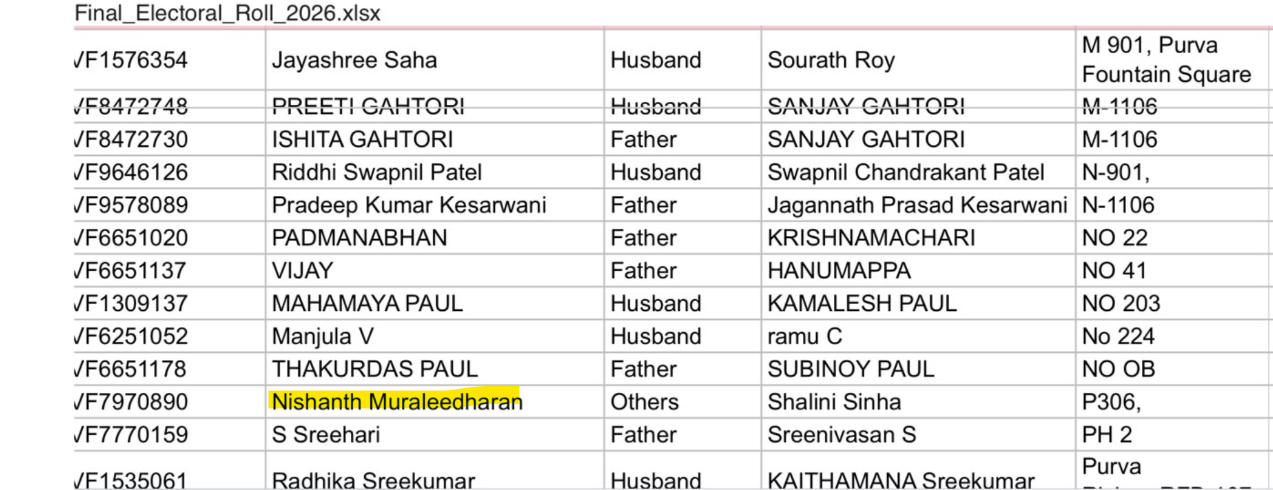
If a name is missing, the voter should promptly contact the relevant electoral registration authorities and follow the prescribed procedure for inclusion or appeal.
The Election Commission should also make this process accessible, publish clear constituency-wise data and communicate decisions in a way that ordinary citizens can understand.
Voter verification should not become a privilege available only to people who know how to navigate government websites.
One Question Every Indian Should Ask
This issue goes beyond Karnataka. It touches the foundations of representative democracy.
We often discuss elections in terms of winners, losers, vote shares, political alliances and allegations of manipulation. But beneath every election statistic are individual citizens whose participation gives elected governments their legitimacy.
The right to vote is not a favour granted by an administration. Nor should an electoral roll be treated as a political instrument. It is the mechanism through which citizens exercise one of their most important democratic rights.
If an ineligible entry remains on the list, it should be corrected through a lawful process.
If an eligible citizen is wrongly removed, that error must be identified and rectified.
Both responsibilities belong at the heart of a credible electoral system.
The Karnataka figures deserve neither blind celebration nor automatic condemnation. They deserve a transparent examination of the evidence, a fair opportunity for affected voters to seek remedies, and clear answers from the authorities responsible.
Because the real measure of electoral integrity is not how many names an election authority can remove. It is whether every eligible citizen who has the right to vote can actually exercise that right.
A democracy is not strengthened merely by removing names from a list. It is strengthened when citizens can trust that the list is accurate, the process is fair and their voice will not disappear through an administrative error.
And when nearly one crore names disappear from an electoral roll, asking difficult questions is not an attack on democracy.
It is part of protecting it.
Comments

Hi, I’m Nishanth Muraleedharan (also known as Nishani)—an IT engineer turned internet entrepreneur with 25+ years in the textile industry. As the Founder & CEO of "DMZ International Imports & Exports" and President & Chairperson of the "Save Handloom Foundation", I’m committed to reviving India’s handloom heritage by empowering artisans through sustainable practices and advanced technologies like Blockchain, AI, AR & VR. I write what I love to read—thought-provoking, purposeful, and rooted in impact. nishani.in is not just a blog — it's a mark, a sign, a symbol, an impression of the naked truth. Like what you read? Buy me a chai and keep the ideas brewing. ☕💭 For advertising on any of our platforms, WhatsApp me on : +91-91-0950-0950 or email me @ support@dmzinternational.com