
The Three Boxes: Why You Pay for Things You Could Easily Live Without
Every day, millions of people in Indian cities open an app and pay a delivery fee to get one packet of milk. The same milk is sold in a shop at the end of their street, two minutes away. The price is the same. Yet they pay extra.
This is not foolishness. It is a pattern, and it explains almost every rupee you have ever spent.
Box One: Relief
Imagine a person standing outside their own front door at 11 at night, and the key has snapped inside the lock. A locksmith arrives and names a price. In daylight, the person would call it unfair. At night, they say yes in seconds.
The lock did not change. The pain did.
This is the first surprise. People do not pay for the product. They pay in proportion to the pain it removes. A cheap tablet and an expensive operation are both bought for the same reason: the buyer wants a problem to disappear.
Fear is a problem too. Insurance agents know that the easiest time to sell a health policy is when a neighbour’s hospital bill is the talk of the street. The buyer is paying for a problem that has not happened yet, but the fear is already there.
Box Two: Convenience
Indian Railways charges extra for Tatkal tickets, which are booked one day before travel. The seat is the same and the train is the same. The extra money buys a person the right to skip planning.
Mumbai’s dabbawalas show the same idea on a much bigger scale. For more than a century, they have carried around two lakh lunch boxes a day, and customers pay for it. Food is not the product here. The product is a person who does not have to carry a box in a crowded local train.
Here is what most people do not know. Convenience is really the sale of time. Researchers studying this, in work published in a major scientific journal in 2017, found that people who spend money to save time report greater life satisfaction than people who do not. A small fee can buy a better mood than a large gift.
Box Three: Experience
Every year, crores of people in India travel to pilgrimages. At the Maha Kumbh in 2025, official estimates ran into hundreds of millions of visits. These people spend money on trains, buses, food and a place to sleep. They bring home no product, only a memory.
Psychologists Leaf Van Boven and Thomas Gilovich studied this and found that experiences usually bring more lasting happiness than objects. There are two reasons. An experience becomes part of who we are, and we share it with others. A new phone becomes old, but a story does not.
Another surprise comes from a Dutch study of holiday travellers. People were found to be happiest in the weeks before the trip, not during it. This means a person pays for the journey and also for the joy of waiting for it.
Think about the Indian wedding. Many families spend years of savings on an event that lasts only a few hours. Nobody calls it wasteful, because nobody is buying an event. They are buying a feeling that will be remembered for fifty years.
The Same Product Can Sit in All Three Boxes
Take tea.
A tea sachet at home is convenience. Hot water, one minute, done.
A cup of chai at a roadside stall in heavy rain is an experience. The tea may not even be better, but the moment is.
A person with a bad cold who drinks ginger tea is buying relief.
The tea did not change. The reason for buying it did. This is why a business that only describes its product often fails, while a business that tells people which box it belongs to succeeds.
Handloom shows this clearly. Most people choose it for a simple reason: it is made from natural fibers like cotton and linen. These fibers absorb sweat and let the skin breathe, while polyester locks heat and sweat against the body. Natural fiber cloth also lasts many years longer, so the buyer is paying for comfort that stays, and the story of the weaver comes as a bonus.
The Trap Hidden Inside the Boxes
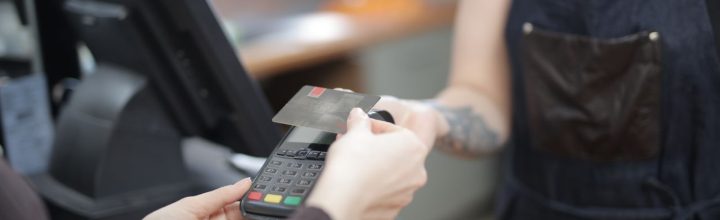
There is one more fact that few people know. A well-known study by researchers at MIT found that people were willing to pay much more for the same item when they paid by card instead of cash. Handing over notes feels painful, while tapping a card does not. Digital payments such as UPI remove even more of that pain.
This means the box tells you why you want something, but the payment method decides how much you will spend. Many people never notice that their spending grew while their pain of paying shrank.
What to Do With This Knowledge
Before the next purchase, ask one question: Which box is this?
If it is relief, check whether the pain is real or only loud. If it is convenience, ask whether the saved time will be used for something good. If it is an experience, ask whether you will remember it a year from now.
If you run a business, ask a harder question. Which box do your customers think you are in?
Because people do not buy what you make. They buy what it does for them.
And the one who understands why people pay will always be richer than the one who only knows what to sell.
Comments

Hi, I’m Nishanth Muraleedharan (also known as Nishani)—an IT engineer turned internet entrepreneur with 25+ years in the textile industry. As the Founder & CEO of "DMZ International Imports & Exports" and President & Chairperson of the "Save Handloom Foundation", I’m committed to reviving India’s handloom heritage by empowering artisans through sustainable practices and advanced technologies like Blockchain, AI, AR & VR. I write what I love to read—thought-provoking, purposeful, and rooted in impact. nishani.in is not just a blog — it's a mark, a sign, a symbol, an impression of the naked truth. Like what you read? Buy me a chai and keep the ideas brewing. ☕💭 For advertising on any of our platforms, WhatsApp me on : +91-91-0950-0950 or email me @ support@dmzinternational.com