Your Body Is Always Listening: The Medicine No Pharmacy Sells
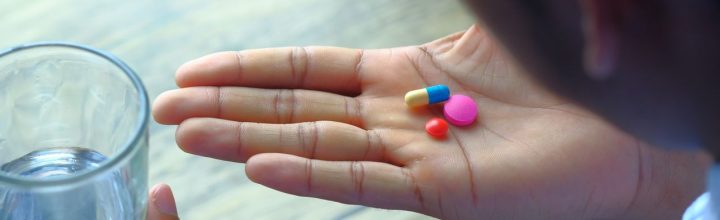
Most people believe healing starts at a pharmacy. The truth is stranger. Your body is repairing itself right now. The lining of your stomach renews in a few days. Your skin replaces its outer layer in about a month. Your red blood cells are replaced every four months.
So the real question is not whether your body can heal. It is what decides how well and how fast. Research from several countries gives an answer most people never expect: your relationships and your state of mind.
Stress slows the repair of a wound
In a well-known study from Ohio State University, researchers made small, harmless wounds on the arms of two groups. One group was people caring for a family member with dementia, a very stressful task. The other group had no such stress.
The caregivers’ wounds took about 24 percent longer to heal. The skin, the blood and the wound were the same. Only the daily pressure was different. This shows that the mind can change what happens at the edge of a cut.
The longest study on happiness gave a surprising winner
In 1938, Harvard researchers began following more than 700 young men. They tracked their health for over 80 years, and later included their families. They measured blood pressure, cholesterol, habits and income.
The best predictor of good health at age 80 was not cholesterol. It was how satisfied people were with their close relationships at age 50.
A larger review supports this. It combined 148 studies covering more than 300,000 people. People with strong social ties had about a 50 percent higher chance of survival over the follow-up period than people with weak ties.
Laughter was turned into a health practice in India
In 1995, a physician in Mumbai, Dr. Madan Kataria, gathered a few people in a public park to laugh together. It began as a small experiment. Today, laughter clubs exist in many countries.
There is a scientific reason. A study by the researcher Robin Dunbar found that laughing together in a group raised people’s tolerance for pain. The likely cause is the release of endorphins, the body’s own pain-relieving chemicals. Laughter is not only a mood. It is a chemical event.
The kind of work you do can affect your heart
The Whitehall studies followed thousands of British civil servants. All of them had stable jobs and steady pay. Still, those with little control over their daily work had a higher risk of heart disease than those with more control.
The lesson is simple. Hard work alone does not harm the body as much as work that feels pointless or forced. Work that has meaning and choice protects the body better.
Being heard may matter as much as being treated
A classic study of doctor visits found that doctors interrupted patients after only about 18 seconds, on average. Many patients never finished explaining their problem.
Now consider a surprising finding about care. In 2010, researchers gave patients with irritable bowel syndrome a placebo pill and told them honestly that it contained no medicine. Even so, many of these patients felt better than patients who received no pills at all. The ritual of care, the attention and the hope had a real effect.
India knew this long before the studies
The ancient Ayurvedic text Charaka Samhita names four pillars of treatment: the physician, the medicine, the attendant and the patient. Three of the four are about people and relationships, not drugs. Indian families have long practised this idea. A grandmother who sits beside a sick child through the night is doing what modern science now measures.
What this really means
Be careful about one thing. Some popular voices say that all healing comes only from inside us. This is not true. Antibiotics cure infections. Insulin keeps people alive. Surgery saves lives. Love does not replace medicine.
What the evidence shows is more useful. Treatment works inside a body that is shaped by loneliness, stress, laughter, purpose and attention. Two people with the same illness and the same medicine may recover differently because of the lives around them.
So the practical steps are small and free:
- Keep close friends and family in your daily routine.
- Laugh with others, not only alone.
- Choose work that gives you some say and some meaning.
- When someone speaks, let them finish.
None of these is a cure. Each one changes the ground on which a cure must work.
Your pharmacy treats the illness. Your people treat the person. A wise life needs both.
Closing line for the reader: the body keeps a record of how it is treated, and it heals best where it feels safe.
Comments

Hi, I’m Nishanth Muraleedharan (also known as Nishani)—an IT engineer turned internet entrepreneur with 25+ years in the textile industry. As the Founder & CEO of "DMZ International Imports & Exports" and President & Chairperson of the "Save Handloom Foundation", I’m committed to reviving India’s handloom heritage by empowering artisans through sustainable practices and advanced technologies like Blockchain, AI, AR & VR. I write what I love to read—thought-provoking, purposeful, and rooted in impact. nishani.in is not just a blog — it's a mark, a sign, a symbol, an impression of the naked truth. Like what you read? Buy me a chai and keep the ideas brewing. ☕💭 For advertising on any of our platforms, WhatsApp me on : +91-91-0950-0950 or email me @ support@dmzinternational.com